Loading…
Analysis
Data-backed reads on players and fits. Every call we make is graded.
PLAYER OUTLOOK
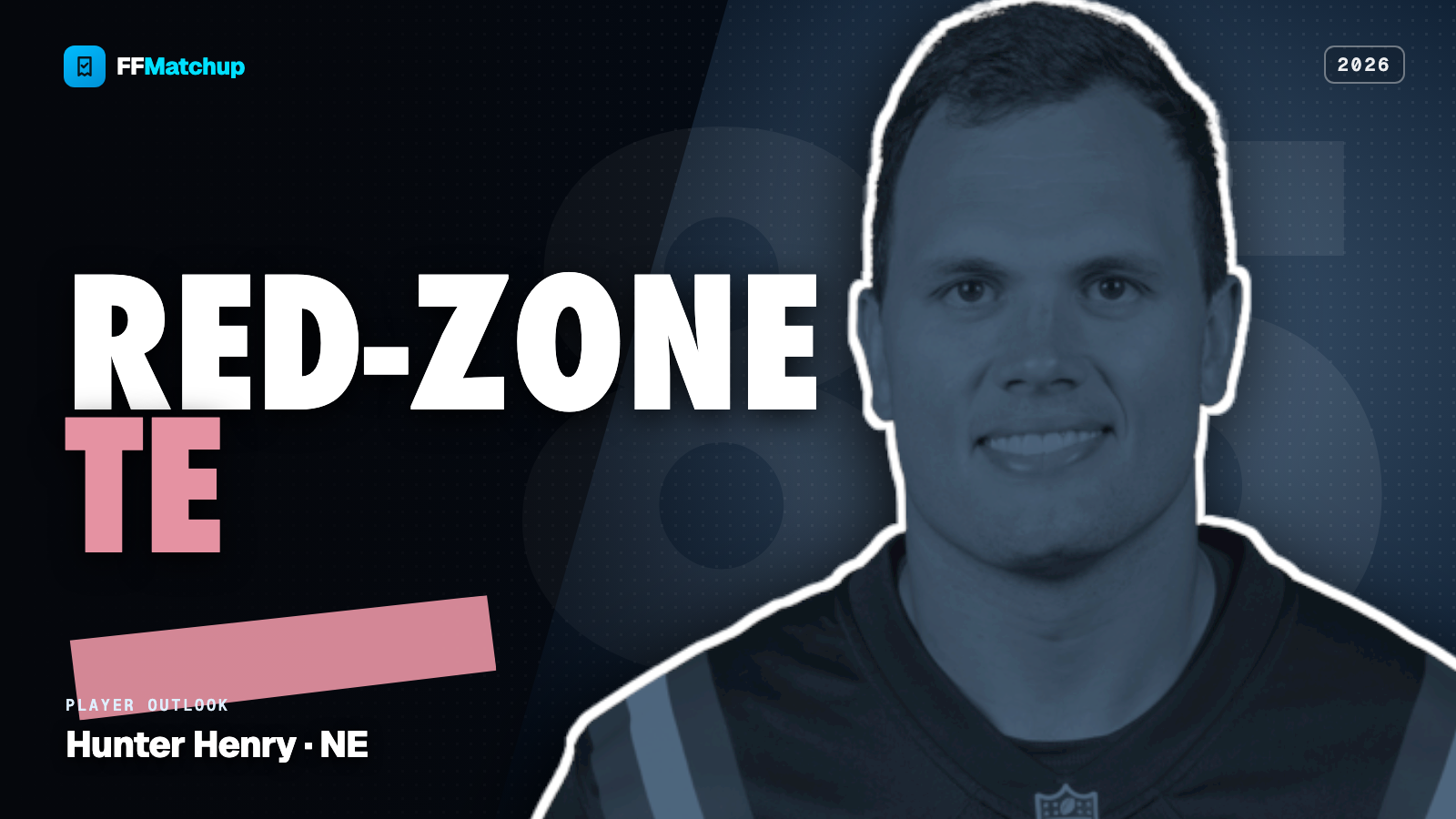
Hunter Henry Fantasy 2026: Is the Patriots TE a Late-Round Streamer to Target?
Hunter Henry is going outside the top-15 tight ends after quietly leading New England in red-zone targets in 2025. The bull case is a real scoring role with an ascending young quarterback at a TE20 price. The bear case is the part the price already knows: possession-level yardage, touchdown-dependent scoring, and a receiving room that just added two veteran wideouts.
FFMatchup
DEEP STAT BOARD
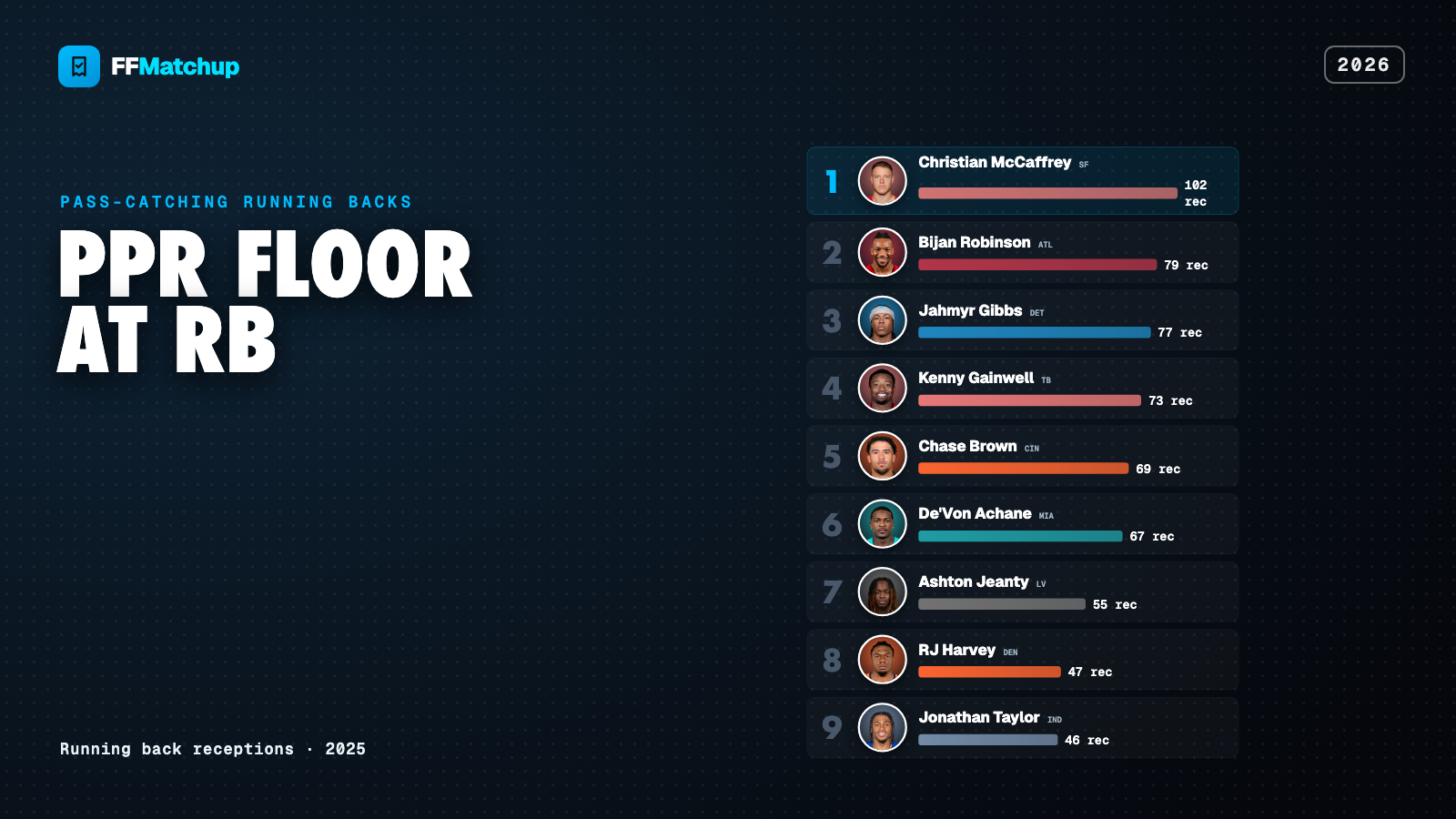
Fantasy 2026 Pass-Catching Running Backs: The PPR Floor the Goal-Line Board Misses
Goal-line touches find the touchdown equity. Receptions and targets find the floor that shows up every week, script-proof, in PPR. Here are the running backs who caught the most passes in 2025, and how to tell a true three-down back from a passing-down specialist whose rushing ceiling is capped.
FFMatchup
PLAYER OUTLOOK
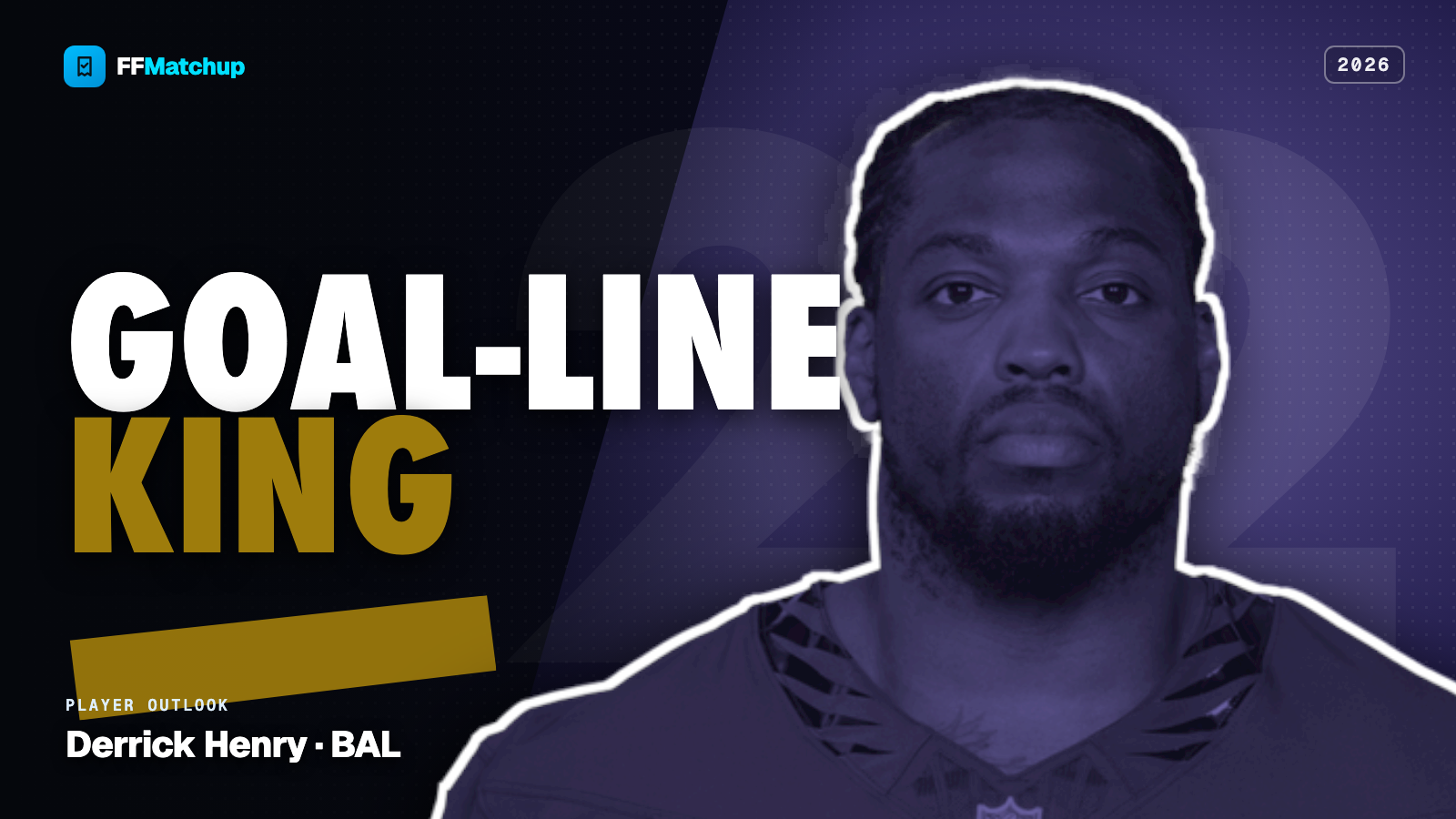
Derrick Henry Fantasy 2026: Is the Ravens RB Still an Elite Fantasy Bet?
Henry led every back in the league in goal-line work and finished second among running backs in rushing touchdowns in 2025, which is the kind of scoring equity that survives a down week. The bull case is a league-leading touchdown role at a back-end RB1 price. The honest caps are a thin receiving floor and a mobile quarterback who can poach a red-zone carry.
FFMatchup
PLAYER OUTLOOK
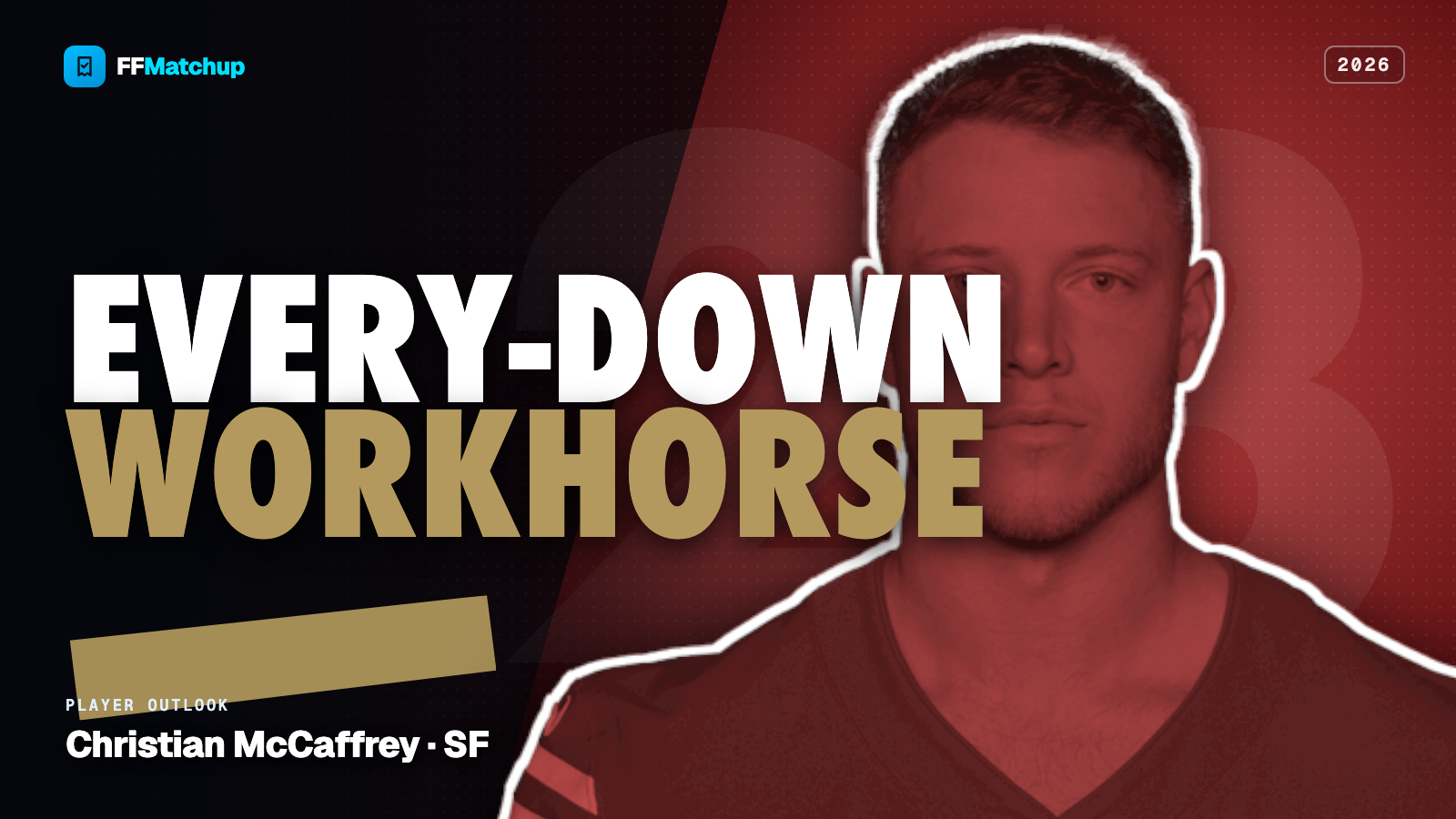
Christian McCaffrey Fantasy 2026: Is the 49ers RB Worth an Early First-Round Pick?
McCaffrey answered the durability questions with a full 17-game 2025 and finished as the highest-floor back in fantasy, a complete every-down workhorse who owns both the goal line and the passing game. The bull case is a proven three-down bell cow at the top of the board. The honest cap is a top-nine price that leaves no margin for a heavy-usage veteran.
FFMatchup
PLAYER OUTLOOK
Baker Mayfield Fantasy 2026: Is the Buccaneers QB a Late-Round Value?
Mayfield posted a top-tier passing line in 2025 and enters 2026 as a locked full-time starter with a young receiving corps around him, all at a late-round quarterback price. The bull case is a proven 26-touchdown ceiling and a breakout wideout at a QB19 cost. The honest caps are a modest rushing floor for the position and a double-digit interception total.
FFMatchup
PLAYER OUTLOOK
Jordan Mason Fantasy 2026: Is the Vikings RB a Sneaky Value or a Committee Back?
Mason out-carried a veteran and owned the goal line in Minnesota in 2025, and he is going at a deep RB price. The bull case is a back who leads a backfield in carries and short-yardage work for almost nothing. The honest cap is that Aaron Jones is still here, plays more snaps, and catches most of the passes, so this is a real committee rather than a bell-cow job.
FFMatchup
DRAFT STRATEGY
Fantasy 2026 Goal-Line Backs: Who Owns the Touchdown Equity (and the Committee Traps)
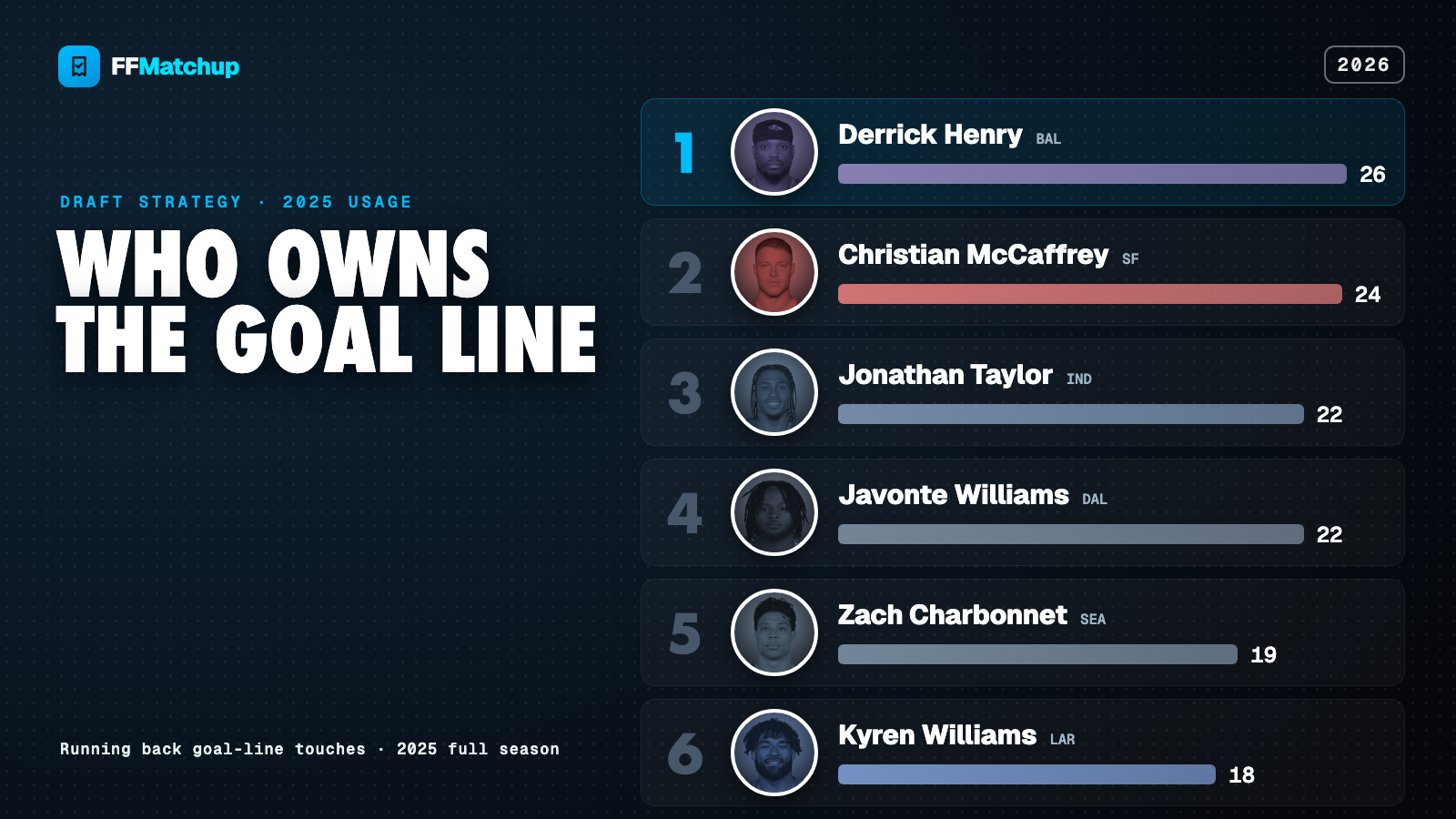
Goal-line touches are the stickiest source of rushing touchdowns, so the backs who own their team's stripe are the safest scoring bets. But the leaderboard alone lies. Snap share is what separates a bell cow you can start every week from a committee back who owns the goal line and still sits on a third of the snaps.
FFMatchup
PLAYER OUTLOOK
DK Metcalf Fantasy 2026: Is the Steelers WR a Buy at His WR34 Price?
Metcalf carried a team-leading 33.2 percent air-yards share in Pittsburgh in 2025 and profiles as the clear downfield alpha in a room that runs through him, going at a cheap WR34 price. The bull case is the unquestioned air-yards leader on the perimeter. The honest caps are a new high-volume target competitor arriving from Indianapolis and a conservative-aDOT quarterback that may not maximize a vertical receiver.
FFMatchup
PLAYER OUTLOOK
Dallas Goedert Fantasy 2026: A Touchdown-Dependent TE1 at a TE12 Price?
Goedert scored 11 touchdowns on just 82 targets in Philadelphia in 2025, the mark of a genuine red-zone hub, and he is going at a cheap TE12 price. The bull case is a locked scoring role, made more interesting by A.J. Brown's departure to New England. The honest caps are heavy touchdown-dependence on a modest yardage floor and a run-first offense that limits the target pie.
FFMatchup
PLAYER OUTLOOK
Jaylen Waddle Fantasy 2026: What the Broncos Move Means for His Value
Waddle led Miami in air-yards share on a 100-target, 910-yard season in 2025, then got traded to Denver, where he joins Courtland Sutton and Troy Franklin and a conservative-aDOT quarterback in Bo Nix. The bull case is a proven downfield separator at a mid-round price who could lead a rising offense in air yards. The honest caps are a crowded target tree, a short-aDOT quarterback, and a scheme fit that has to be proven.
FFMatchup
PLAYER OUTLOOK
Rico Dowdle Fantasy 2026: Is the Steelers RB a Sleeper or a Committee Trap?
Dowdle broke out for a 236-carry, 1,076-yard season in Carolina in 2025, then signed with Pittsburgh, where he lands on top of incumbent Jaylen Warren. The bull case is a back who just proved he can carry a full load, arriving at a cheap RB price in a run-leaning offense. The honest caps are a real committee with a teammate who owns the current goal-line work, a new scheme, and no locked touch split.
FFMatchup
PLAYER OUTLOOK
Caleb Williams Fantasy 2026: Is the Bears QB a Breakout at a QB7 Price?
Williams already delivered a full QB1 season as a rookie, and now he enters year two in a rebuilt Chicago offense. The bull case is a proven 300-plus PPR floor with a real rushing add at a mid-QB1 price. The honest caps are a modest rushing-touchdown share behind a goal-line backfield and a pass-catcher room still finding its shape.
FFMatchup
PLAYER OUTLOOK
Jayden Daniels Fantasy 2026: Is the Commanders QB a Buy After an Injury Year?
Daniels played only seven games in 2025, but his per-game dual-threat rate was high-end QB1 when he was on the field. The bull case is a rushing-floor quarterback at a QB6 price. The honest caps are a seven-game sample where availability is the whole risk and a receiving corps that turned over around him.
FFMatchup
PLAYER OUTLOOK
RJ Harvey Fantasy 2026: Is the Broncos Rookie RB a PPR Sleeper?
Harvey flashed a dual-threat rookie profile in Denver with real receiving volume and a surprising goal-line share. The bull case is 47 catches plus ten goal-line touches at an RB31 price in an improving offense. The honest caps are a genuine committee with J.K. Dobbins, a 42 percent snap share, and a role that still has to grow.
FFMatchup
PLAYER OUTLOOK
Michael Wilson Fantasy 2026: Is the Cardinals WR a Breakout at a WR40 Price?
Wilson led Arizona in air-yards share while topping 1,000 yards on 126 targets, a genuine WR1-usage profile going at a WR40 price. The bull case is team-high downfield volume and seven touchdowns at a discount. The honest caps are a shorter-aDOT quarterback after Kyler Murray's departure and a high-volume tight end who is the real target hub.
FFMatchup
DEEP STAT
Fantasy 2026 Air-Yards Sleepers: The Deep Threats Priced Below Their Usage
Air-yards share is one of the stickiest, most predictive signals a receiver carries, so the players who command a big downfield role at a cheap price are a repeatable sleeper profile. Here are five receivers who led or nearly led their offense in air-yards share in 2025 and are going outside the top 40 at their position, plus the honest counterweight on each: the volatile week-to-week floor and the teammate or quarterback capping the ceiling.
FFMatchup
PLAYER OUTLOOK
Quinshon Judkins Fantasy 2026: Is the Browns Rookie Workhorse a Value at RB22?
Judkins handled a genuine 230-carry lead-back load as a rookie and enters 2026 as Cleveland's clear early-down runner. The bull case is a proven bell-cow volume at an RB22 price with a departed committee back. The honest caps are a returning passing-down complement that limits his receiving work, modest goal-line equity, and an unsettled quarterback room that drags the whole offense.
FFMatchup
PLAYER OUTLOOK
Alec Pierce Fantasy 2026: The Deep-Ball WR the Market Is Sleeping On
Pierce led the Colts in air-yards share and cleared 1,000 yards on modest volume in 2025, one of the purest vertical profiles in the league. With Michael Pittman gone, the downfield tree just opened up. The honest caps are a boom-or-bust week-to-week floor, a target-volume leader ahead of him in the room, and an unsettled quarterback situation.
FFMatchup
DEEP STAT
Fantasy 2026 Touchdown Regression: The Receivers Due for a Scoring Spike
Touchdowns are the noisiest, least sticky part of a receiver's line, so the players who earned a big target load but barely scored are classic buy-low profiles. Here are the receivers whose 2025 scoring fell furthest below what their usage implied, plus the honest counterweight: the red-zone competitor capping each one, and one profile that looks like regression but is really just a stuck role.
FFMatchup
DRAFT STRATEGY
Fantasy 2026 Vacated Targets: The Receivers in Line for a Volume Bump
Every offseason ships a big block of targets from one roster to another. Here are the largest chunks of 2025 receiving volume that changed teams, the incumbents best placed to inherit each, and the honest catch that decides which bets pay off: vacated targets almost always split across a committee rather than funnel to one man.
FFMatchup
PLAYER OUTLOOK
Xavier Worthy Fantasy 2026: Is the Chiefs Speedster a Late-Round Buy?
Worthy earned a real target load in Kansas City but scored just one touchdown in 2025, and two teammates who worked the perimeter ahead of him are now gone. That is a classic positive-regression profile at a late-round price. The honest caps are a still-crowded target tree and a graded record our model never trusted enough to start him.
FFMatchup
PLAYER OUTLOOK
Travis Etienne Fantasy 2026: Can the Lead Back Bounce Back in New Orleans?
Etienne quietly ran for over 1,100 yards and scored 13 total touchdowns in 2025, and a trade to New Orleans hands him a lead role at a mid-round RB price. The bull case is a proven three-down back with a clear path to touches. The honest caps are a new-team backfield that still has Alvin Kamara, a 2025 goal-line committee, and a rookie-quarterback offense.
FFMatchup
PLAYER OUTLOOK
Jauan Jennings Fantasy 2026: Is the New Vikings WR a Late-Round Value?
Jennings scored nine touchdowns and played 82 percent of the snaps in 2025, and now he lands in Minnesota at a WR63 price. The bull case is a physical, red-zone-capable target-earner for almost free. The honest caps are a target ceiling set by Justin Jefferson, a team change, and a graded record that says boom-or-bust.
FFMatchup
PLAYER OUTLOOK
Jayden Reed Fantasy 2026: Is the Packers WR a Late-Round Sleeper?
Green Bay lost 85 targets when Romeo Doubs left, and Reed is one of the names in line to absorb them at a WR44 price. The bull case is a cheap slot piece with room to grow. The honest caps are a seven-game 2025 sample, a tiny air-yards share, and the most crowded receiver room in football.
FFMatchup
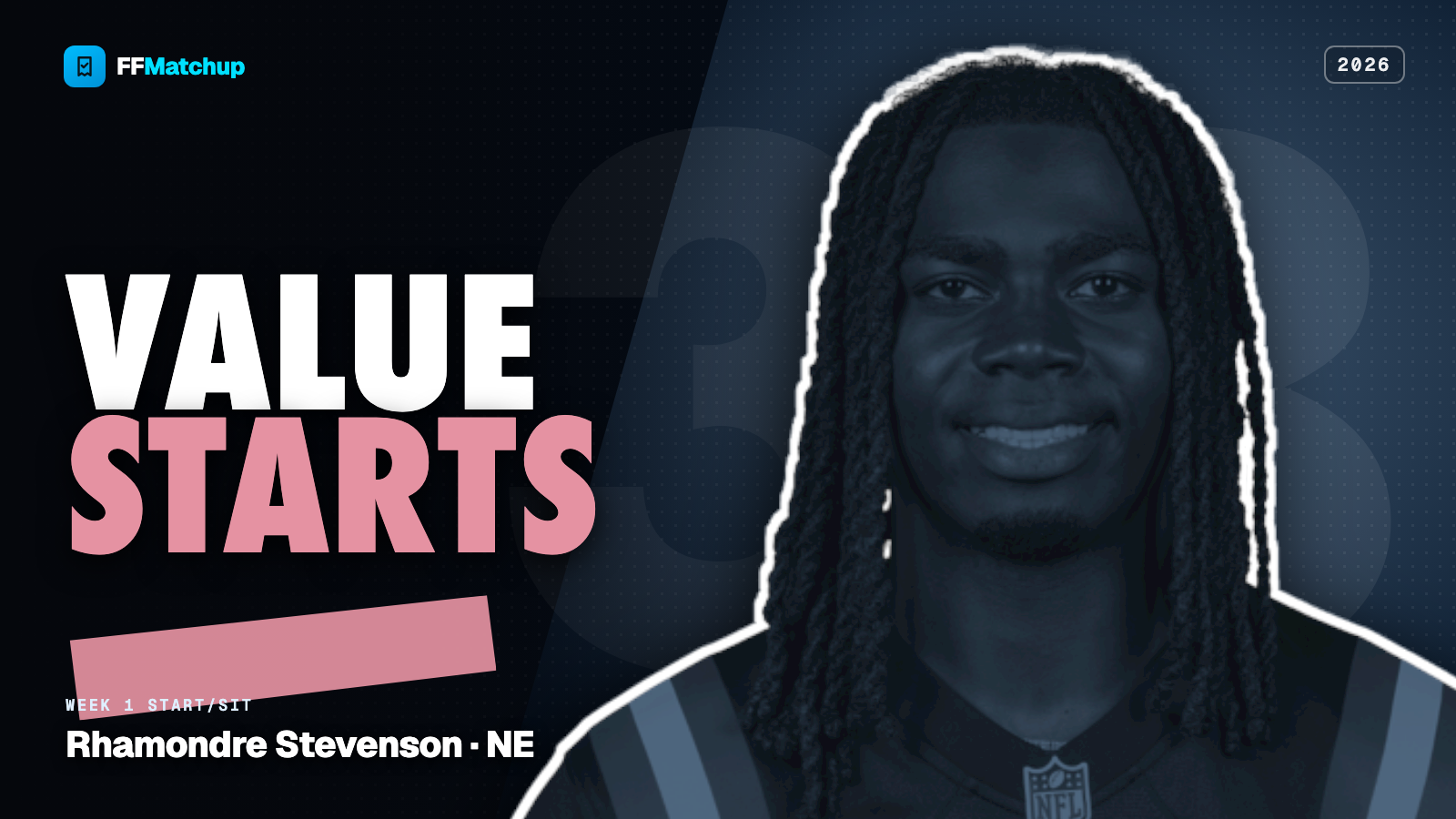
WEEK 1 START/SIT
Week 1 Fantasy Start/Sit 2026: The Value Starts Beyond the Obvious Names
Anyone can start their first-rounders. This is the layer underneath: five cheap Week 1 starts our opportunity-weighted matchup model likes, for the manager who has already used their obvious plays and needs a flex or streamer to break right.
FFMatchup
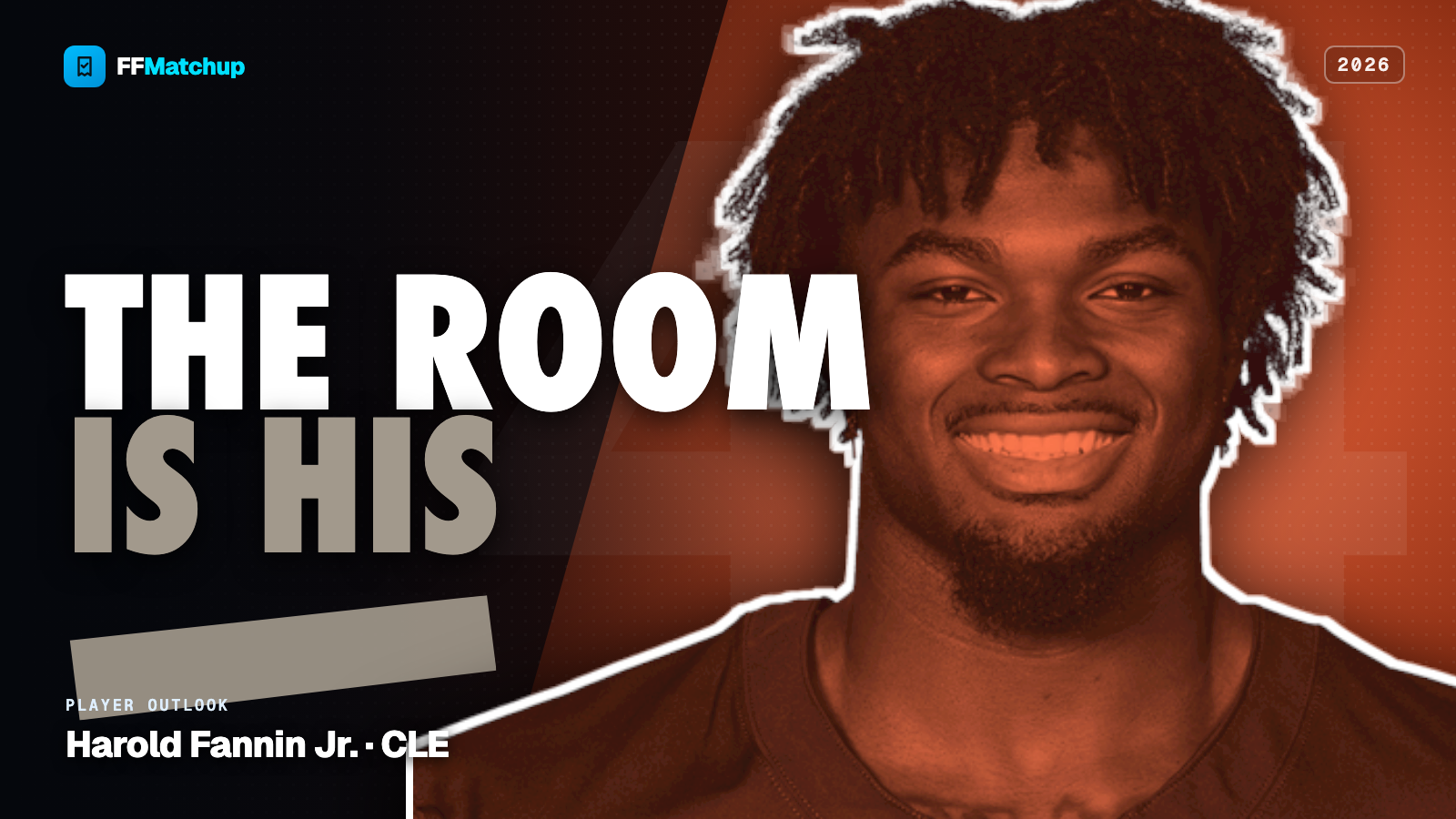
PLAYER OUTLOOK
Harold Fannin Jr. Fantasy 2026: Is the Browns' Second-Year TE a TE5 Sleeper?
Fannin posted real rookie target volume and already out-worked the veteran ahead of him, and now David Njoku is gone and the Cleveland tight end room is his. The bull case is a target-earning young TE at a mid-round price. The honest caps are a possession role underneath a true air-yards alpha, a modest scoring line, and a rookie-led quarterback room that sets his ceiling.
FFMatchup
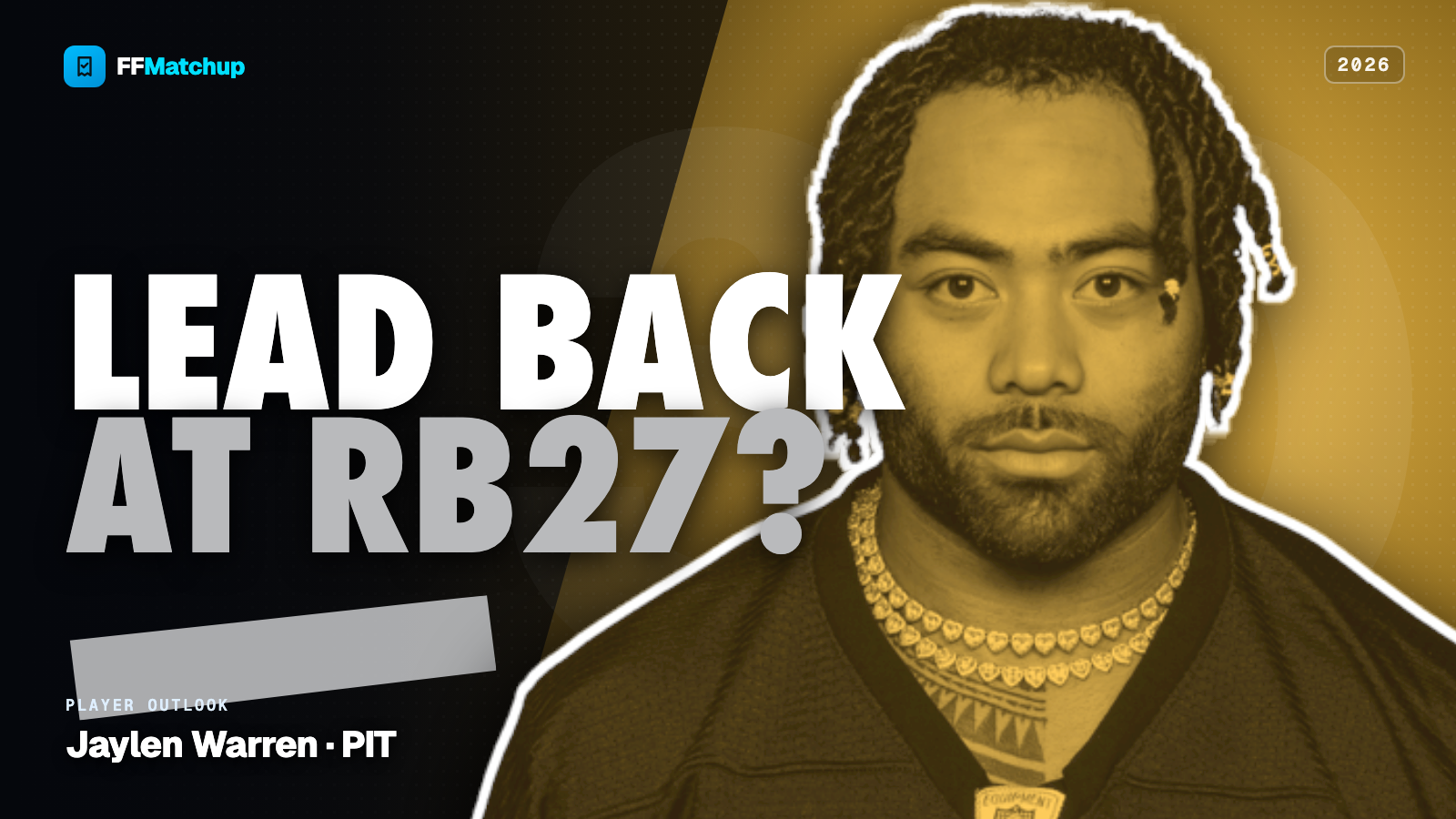
PLAYER OUTLOOK
Jaylen Warren Fantasy 2026: Is the Steelers RB a Value Now That He Leads the Backfield?
Warren carried a genuine starter's load in 2025 and the back who split it with him is gone, yet he is going as the RB27. The bull case is a proven three-down role with vacated touches to absorb. The honest caps are a real committee addition, a half-time snap share, and a modest scoring line.
FFMatchup
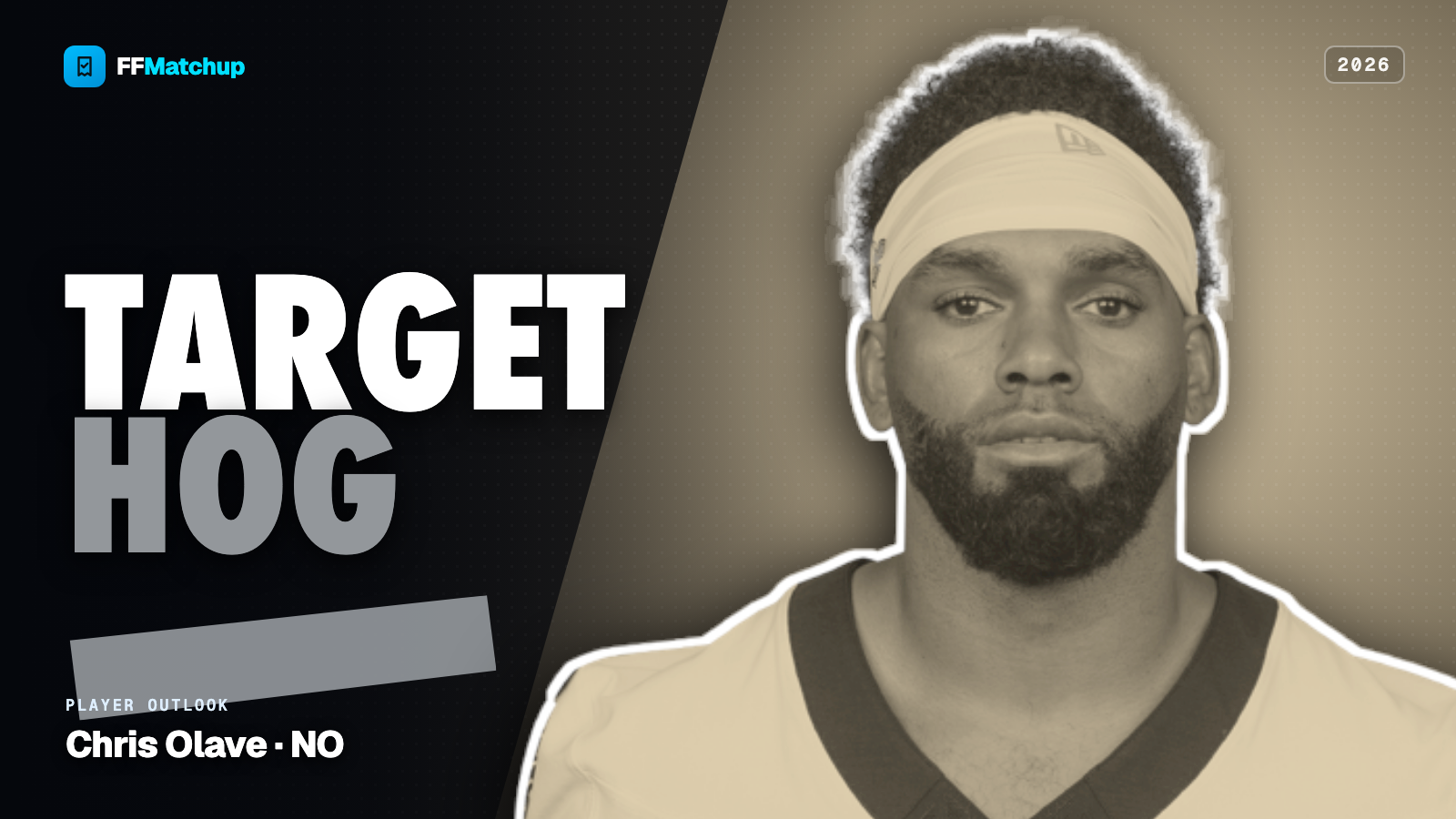
PLAYER OUTLOOK
Chris Olave Fantasy 2026: Is the Saints WR1 a Value at a WR10 Price?
Olave was a true No. 1 in 2025, a healthy target hog who owned his team's air yards, and he is going as the WR10. The bull case is elite volume and role. The honest caps are a middling graded record and an unsettled young quarterback room that sets his ceiling.
FFMatchup
PLAYER OUTLOOK
Javonte Williams Fantasy 2026: Is the Cowboys RB a Steal at RB16?
Williams handled a genuine bell-cow load in his first Dallas season and owned the goal line, yet he is going as the RB16. The bull case is real three-down volume with rushing touchdowns. The honest caps are a thin receiving line and a Dallas backfield that a new coaching staff can reshape in year two.
FFMatchup
PLAYER OUTLOOK
Kenneth Walker Fantasy 2026: What His Move to Kansas City Means for His RB10 Price
Walker lands in a Kansas City backfield that just lost its goal-line back and its early-down back, which clears a lead role at an RB10 price. The bull case is vacated touches. The honest cap is a two-down profile in a pass-first offense.
FFMatchup
PLAYER OUTLOOK
Omarion Hampton Fantasy 2026: Is the Chargers Rookie RB Worth an RB9 Price?
Hampton flashed a three-down, goal-line role in a shortened 2025 and is going as a top-10 back. The bull case is the workload and the stripe. The honest caps are a nine-game rookie sample and a backfield mate who carried a starter's load when Hampton was out.
FFMatchup
DRAFT STRATEGY
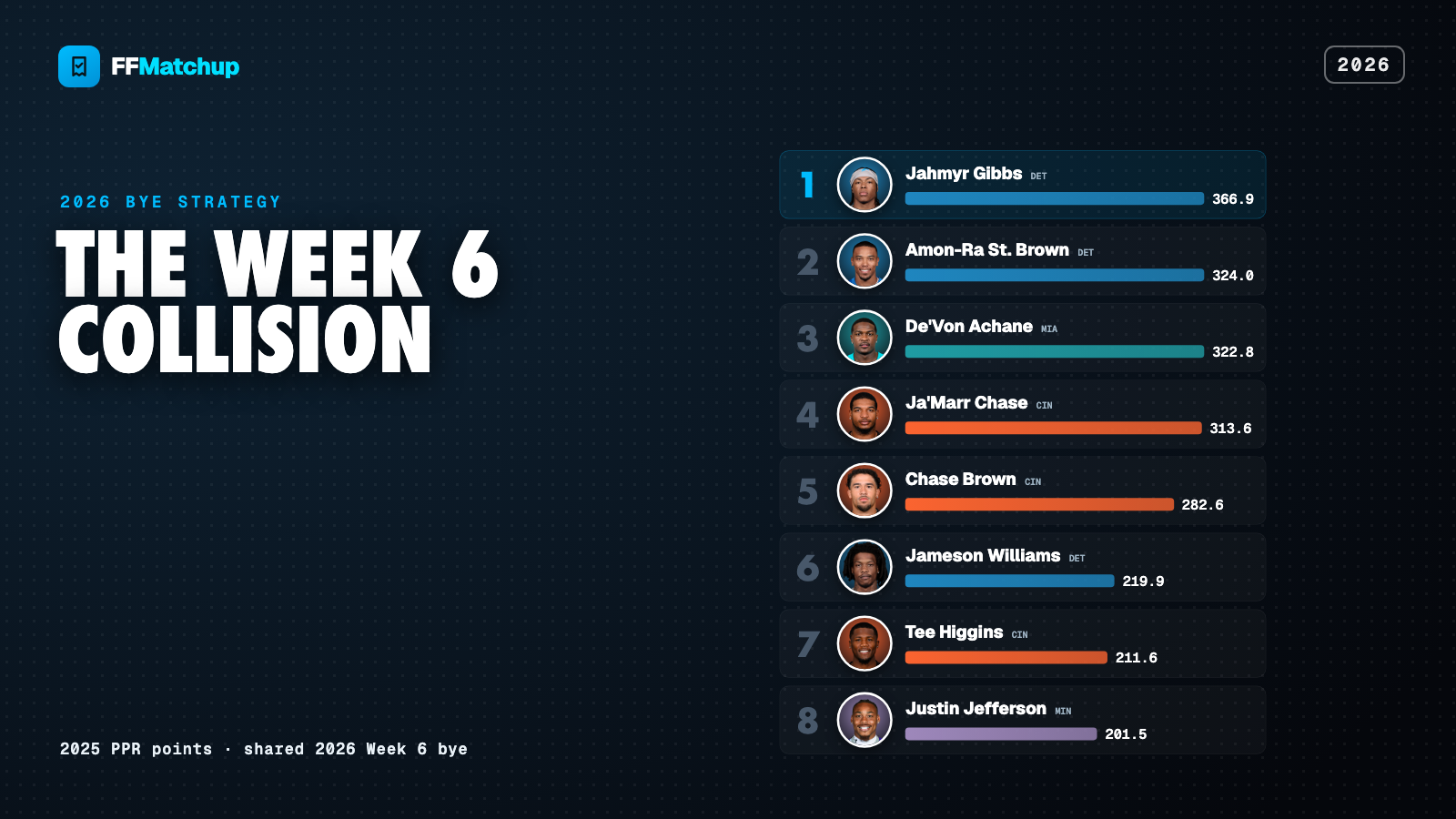
Bye-week punt strategy 2026: when to sacrifice an early week for a better roster
Most managers ignore bye weeks until the Week 5 panic. The smart move is to plan the pain, punt one week on purpose, and never downgrade a pick just to dodge a bye.
FFMatchup
DRAFT STRATEGY
Zero-RB strategy 2026: when it works, when it backfires, and what the draft board actually says
The early board is drowning in wide receivers and thin on bell-cow backs. Here is when passing on running backs pays off, and the two ways it costs you a season.
FFMatchup
DRAFT STRATEGY
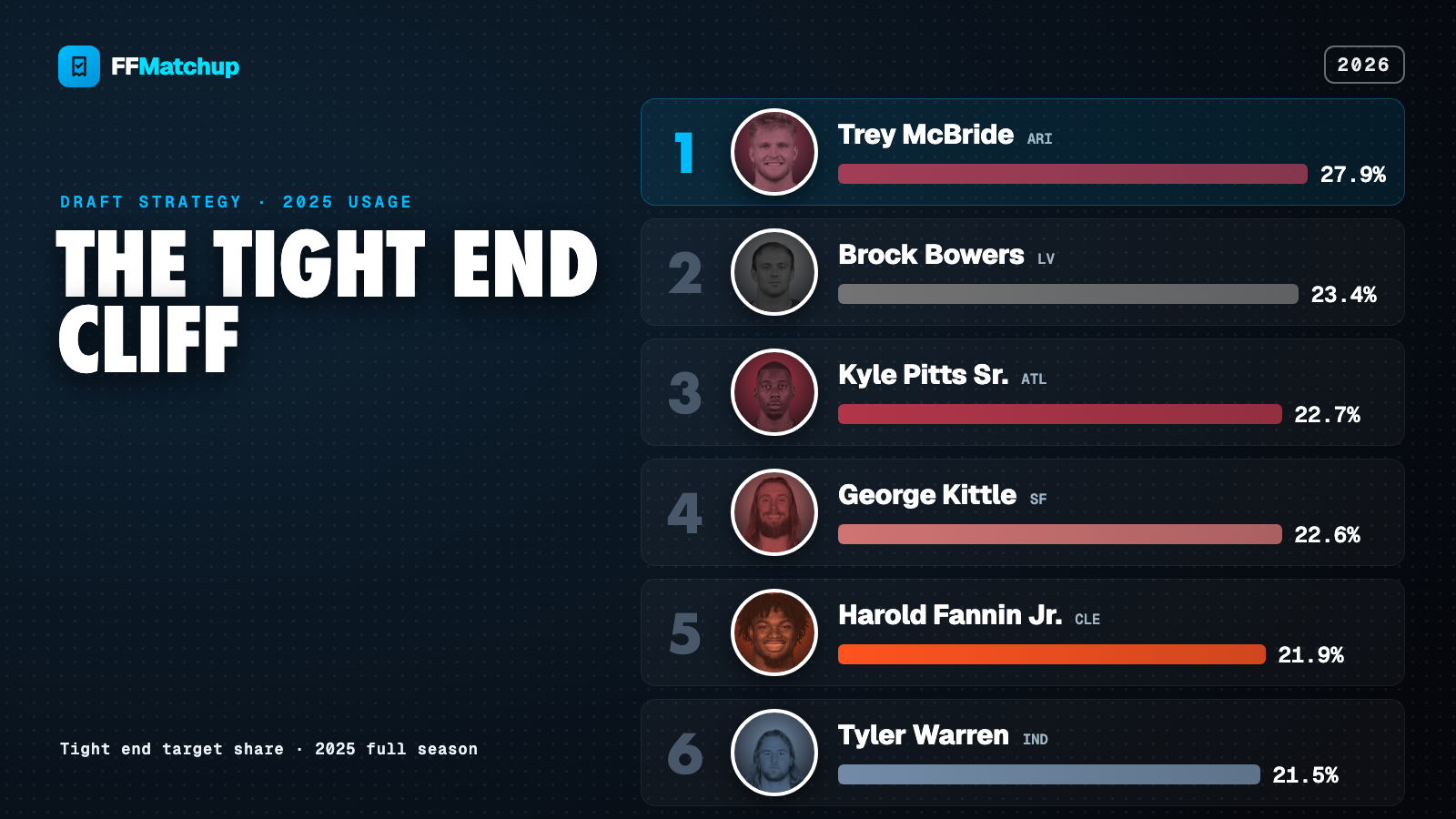
Positional scarcity 2026: where to invest early and where to wait
Scarcity, not talent, should drive your first five picks. The tight end position falls off a cliff after two names. Wide receiver does not. Here is how to draft the difference.
FFMatchup
PLAYER OUTLOOK
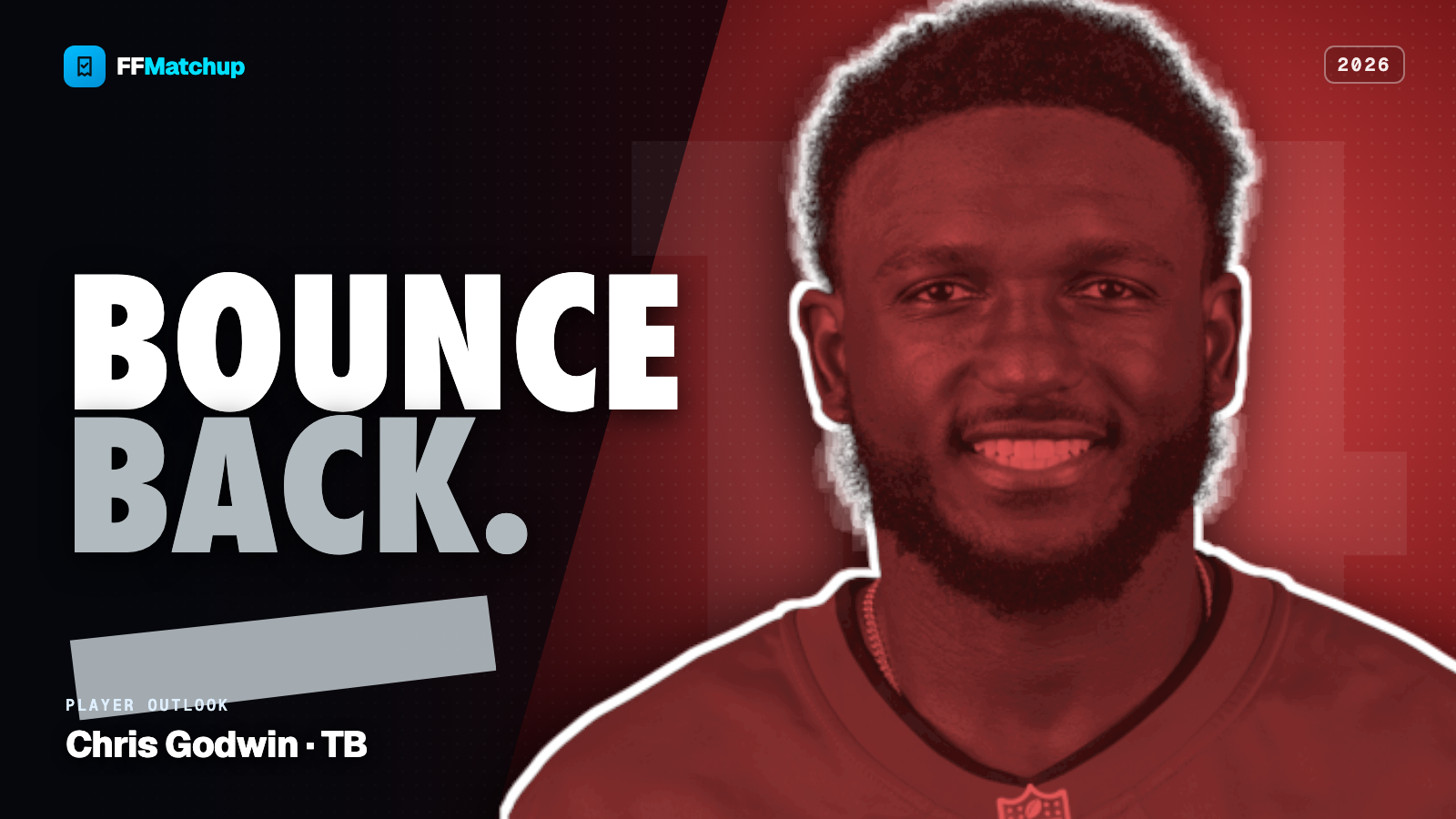
Chris Godwin Fantasy 2026: Is the Buccaneers Slot Receiver a Bounce-Back Buy After a Lost Season?
Godwin is a proven target-earner coming off a nine-game 2025, at a WR34 price. The bull case is a healthy possession receiver with a decade of production. The honest caps are the lost year and a Tampa Bay room where a rookie broke out as the new air-yards alpha.
FFMatchup
PLAYER OUTLOOK
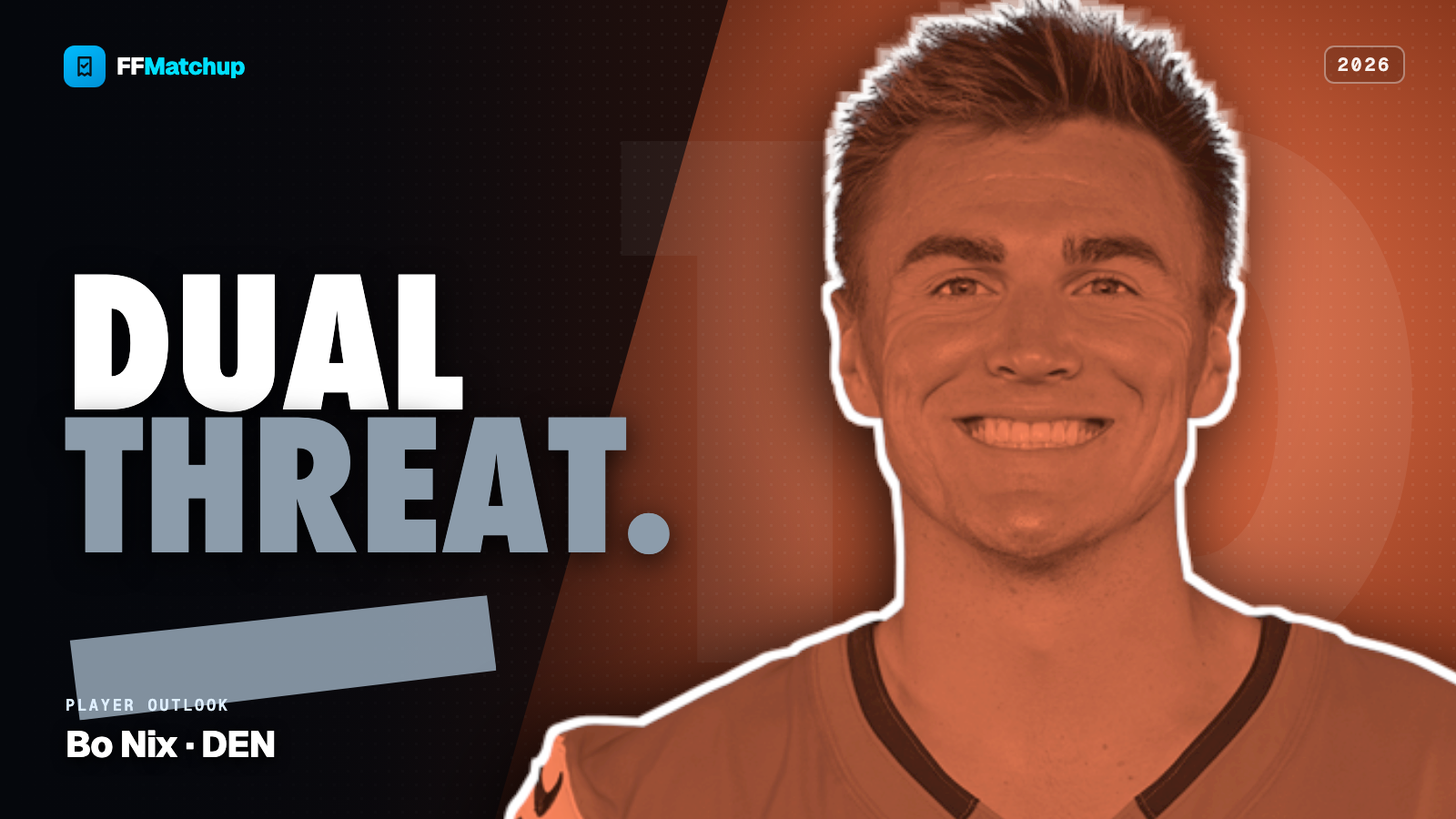
Bo Nix Fantasy 2026: Why the Broncos QB Is a Value at a QB13 Price
Nix produced like a low-end QB1 as a rookie and added a real rushing floor, yet he goes as a QB13. The bull case is full-season volume, legs, and an upgraded receiver room. The honest caps are a modest downfield profile and eleven interceptions.
FFMatchup
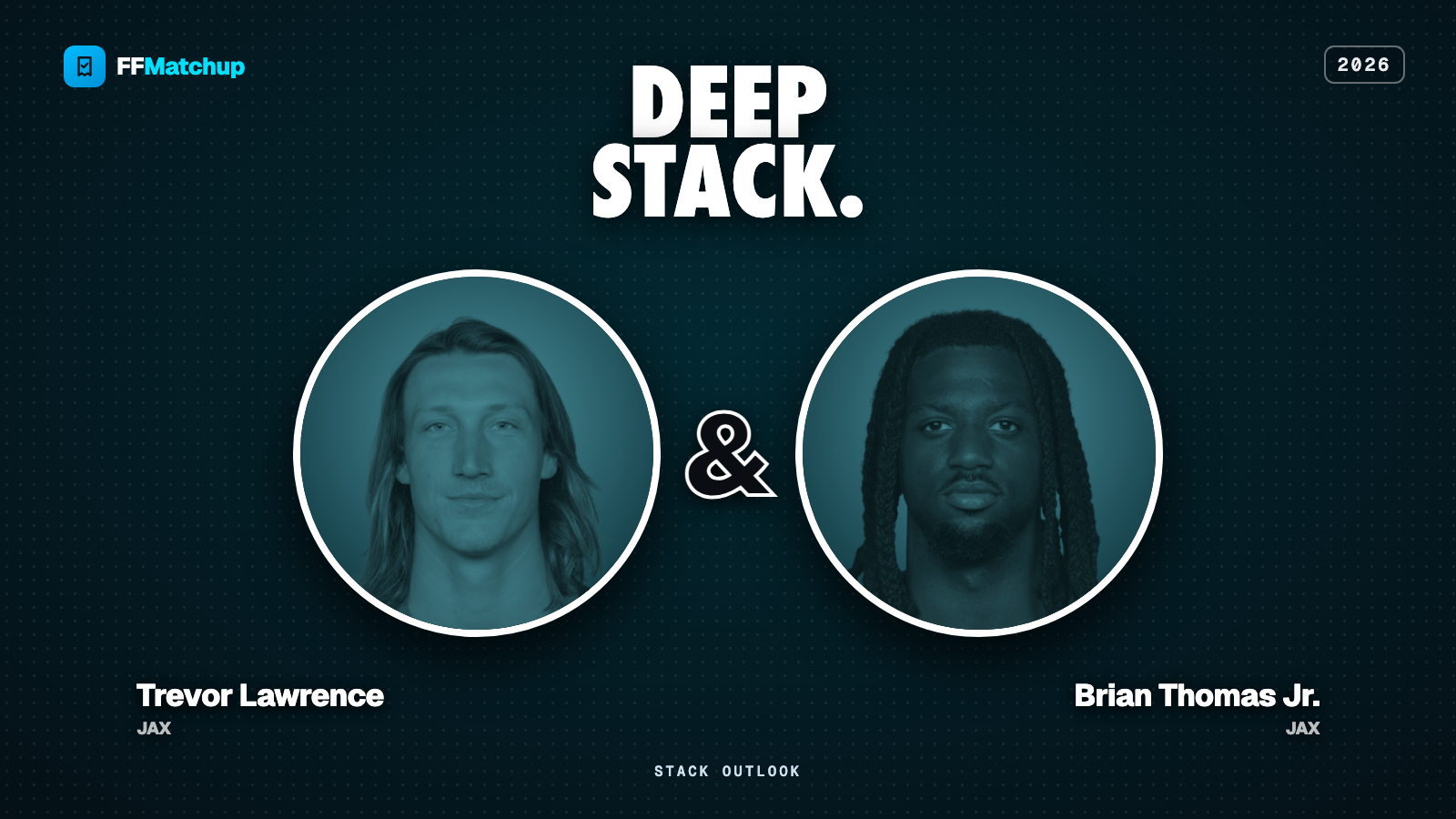
STACK OUTLOOK
Fantasy Stacks 2026: Trevor Lawrence and Brian Thomas Jr., the Jaguars Deep-Ball Pair
Thomas is Jacksonville's downfield alpha and Lawrence throws to that depth, a high-correlation pair where one player's ceiling week is often the other's too. The bull case is an elite air-yards fit and a two-touchdown receiver line due to bounce back. The honest cap is a newly crowded target room that can split the looks.
FFMatchup
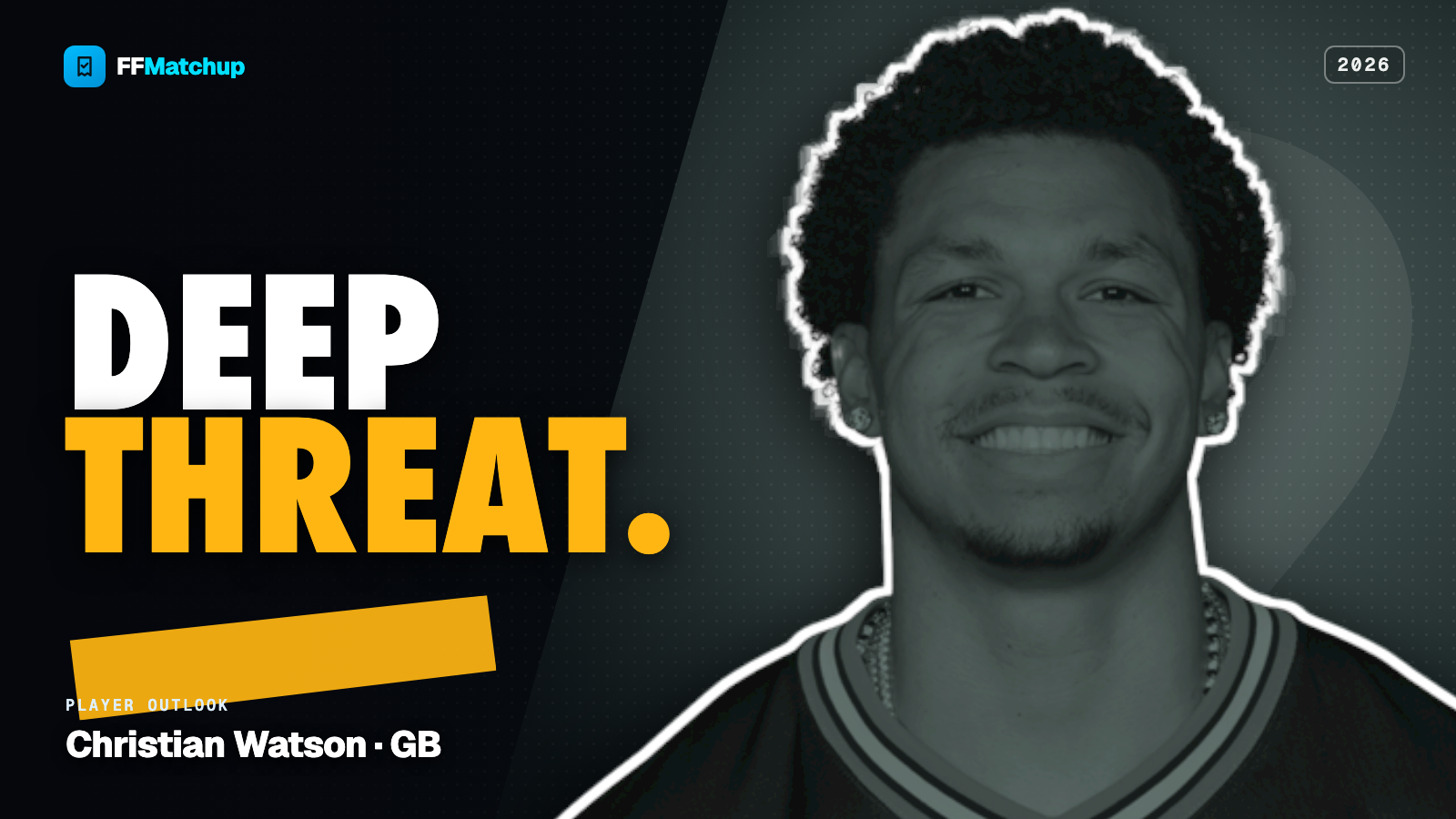
PLAYER OUTLOOK
Christian Watson Fantasy 2026: Can the Packers Deep Threat Break Out After Romeo Doubs Left?
Watson is the deepest route runner in Green Bay, and the receiver who led the room in air yards just left for New England. The bull case is a vacated downfield role and a deep-ball quarterback throwing to it. The honest caps are a ten-game 2025, an injury history, and a boom-bust profile our own start/sit model spent most of last year benching.
FFMatchup
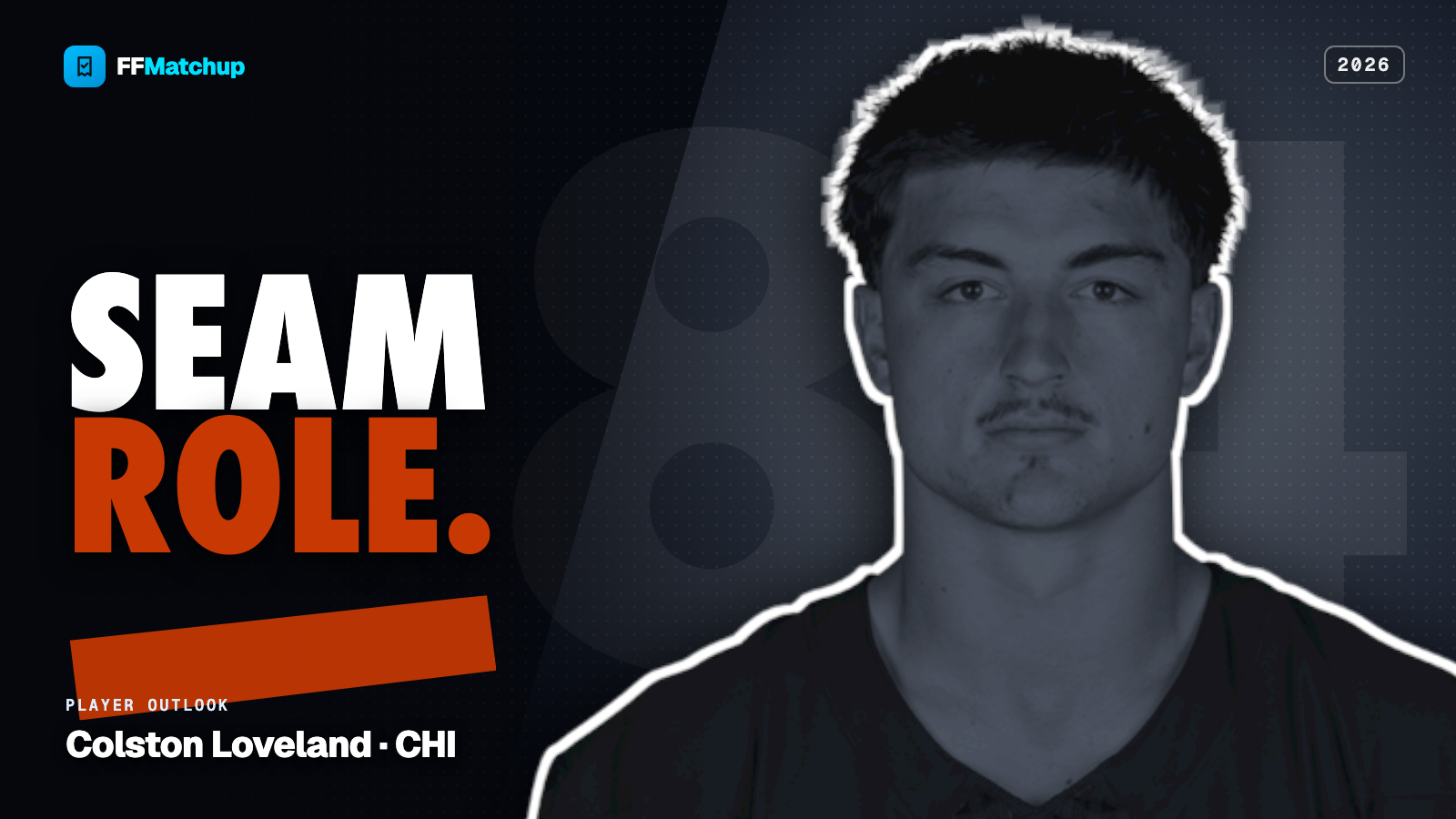
PLAYER OUTLOOK
Colston Loveland Fantasy 2026: Is the Bears Rookie TE a TE1 at a TE3 Price?
Loveland ran a real receiving role as a rookie, a genuine seam target with a red-zone job and a clear path to the Chicago tight end snaps. The bull case is target volume, a downfield role, and vacated work from a departed receiver. The honest cap is a TE3 price that already bakes in the leap and a target tree that still runs through the wideouts.
FFMatchup
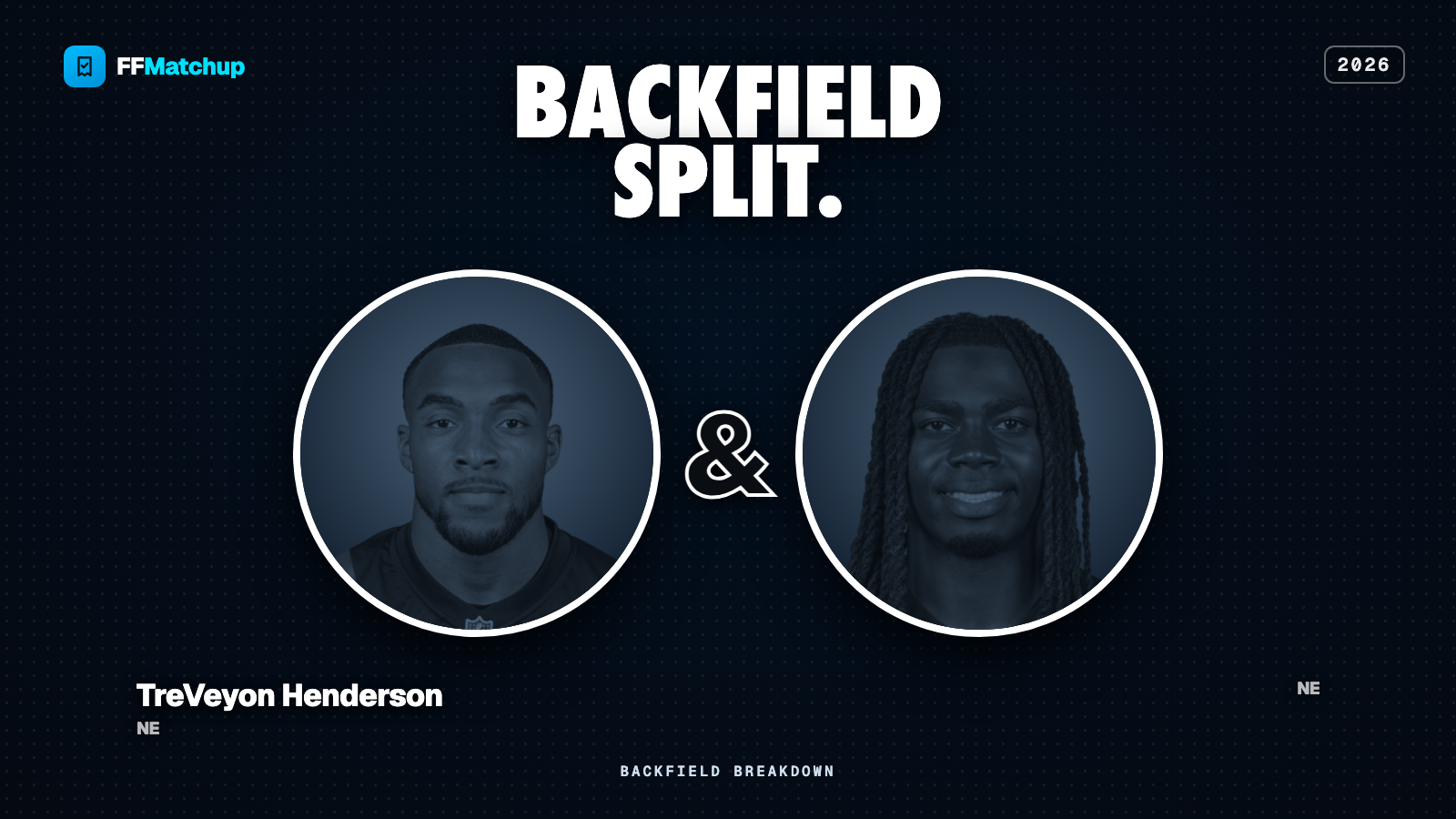
BACKFIELD BREAKDOWN
Patriots Backfield Fantasy 2026: TreVeyon Henderson or Rhamondre Stevenson?
New England's backfield is a genuine two-man committee, not a bell cow. The rookie has the bigger workload and the explosive carries. The veteran has the higher snap share and a shade more goal-line work. Both are drafted a round apart, and the tie-breaker is a coaching staff whose usage our data cannot project.
FFMatchup
PLAYER OUTLOOK
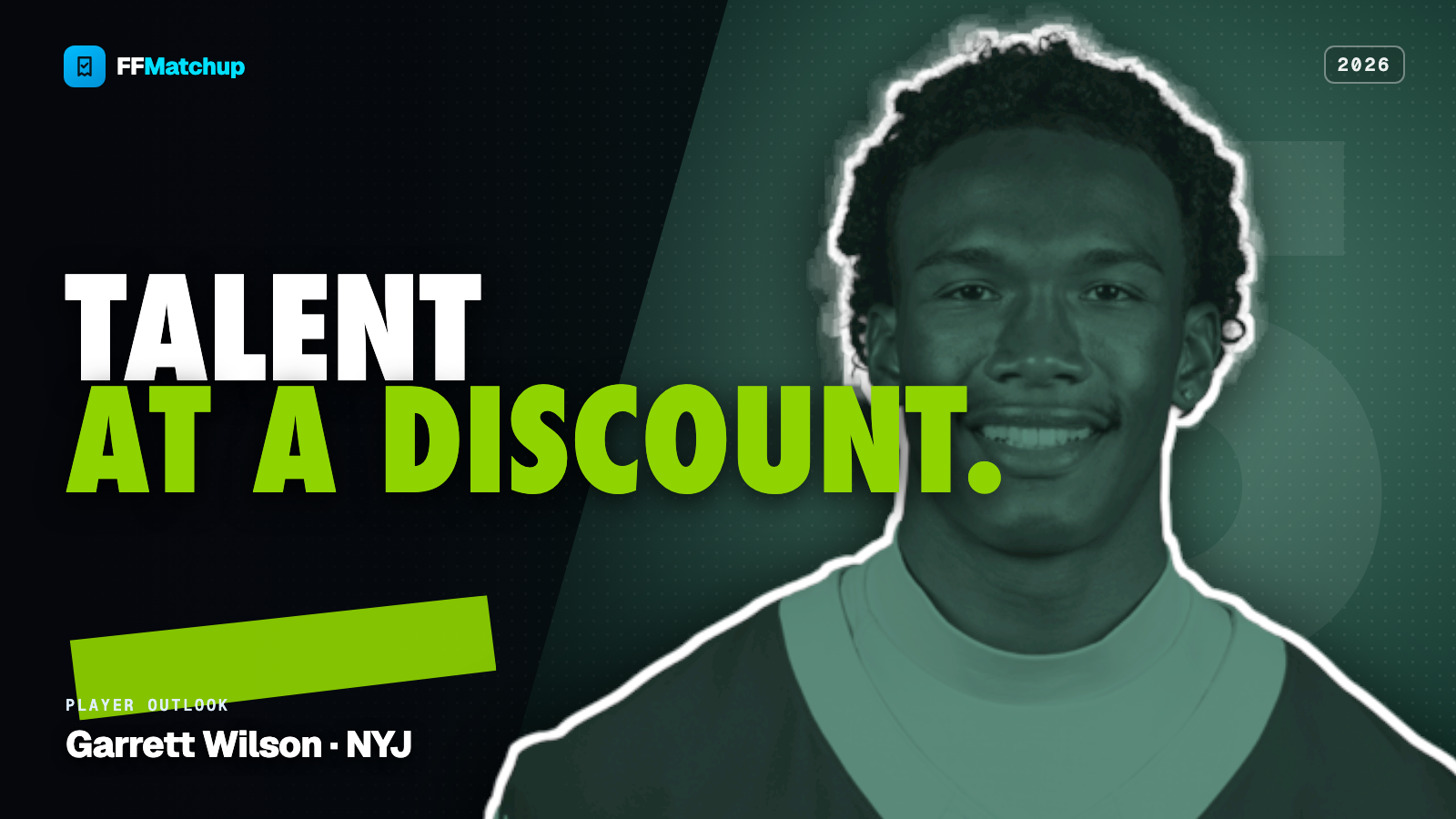
Garrett Wilson Fantasy 2026: Is the Jets WR a Buy-Low at WR16?
Wilson played only seven games in 2025 before his season ended, and the market has him at a WR16 price. The bull case is a clear alpha role and an 87 percent snap rate when healthy. The honest caps are a weak graded record, an emerging teammate, and a short-area quarterback in Geno Smith whose game does not push the ball down the field.
FFMatchup

PLAYER OUTLOOK
Cooper Kupp Fantasy 2026: Is the Seahawks WR a WR83 Steal?
The market has all but written Cooper Kupp off at a WR83 price after a modest first year in Seattle. The counting stats stayed quiet, and our own graded start/sit calls spent most of 2025 correctly telling you to bench him. What is left is a proven route-runner in a real possession role going for free, with a clear alpha ahead of him and a two-touchdown ceiling to respect.
FFMatchup
PLAYER OUTLOOK
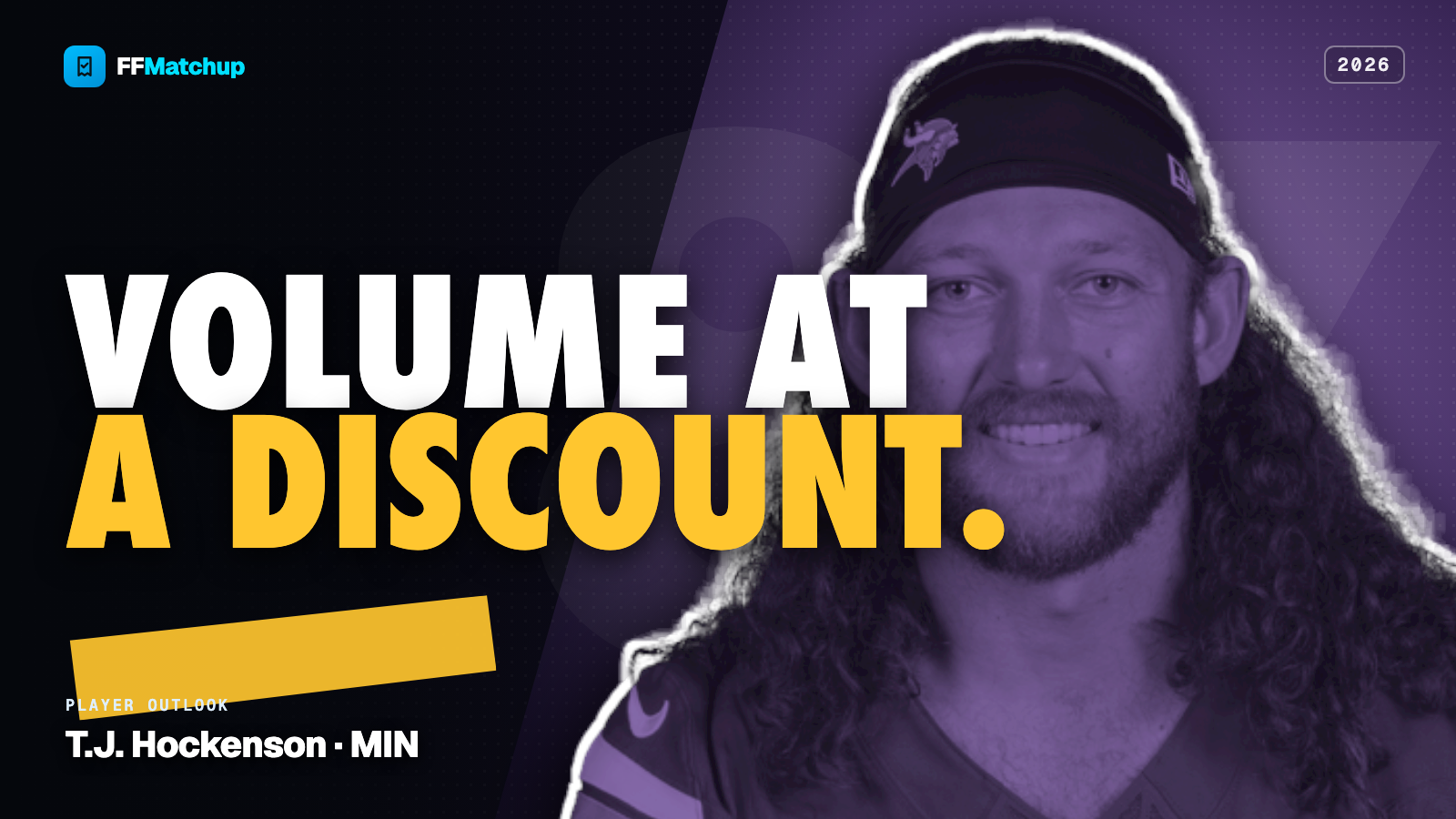
T.J. Hockenson Fantasy 2026: Is the Vikings TE a Buy-Low at TE22?
Hockenson ran a near-full 2025 as a starting NFL tight end, and the market has faded him to a TE22 price. The bull case is uncontested every-week volume at a stream-level cost. The honest caps are a weak graded record, modest scoring, and a target tree that runs through a true WR1.
FFMatchup
STACK PLAY
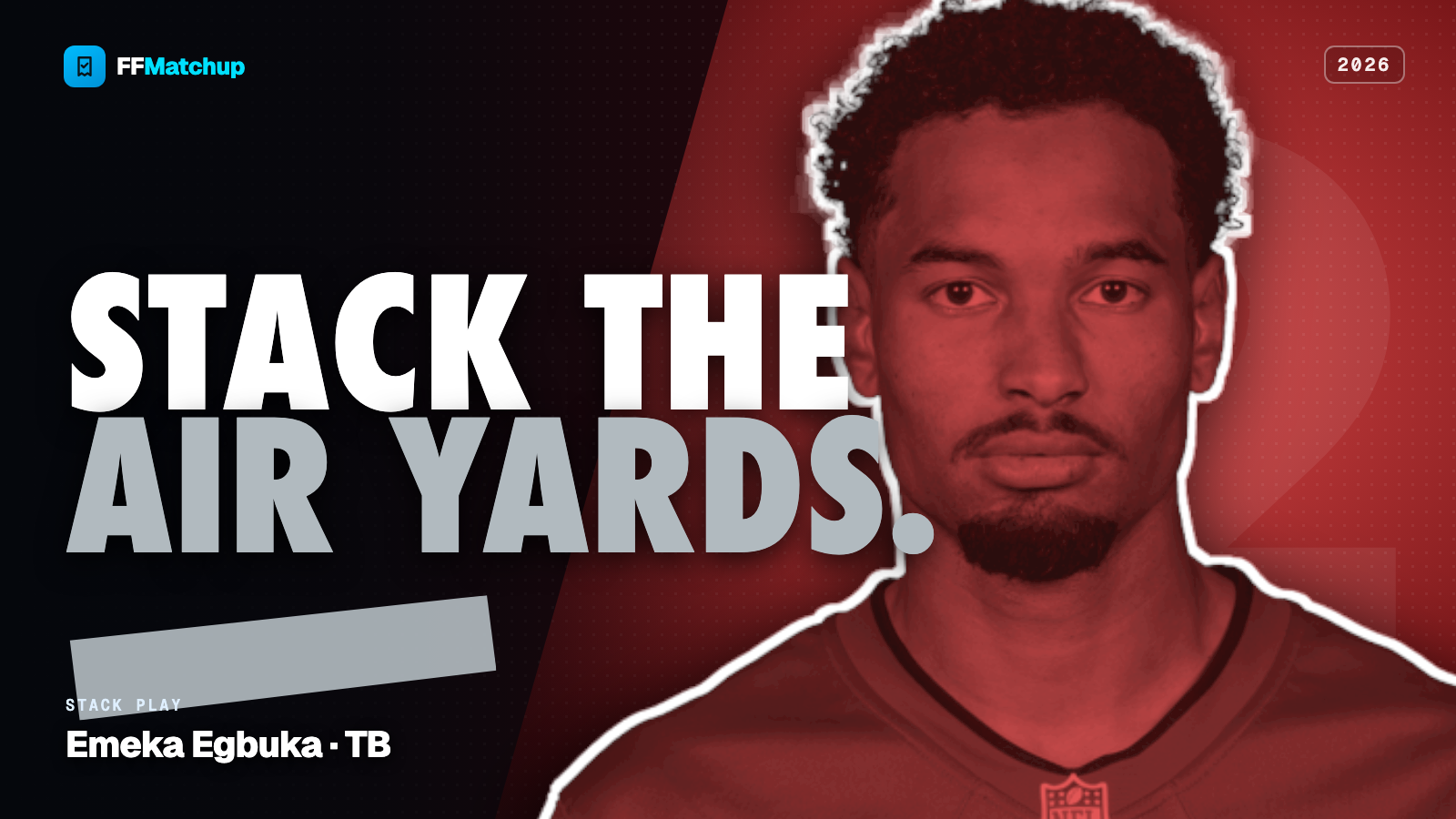
Baker Mayfield and Emeka Egbuka: Tampa Bay's High-Correlation Fantasy Stack for 2026
Emeka Egbuka led all of Tampa Bay in air-yards share as a rookie, and the quarterback feeding him throws it down the field. When a passer's aDOT and his top receiver's aDOT line up, their fantasy weeks rise and fall together, which is exactly what a stack is built to capture. The honest caps are a weak graded record and a target tree that gets more crowded when the veterans are healthy.
FFMatchup
PLAYER OUTLOOK
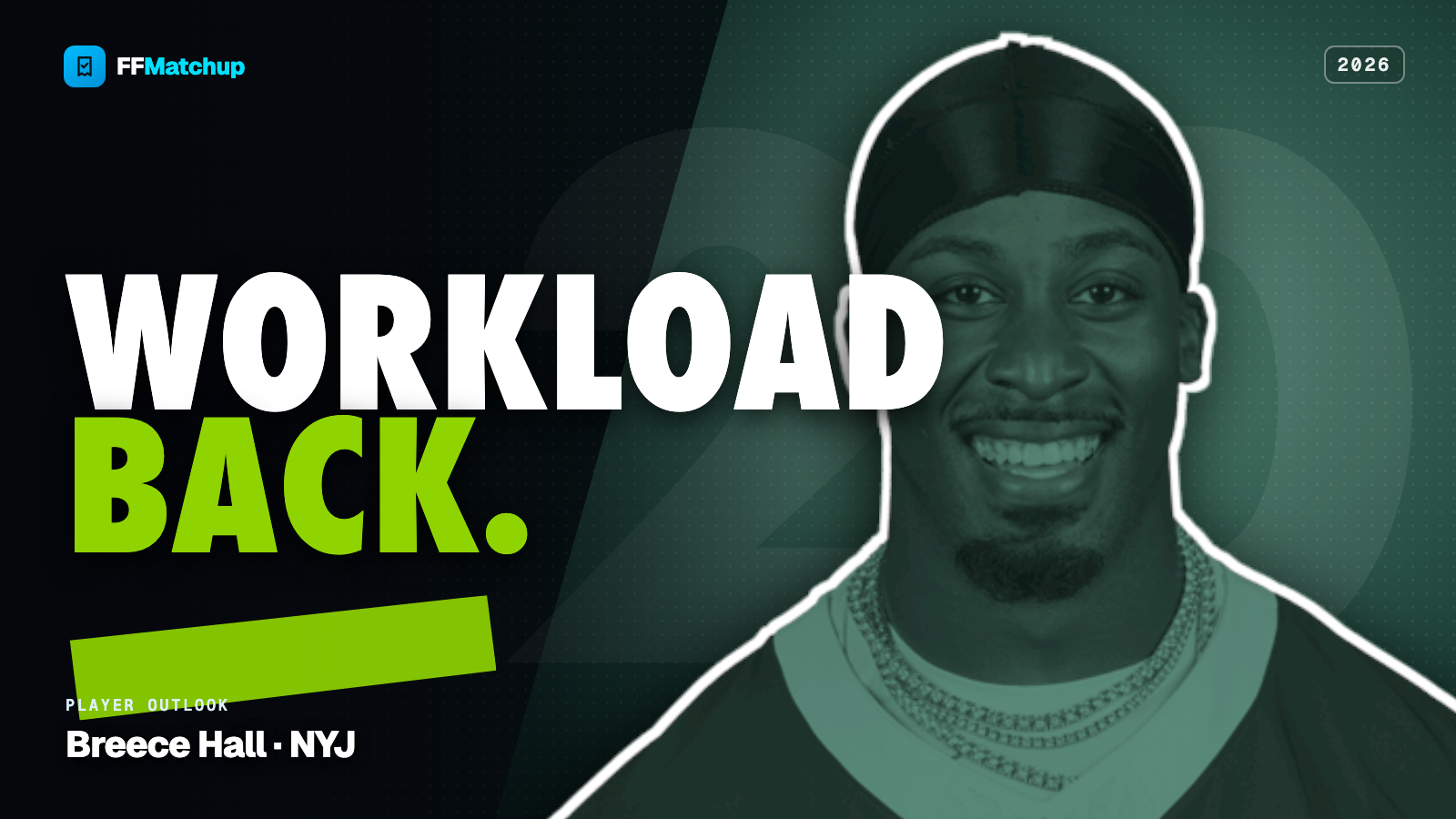
Breece Hall Fantasy 2026: Is the Jets RB Still a Buy at RB14?
Hall carried a full three-down workload in 2025, 243 rushes and 48 targets over 16 games, and the market has him at an RB14 price. The bull case is the volume. The honest cap is a scoring role that produced only four rushing touchdowns.
FFMatchup
PLAYER OUTLOOK
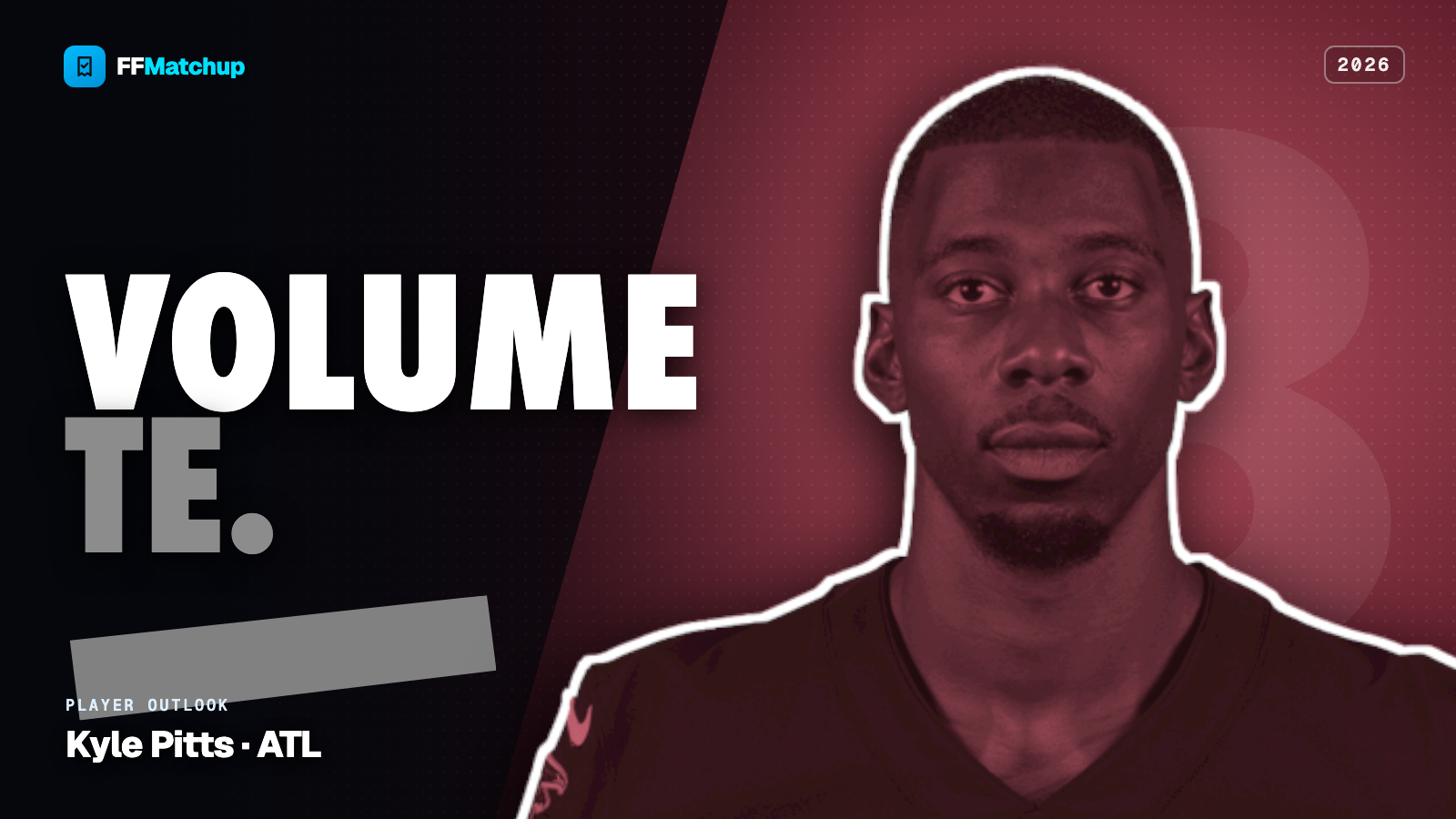
Kyle Pitts Fantasy 2026: Is the Falcons TE a Value at TE7?
Pitts finally posted a full-season target-volume line in 2025, a team-high 118 targets and 928 yards over 17 games, and the market has him at a TE7 price. The bull case is the volume. The honest cap is five touchdowns and a crowded target tree.
FFMatchup
PLAYER OUTLOOK
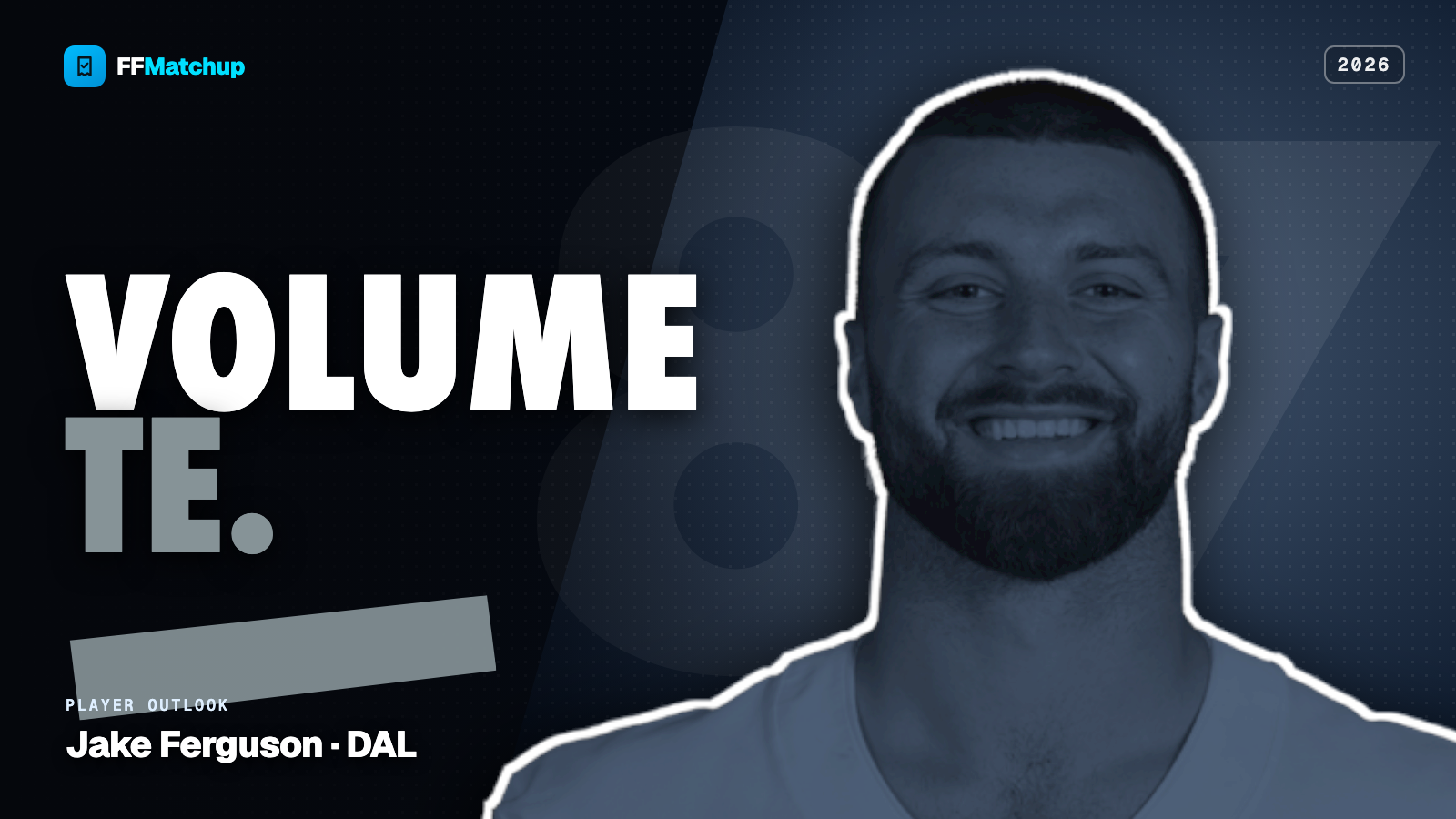
Jake Ferguson Fantasy 2026: Is the Cowboys TE a Value at TE11?
Ferguson posted a full-season TE1 line in 2025, 102 targets, 82 catches and 8 touchdowns, and he finished TE10 per game at a TE11 price. He owns the Dallas tight-end job outright. The catch is that he does it behind two 100-target receivers who own the air.
FFMatchup
PLAYER OUTLOOK
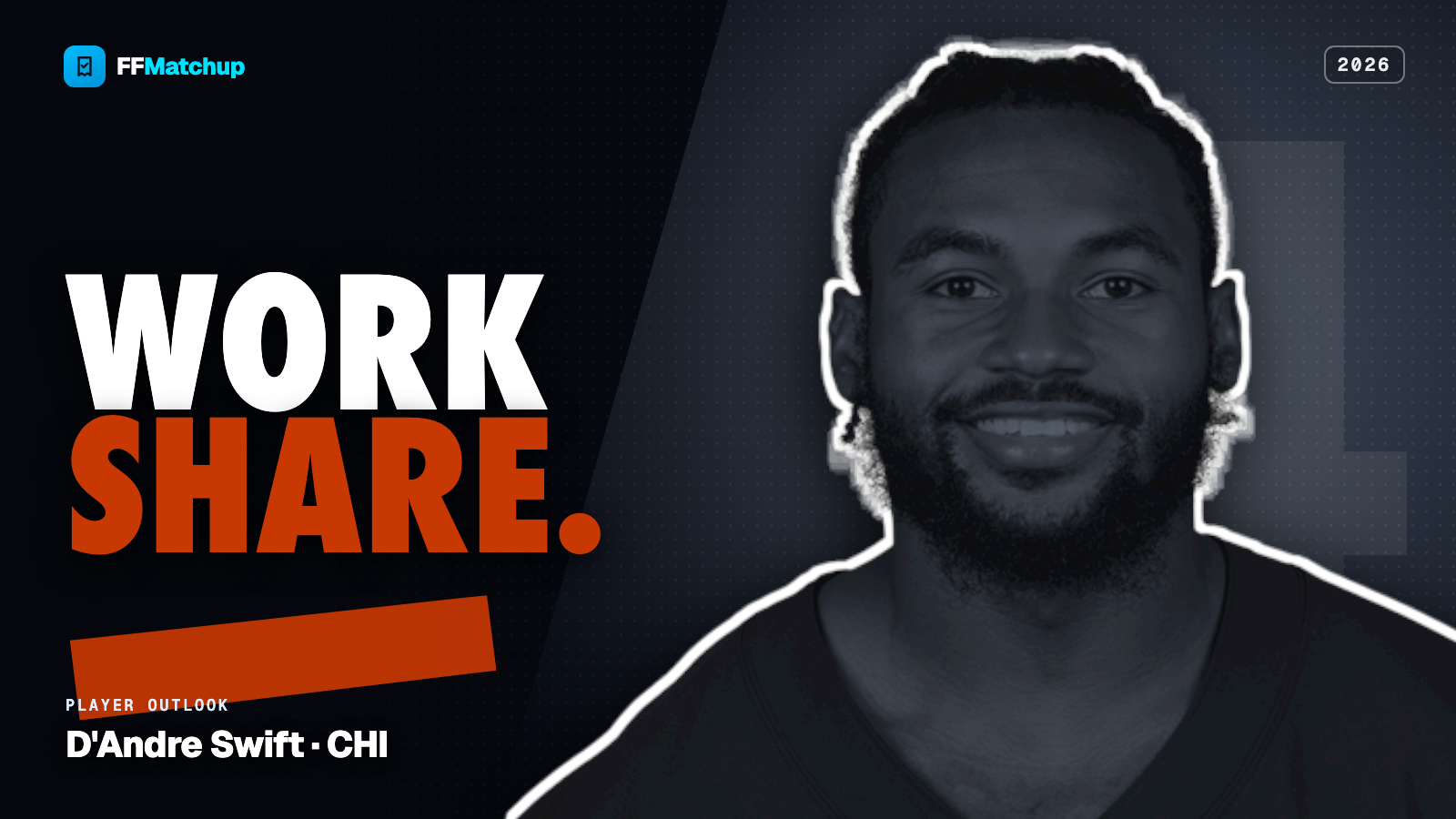
D'Andre Swift Fantasy 2026: Is the Bears RB a Buy at RB21?
Swift ran a genuine every-down line in 2025, carrying 223 times for 1,087 yards and 9 scores while catching 34 passes, and he finished RB17 per game at an RB21 price. The workload is real. The honest question is whether a rookie committee back and a new coaching staff turn the bell cow into a timeshare.
FFMatchup
PLAYER OUTLOOK
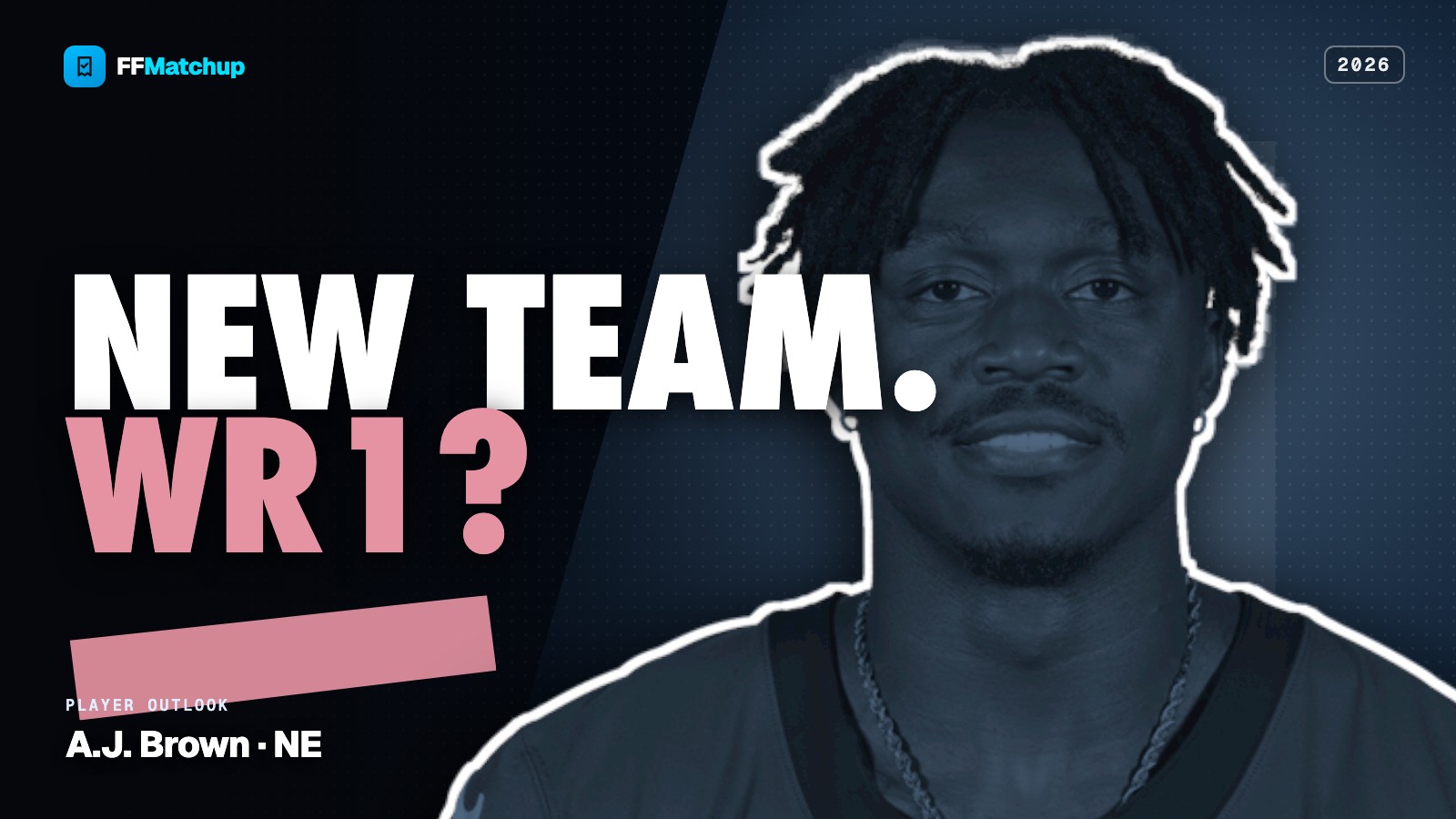
A.J. Brown in New England: Can Drake Maye Support a WR1?
Brown lands in New England as the clear alpha, and the quarterback is the good news: Drake Maye threw for 31 touchdowns on a 9.13 average depth of target as a sophomore, a downfield profile that fits Brown's game. The brake is the offense around them, a low team total that leans run and gives its red zone to the backs. Here is the honest WR1 case at a WR8 price.
FFMatchup
PLAYER OUTLOOK
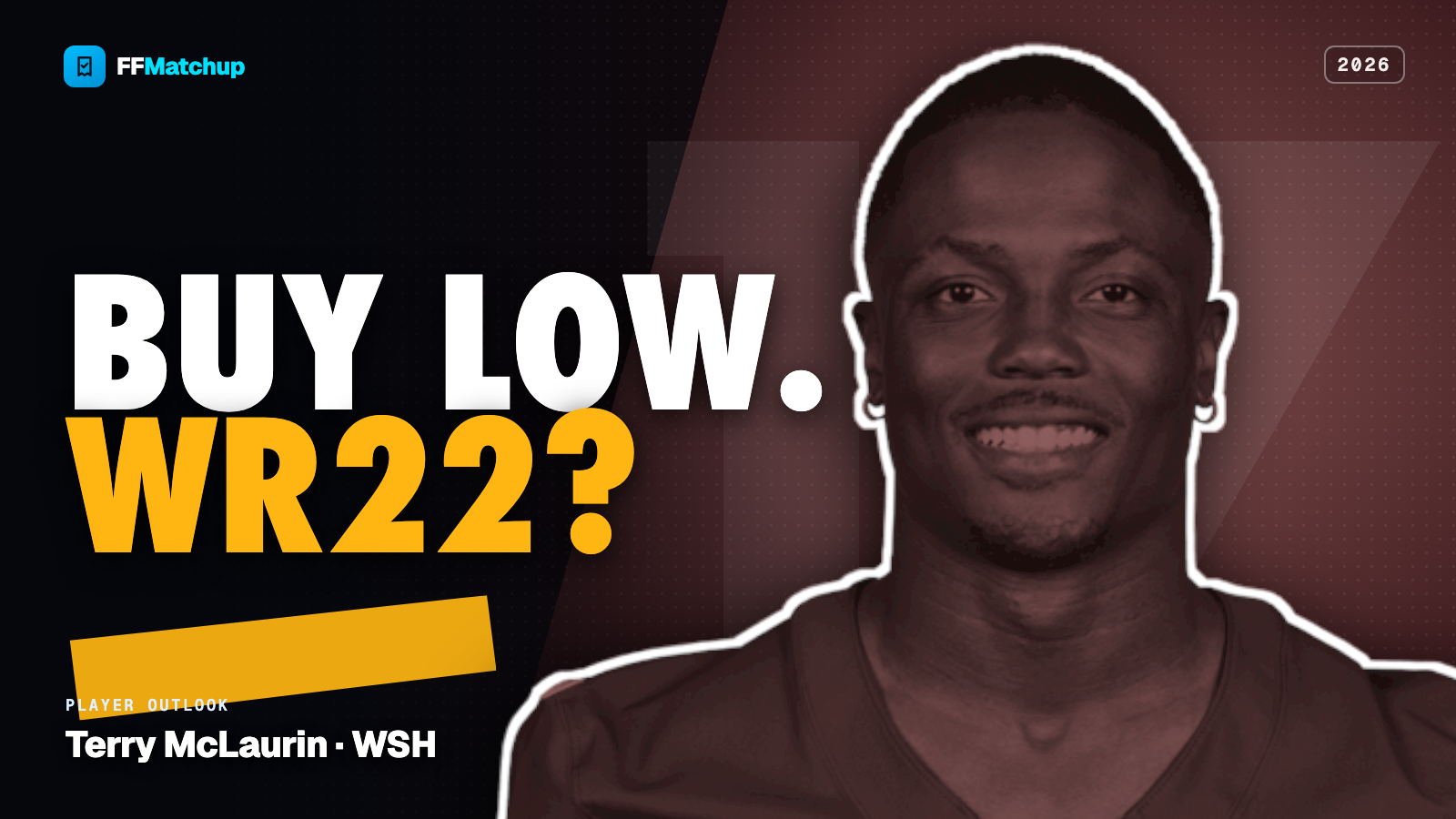
Terry McLaurin Fantasy 2026: Is the Commanders WR a Buy-Low at WR22?
Terry McLaurin missed a third of 2025, and so did his quarterback, which is exactly why the market has him at a WR2 price. He is still the clear downfield alpha in Washington, and the receiver Washington added works underneath, not over the top. At a WR22 cost you are buying the deep-target role and betting on health. The 10-game sample and a modest graded record are the honest caps.
FFMatchup
PLAYER OUTLOOK
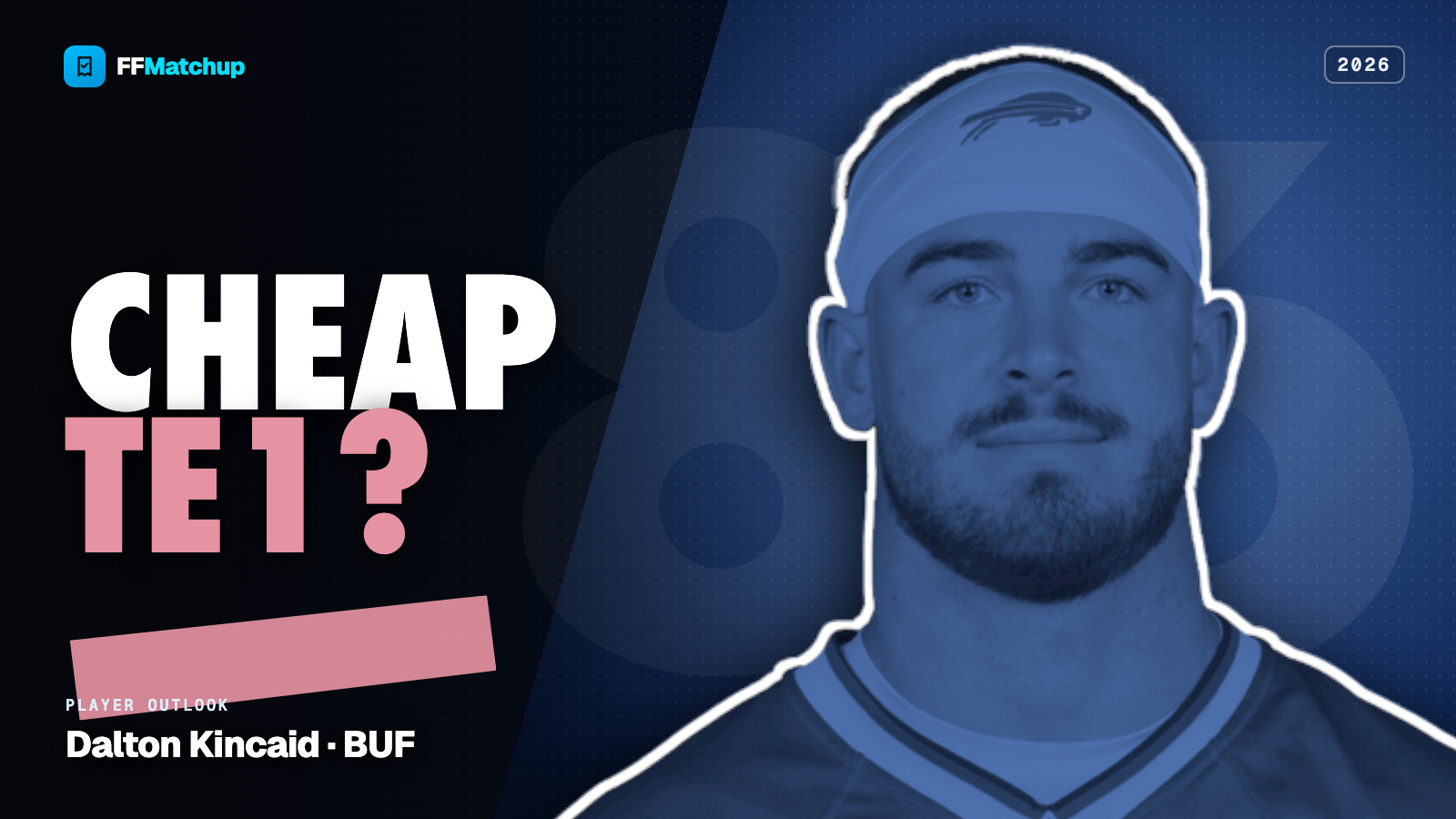
Dalton Kincaid Fantasy 2026: Is the Bills TE a Value at TE12?
Dalton Kincaid is priced like the last tight end you draft, a TE12 tag on an every-down athlete in a high-scoring Buffalo offense. The bull case is a target share with real room to grow. The bear case is the part the price already knows: a thin 49-target 2025, a boom-or-bust graded record, a snap count that was not every-down, and a red-zone role that belongs to the other Bills tight end.
FFMatchup
PLAYER OUTLOOK
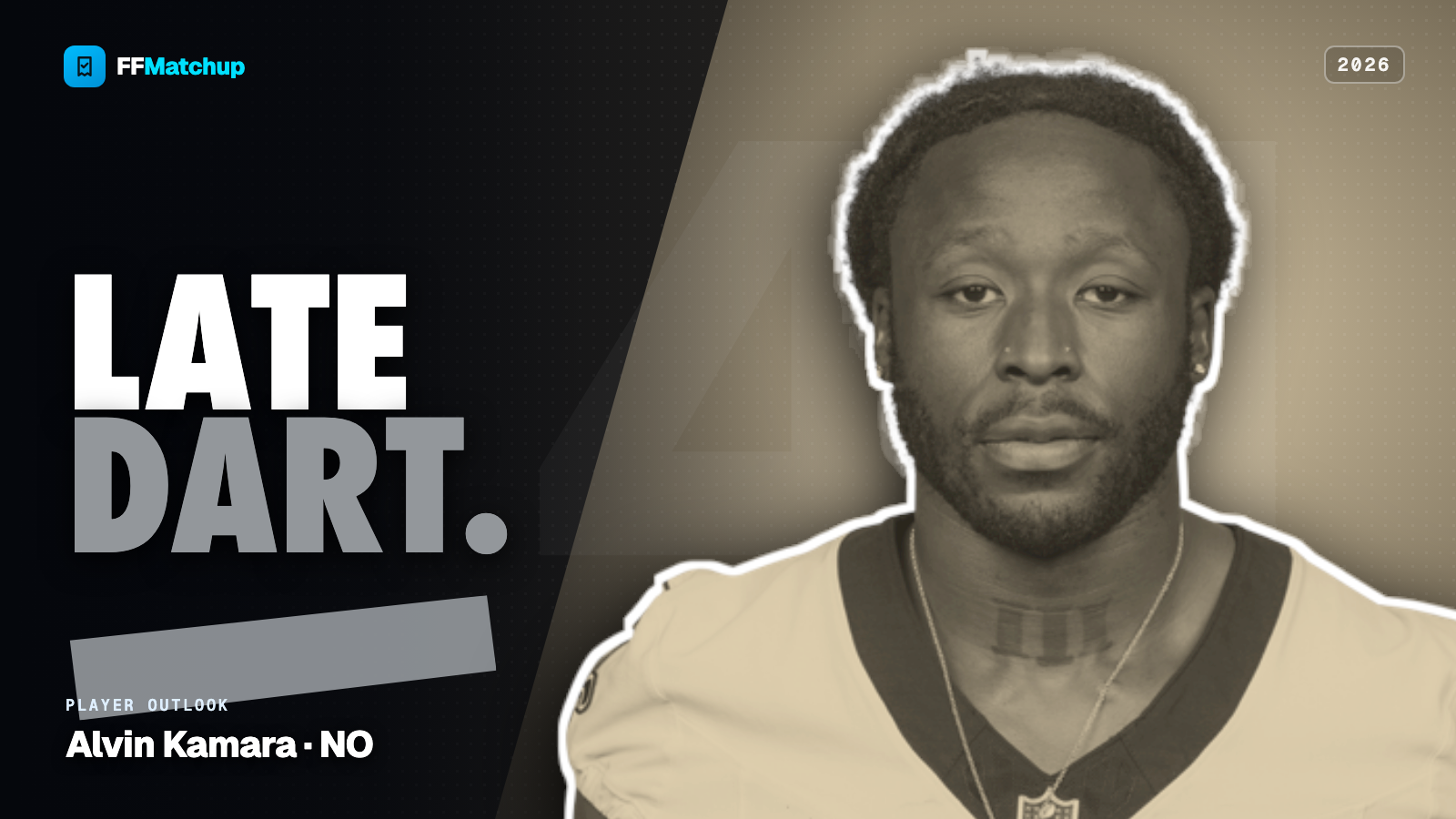
Alvin Kamara Fantasy 2026: Is the Saints RB Worth an RB48 Dart?
Alvin Kamara is still a useful three-down skill set, but 2025 was a shadow of his peak: one rushing touchdown across 11 games and a scoring line that cratered. Now the depth chart lists him second, behind a workhorse New Orleans imported to lead the backfield. At an RB48 price you are buying the pass-game floor and betting the role holds. The committee and the age are the honest caps.
FFMatchup
PLAYER OUTLOOK
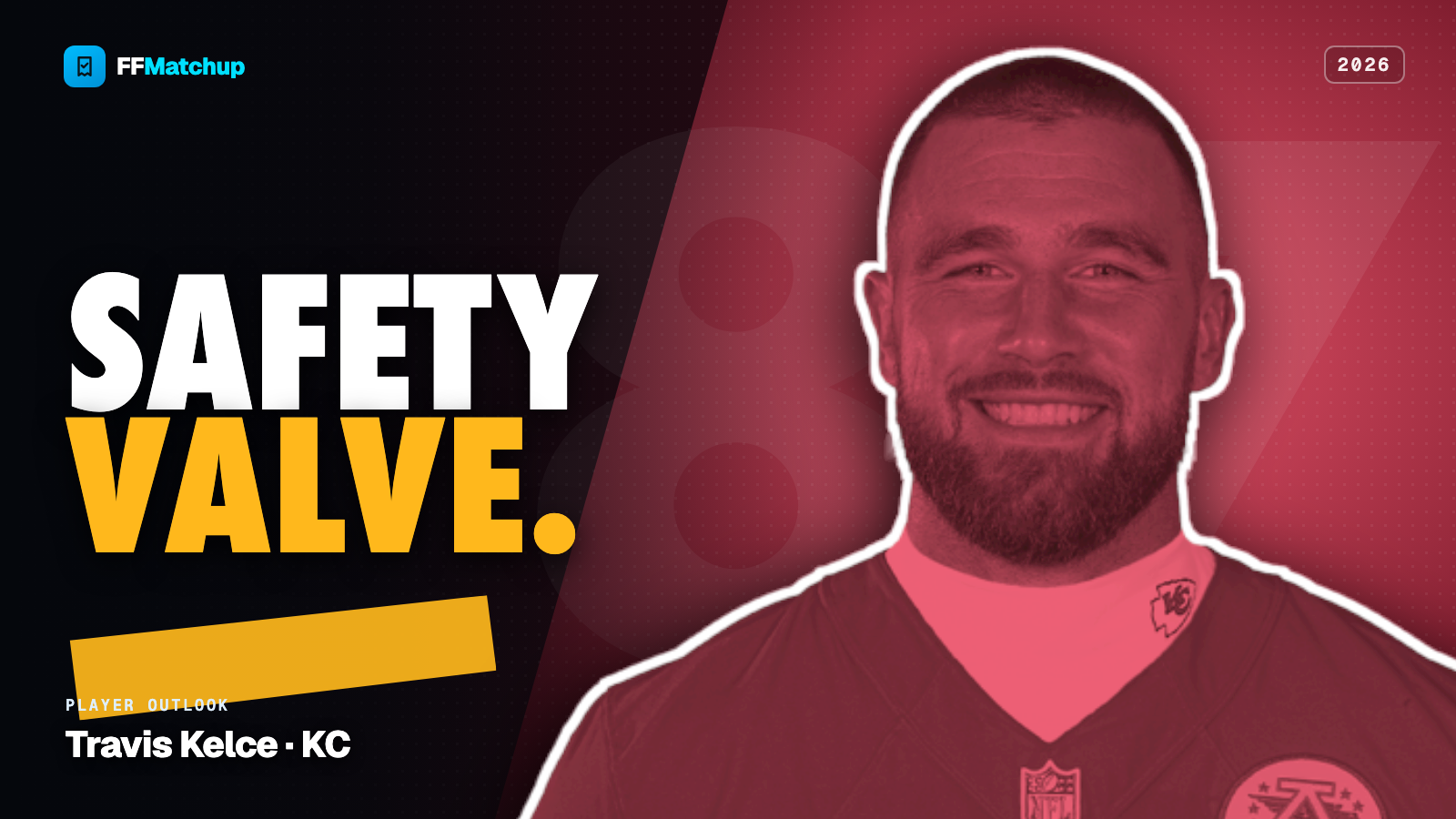
Travis Kelce Fantasy 2026: Is the Chiefs TE Still Worth a TE9 Price?
Travis Kelce is past his peak but still a full-time role in an elite offense. In 2025 he ran a possession game more than a downfield one, a durable 17-game floor with modest yards per catch. At a TE9 price you are buying volume and reliability, not the ceiling that made him a first-rounder. A younger, faster Kansas City target tree that now eats the red zone and the deep ball is the honest cap.
FFMatchup
PLAYER OUTLOOK
DeVonta Smith Fantasy 2026: Does A.J. Brown's Exit Make Him a WR1?
DeVonta Smith was already a near-equal downfield alpha in Philadelphia, second only to A.J. Brown in air-yards share, and with Brown gone he inherits the biggest vacated target share in the league. The bull case is a clear alpha role. The honest caps are a run-heavy Jalen Hurts offense, a red-zone role that runs through Dallas Goedert, and a boom-or-bust graded record.
FFMatchup
PLAYER OUTLOOK
Tee Higgins Fantasy 2026: Is the Bengals WR2 Worth a WR18 Price?
Tee Higgins scored 11 touchdowns as the nominal second receiver in Cincinnati and is going as a WR18 for 2026. The bull case is the red-zone role and a healthy Joe Burrow returning. The honest cap is a games-missed history, a boom-or-bust graded record, and a target hierarchy that runs through Ja'Marr Chase first.
FFMatchup
DRAFT STRATEGY
Draft the Role, Not the Line: The Best Fantasy Bets on 2026's Worst Offensive Lines
Our new offensive-line ranks put Cleveland, the Chargers, Las Vegas, Kansas City and Minnesota among the shakiest fronts in football. History says it barely dents the right players: top-10 receivers and tight ends come off bottom-10 lines every year, and even rookies pull it off. Here are the prospects whose usage travels, and the one group you should still fade.
FFMatchup
PLAYER OUTLOOK
James Cook Fantasy 2026: Is the Bills RB Worth an RB7 Price After 14 Touchdowns?
James Cook was a true bell cow in 2025, pairing 300-plus carries with a strong graded record and a lead-back goal-line role. The market prices him as a top-seven back. The bull case is the volume and the receipts. The honest cap is a 14-touchdown scoring line that has to repeat with Josh Allen vulturing the goal line.
FFMatchup
PLAYER OUTLOOK
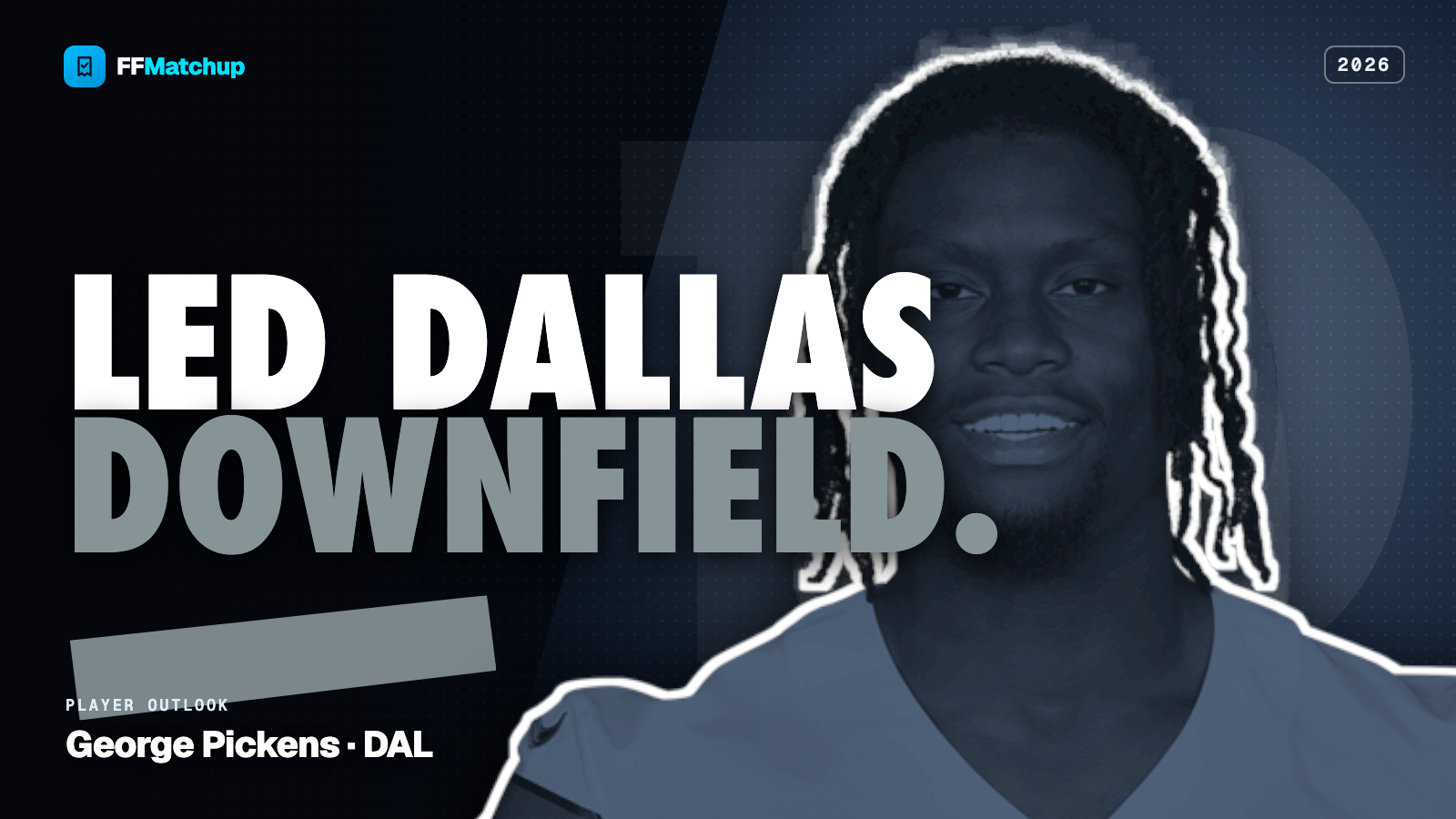
George Pickens Fantasy 2026: Can the Cowboys WR Repeat a 1,400-Yard Season?
George Pickens posted a 1,429-yard season in Dallas and led the team in air-yards share, going as a WR10 for 2026. The bull case is the downfield volume and the full-season availability. The honest cap is a boom-or-bust graded record and a healthy CeeDee Lamb reclaiming targets in the same room.
FFMatchup
QB ↔ WR FIT
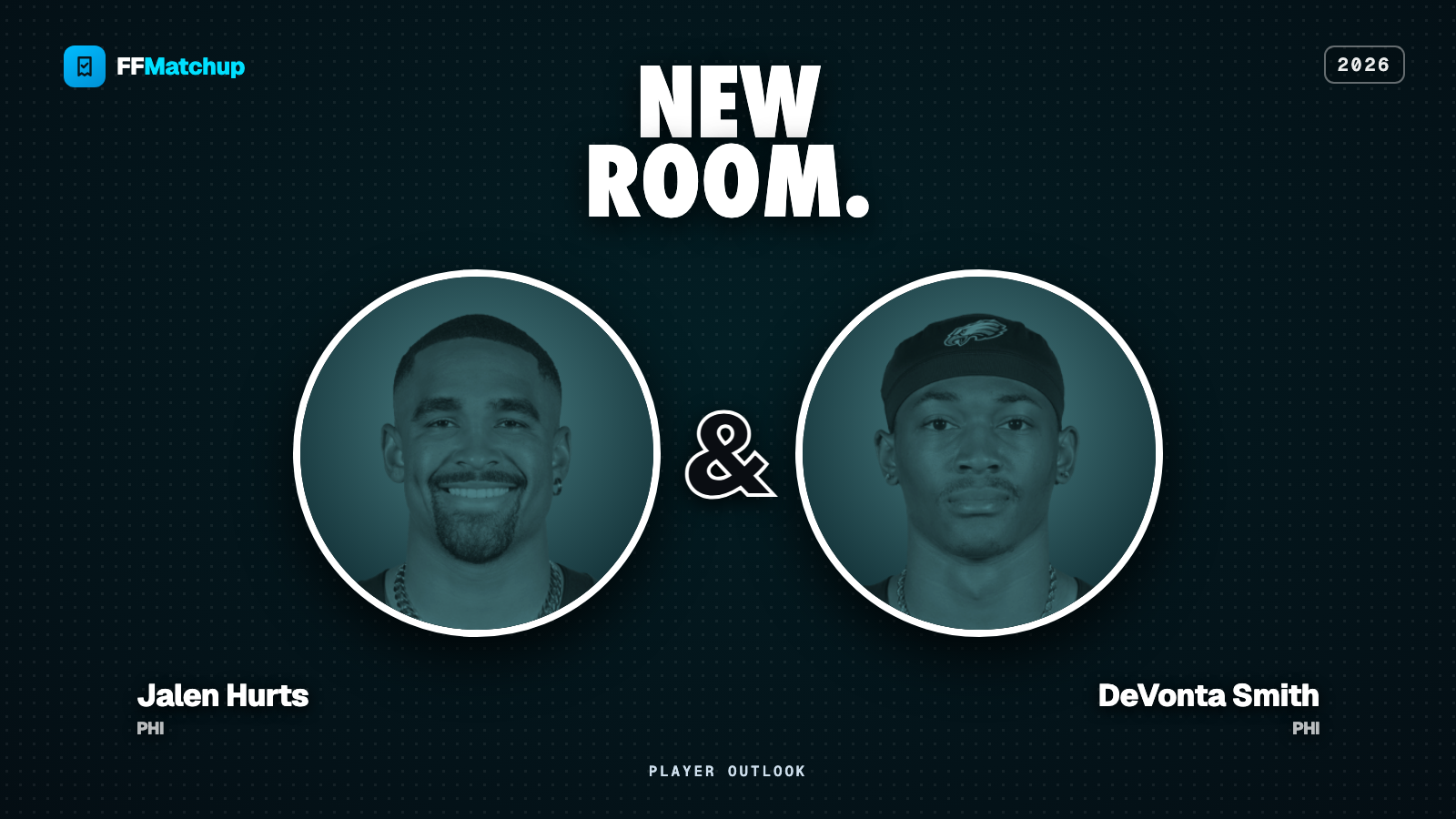
Jalen Hurts, aDOT, and DeVonta Smith's WR1 Case in Philly's New Room
A.J. Brown is in New England and Jahan Dotson is gone, so DeVonta Smith inherits the alpha role and 37.7% of the vacated air yards. The catch is the man throwing it: Jalen Hurts ran a 9.01 average depth of target on low volume in a run-first, quarterback-rushing offense. Here is the honest WR1 case at a WR13 price.
FFMatchup
PLAYER OUTLOOK
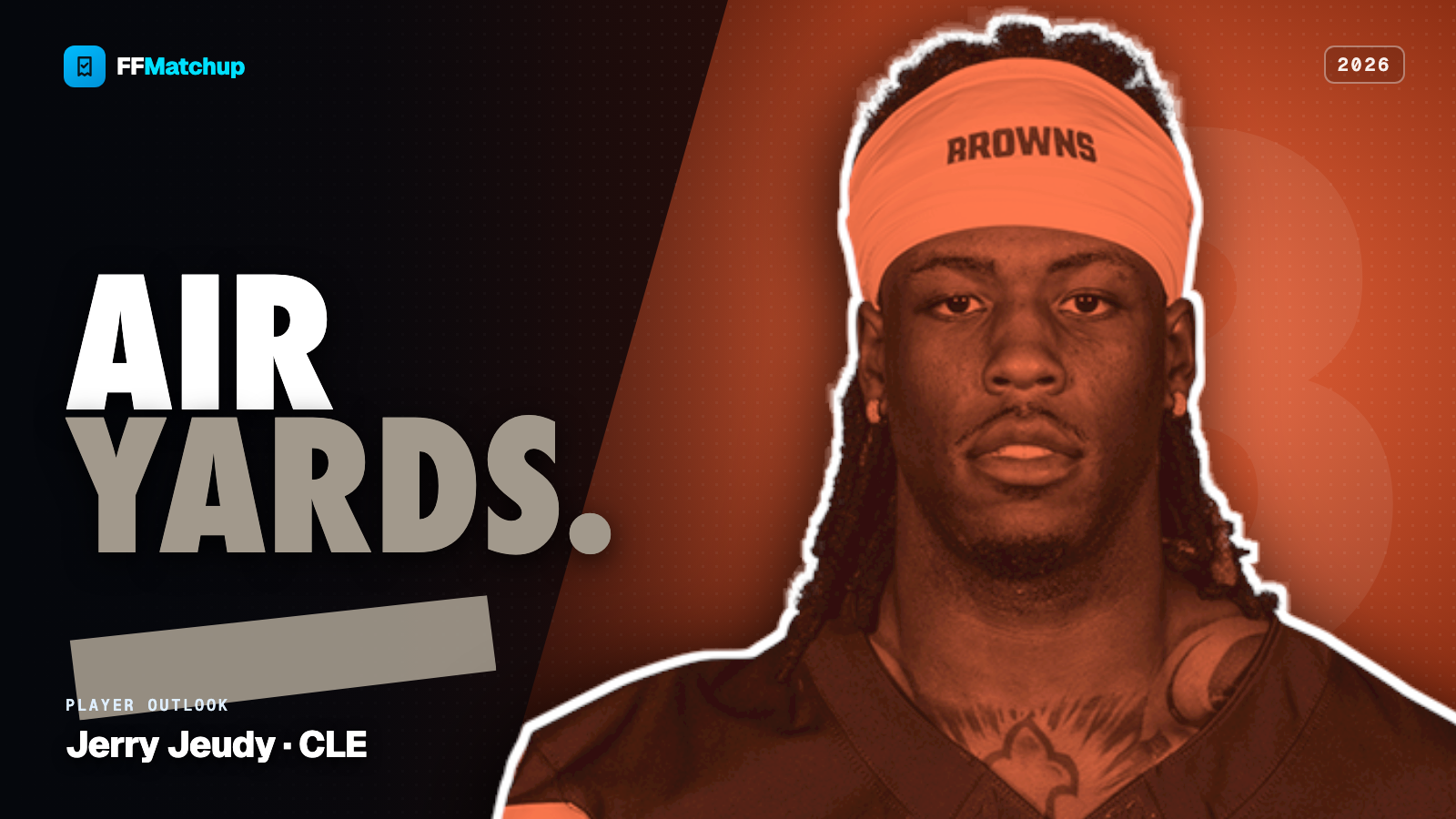
Jerry Jeudy Fantasy 2026: Is the Browns WR a Late-Round Buy at WR59?
Jerry Jeudy led Cleveland in air yards and drew 106 targets in 2025, and our graded record on him is strong. Then the scoring collapsed to two touchdowns behind a quarterback carousel that has still not settled. The role and the receipts say buy. The quarterback room says know what you are buying. The honest read on a WR59 dart.
FFMatchup
PLAYER OUTLOOK
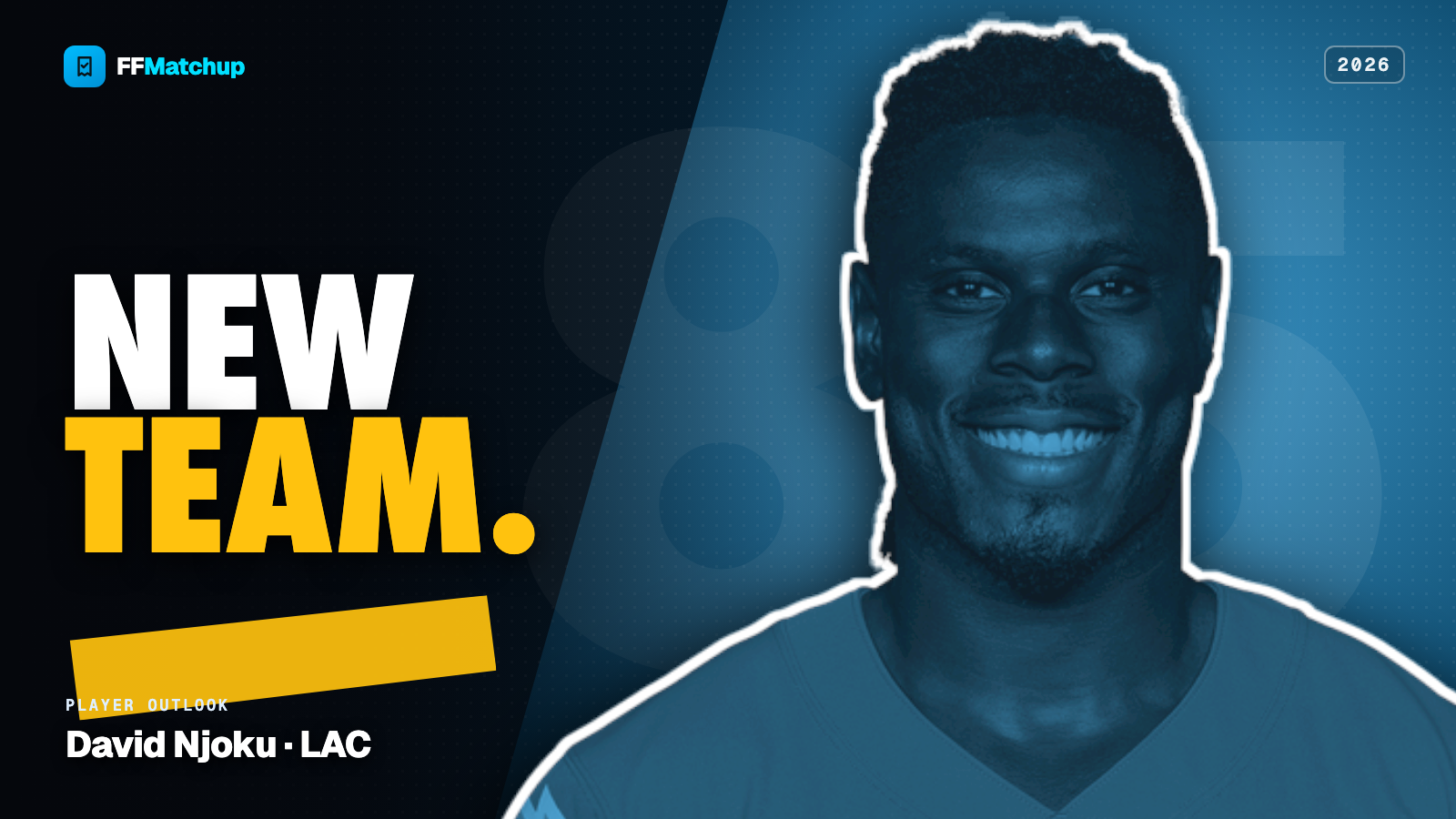
David Njoku Fantasy 2026: Does a Move to the Chargers Unlock the Tight End?
David Njoku leaves a broken Cleveland passing game for Justin Herbert and the Chargers, and the quarterback upgrade is real. The catch is a quiet 2025 line, a shallow role, and a Los Angeles tight end room that already has Oronde Gadsden and his 664 yards. The honest two-sided read on a deep TE30 dart.
FFMatchup
PLAYER OUTLOOK
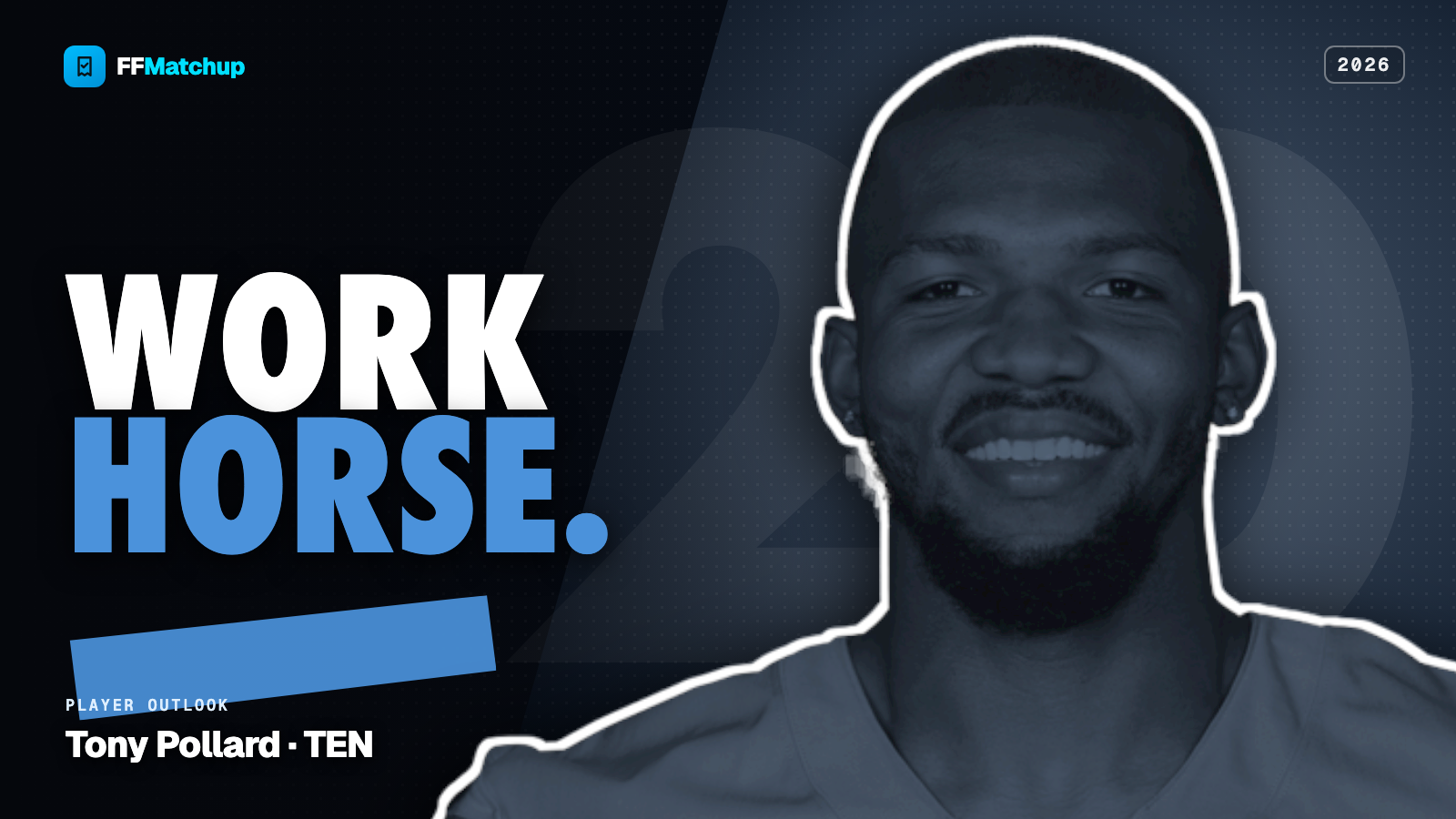
Tony Pollard Fantasy 2026: Is the Titans Workhorse Worth an RB29 Price?
Tony Pollard handled a genuine lead-back workload for Tennessee in 2025, more than 240 carries and a full 17-game season. The catch is the scoring: five rushing touchdowns on that volume, because the goal line was a committee he never fully owned. At an RB29 price you are buying the carries and betting the touchdowns follow. The shared stripe and a run-light young offense are the honest caps.
FFMatchup
PLAYER OUTLOOK
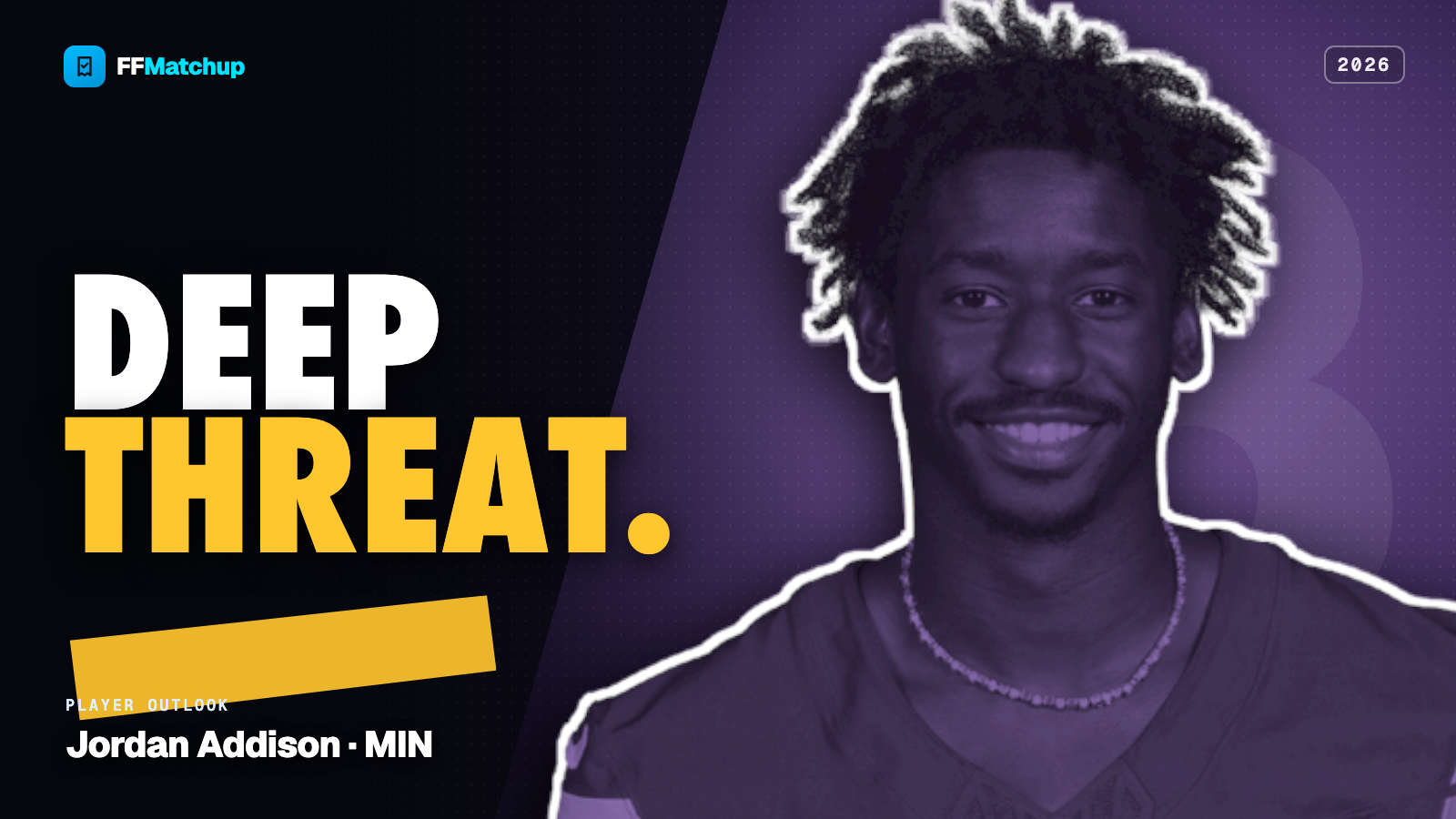
Jordan Addison Fantasy 2026: Is the Vikings Deep Threat a Buy at WR46?
Jordan Addison owns the deep half of Minnesota's passing game, a top-two air-yards share on a 13.7-yard average target depth, and he is going as the WR46. The upside is a field-stretcher role next to Justin Jefferson with a new quarterback who throws downfield. The catch is a room that just added Jauan Jennings and 90 targets, plus a boom-or-bust profile that caught only 42 of 79 looks. The honest two-sided read at a mid-round price.
FFMatchup
WEEK 1 START/SIT
Week 1 Start/Sit: Our Model's Top Calls (Powered by Opportunity-Weighted DvP)
Everyone knows to start their first-rounders. Our new opportunity-weighted DvP model tells you which Week 1 matchups actually amplify the usage, and puts a graded number on every call.
FFMatchup
DRAFT STRATEGY
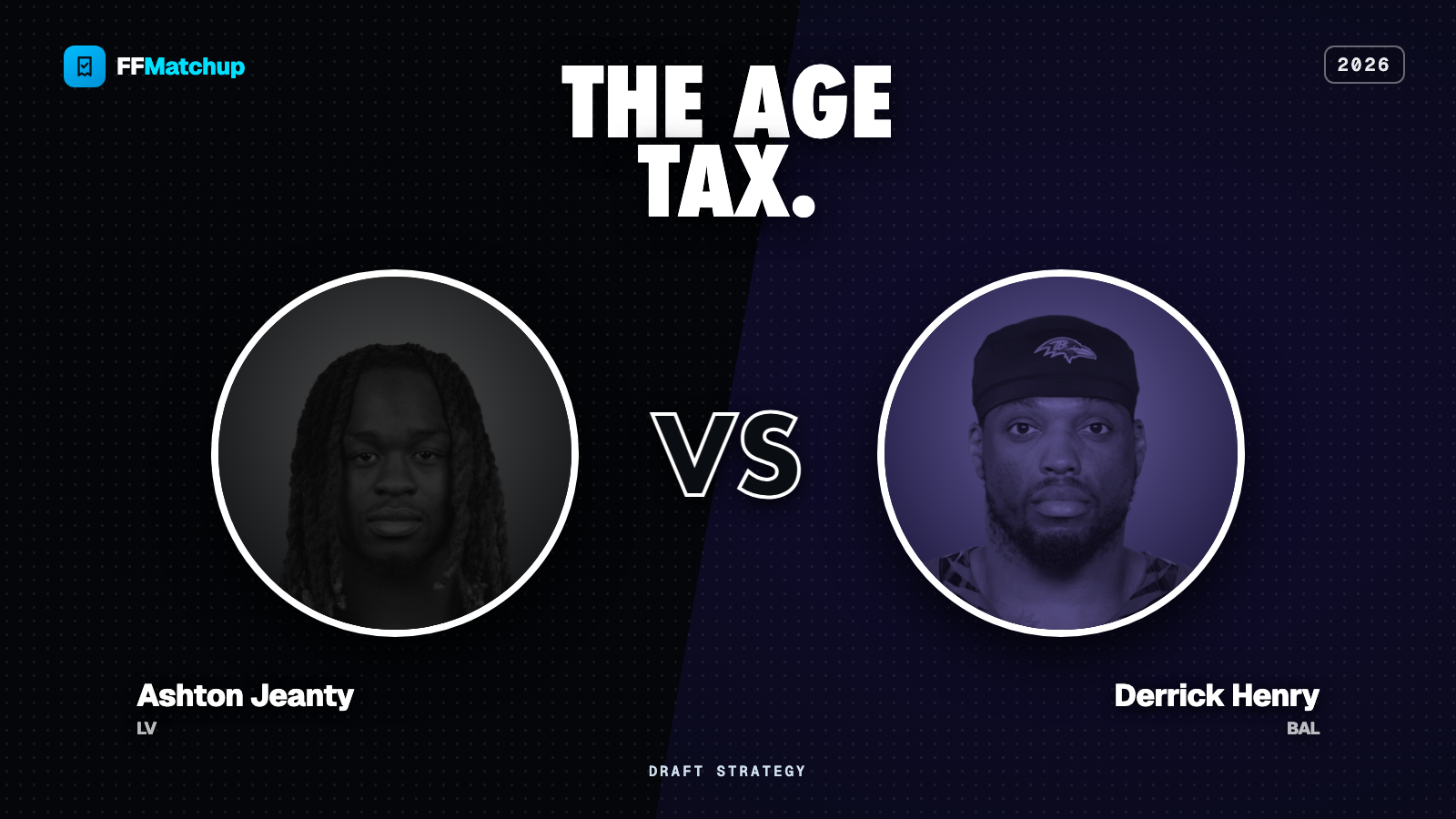
The RB Age Cliff Meets 2026 ADP: Where the Board Is Buying Age
The oldest rule in fantasy is that running back production falls off in the late twenties. Map it onto 2026 ADP and the top of the board is reassuringly young, but the age risk clusters in one specific, expensive tier. Here are the top drafted backs by their 2026-season age.
FFMatchup
PLAYER OUTLOOK
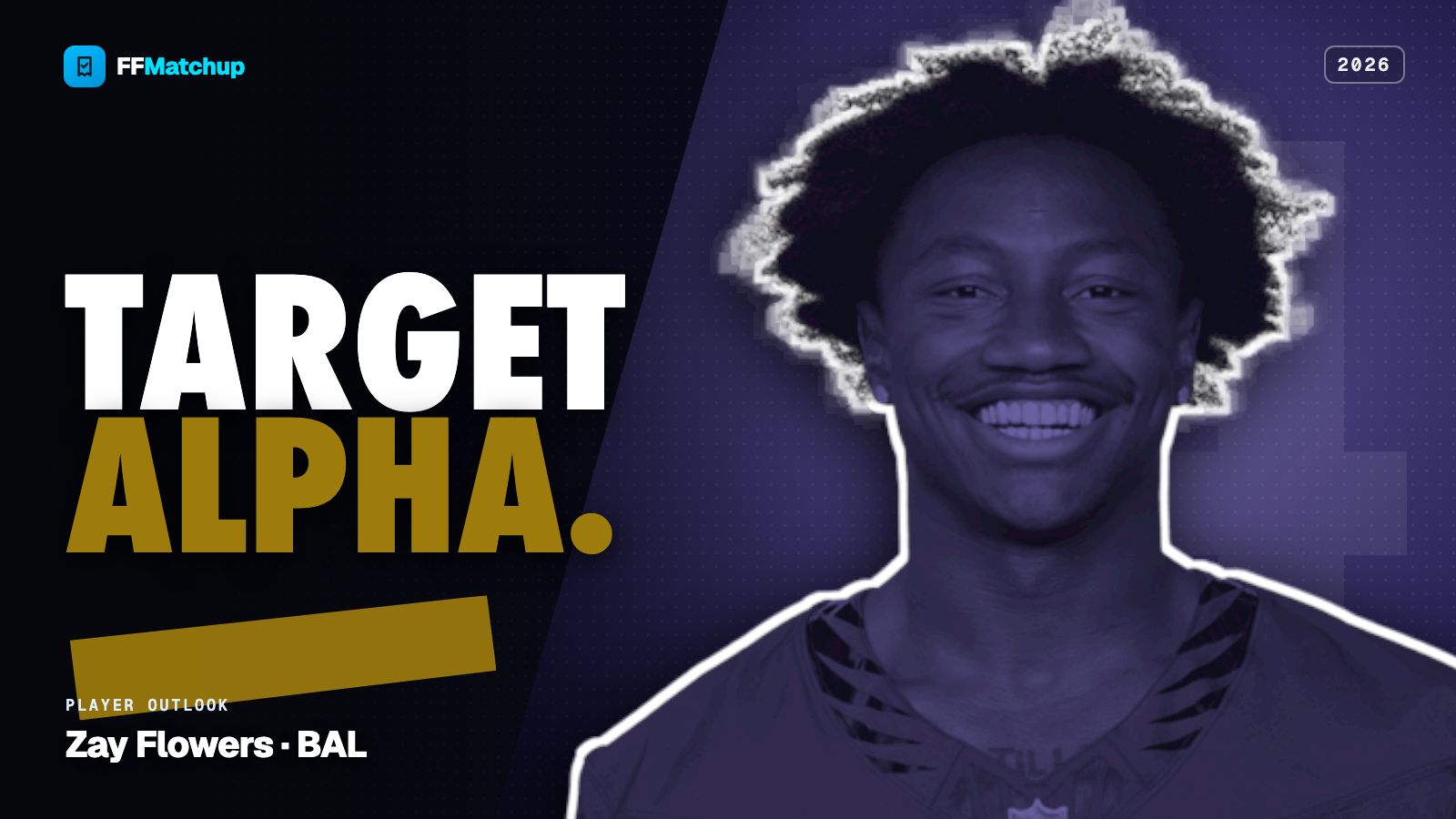
Zay Flowers Fantasy 2026: Is the Ravens WR a WR1 at a WR14 Price?
Zay Flowers was a genuine target alpha in 2025, 86 catches for 1,211 yards and 5 touchdowns while commanding the largest air-yards share in a loaded Baltimore offense. He goes as a back-end WR1. The volume and the air-yards dominance are the case. A modest touchdown total and a run-heavy offense are the honest caps.
FFMatchup
PLAYER OUTLOOK
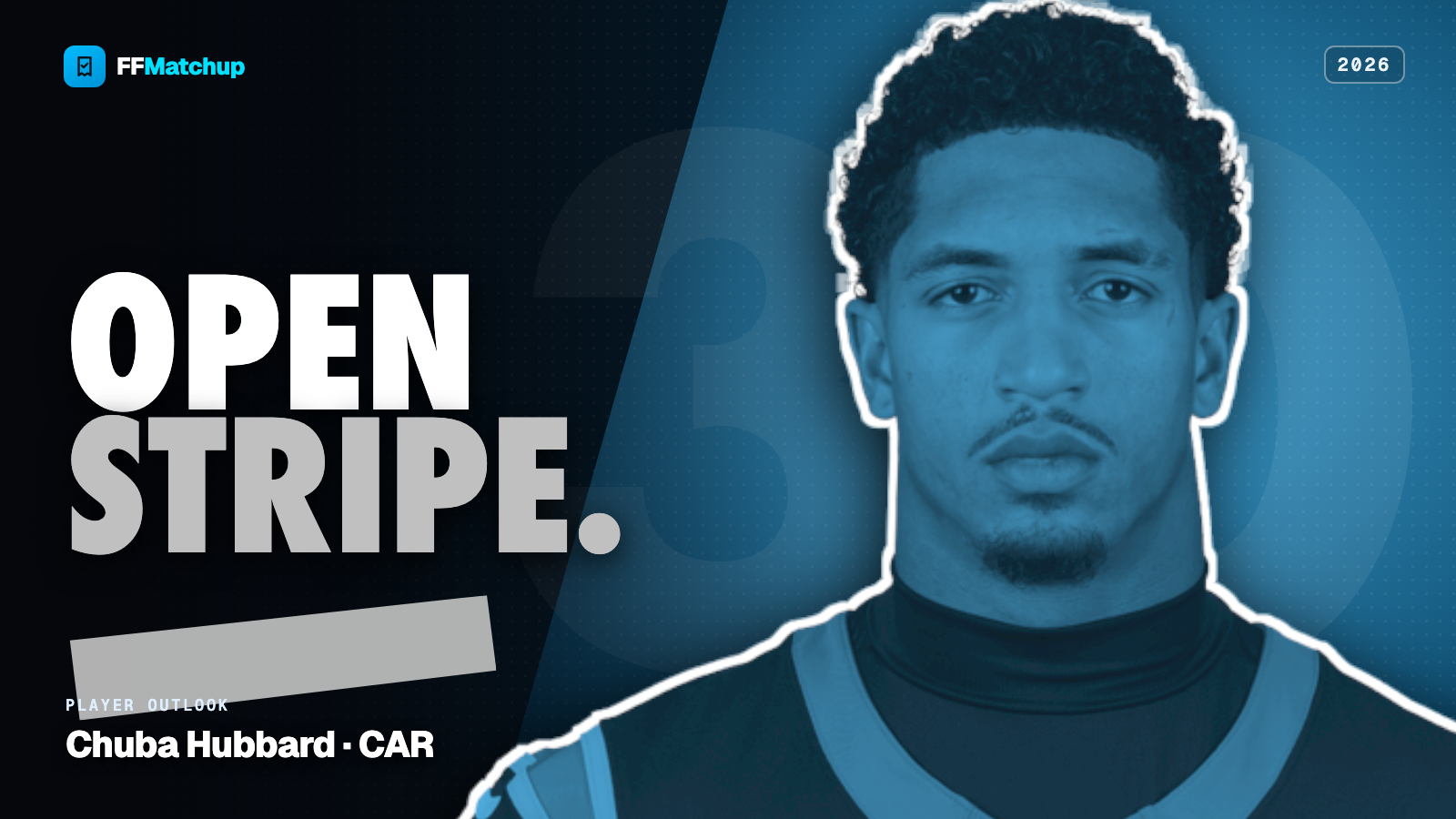
Chuba Hubbard Fantasy 2026: Is the Panthers Back Worth an RB30 Price?
Chuba Hubbard carried a real workload for Carolina in 2025, but the scoring cratered to a single rushing touchdown. The back who out-carried him and owned the goal line is gone to Pittsburgh. At an RB30 price, the bet is that the vacated touchdown work is his to take. The thin scoring line and a crowded committee are the honest caps.
FFMatchup
PLAYER OUTLOOK
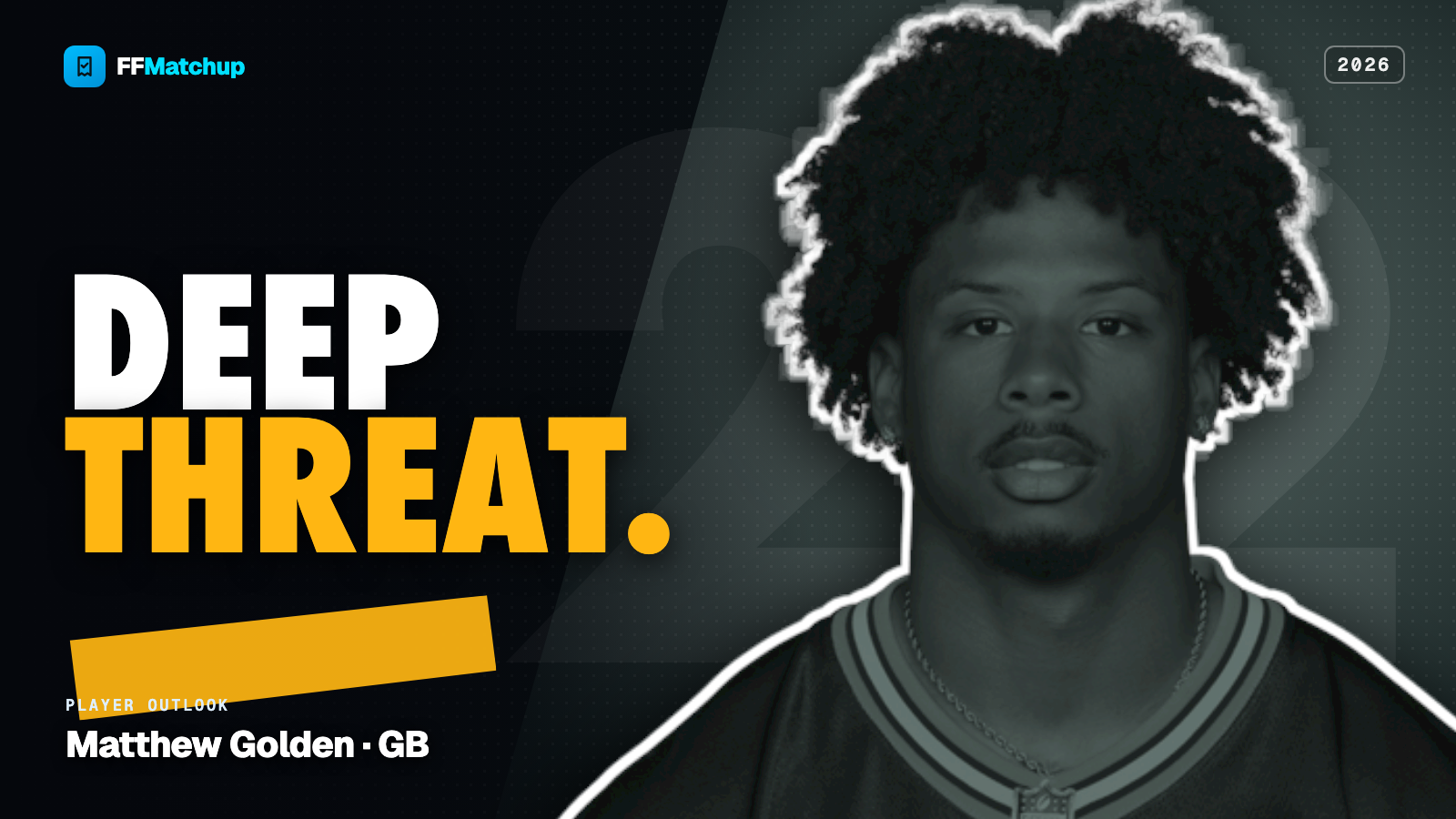
Matthew Golden Fantasy 2026: A First-Round Deep Threat Still Waiting on Volume
Golden's rookie tape shows a real downfield role, a 12.55 average depth of target and a 31.8% deep-target rate. The catch is the volume: he ran as Green Bay's WR3 on a spiky 12.4% target share with almost no red-zone work. Here is the honest year-two case at a WR54 price.
FFMatchup
PLAYER OUTLOOK
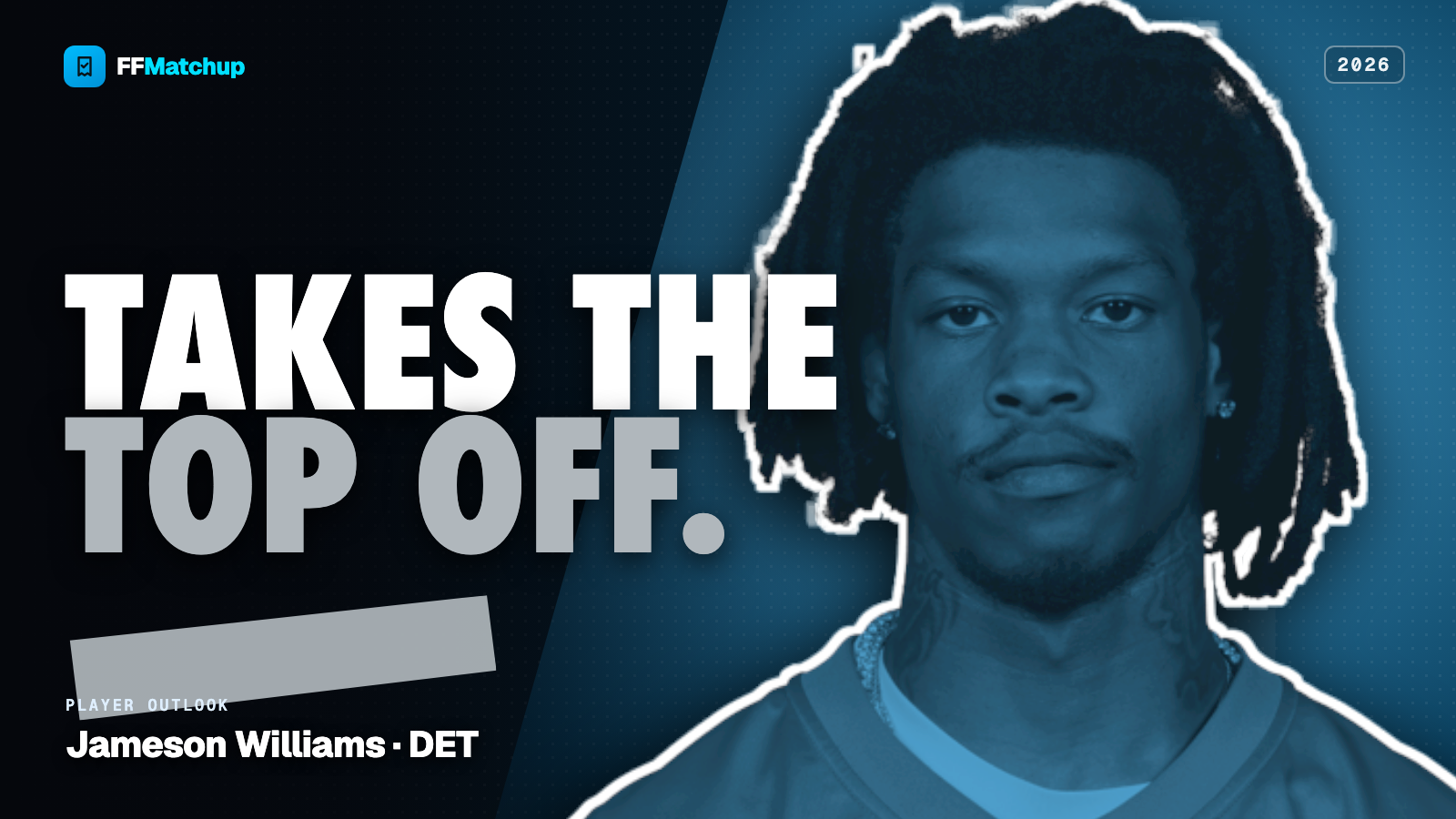
Jameson Williams Fantasy 2026: A 1,100-Yard Deep Threat at a WR27 Price
Williams posted 1,117 receiving yards and 7 touchdowns on a 35 percent air-yards share in 2025, a genuine field-stretching alpha role in a top offense, yet he is going as the WR27. The deep role and the full season are the bull case. The honest caps are a clear No. 1 ahead of him and a boom-or-bust week-to-week profile.
FFMatchup
PLAYER OUTLOOK
Josh Jacobs Fantasy 2026: Is the Packers Workhorse a Round-Two Value?
Jacobs was a true bell cow in 2025, running for 929 yards and 13 touchdowns while genuinely owning the Green Bay goal line, and he is going as a second or third round back. The volume and the scoring floor are the bull case. The honest question at that price is a receiving role that is real but modest.
FFMatchup
PLAYER OUTLOOK
Ashton Jeanty Fantasy 2026: Is the Rookie Workhorse Worth a First-Round Pick?
Jeanty handled a true bell-cow rookie load in Las Vegas, 266 carries and 55 catches over a full season, and he controls the backfield's scoring work with a 75.6% red-zone carry share. He is going as a first-round back. The volume and the goal-line control are real. The honest question at that price is the touchdown total and the offense around him.
FFMatchup
PLAYER OUTLOOK
Brian Thomas Jr. Fantasy 2026: Is the Deep-Ball Alpha a Buy-Low?
After a big rookie year, Brian Thomas Jr. took a step back in 2025, 48 catches for 707 yards and 2 touchdowns over 14 games, yet he still led Jacksonville in air-yards share on a deep 14.5-yard target line. The role of a field-stretcher is intact. His efficiency and touchdown rate cratered. At a seventh-round price, that gap is the bet.
FFMatchup
PLAYER OUTLOOK
Rome Odunze Fantasy 2026: A Breakout Bet on a 28% Air-Yards Share
Odunze commanded a 27.6% air-yards share on a deep 13.9-yard aDOT in 2025, and D.J. Moore's move to Buffalo just vacated 85 targets in Chicago. The year-two breakout case is real. The efficiency and a genuine tight-end competitor are the honest caps.
FFMatchup
PLAYER OUTLOOK
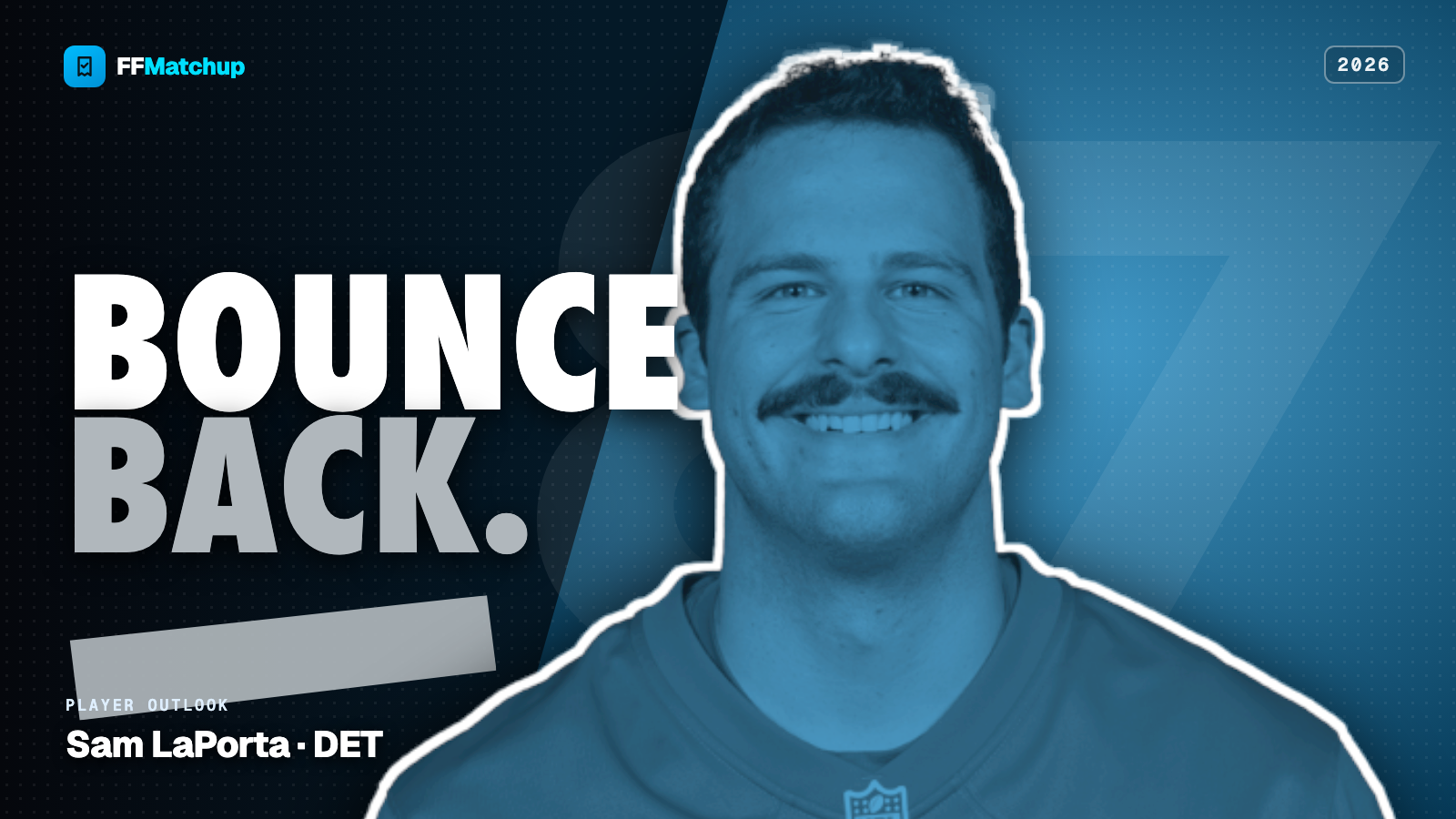
Sam LaPorta Fantasy 2026: Is the Detroit Tight End a Bounce-Back Buy?
A hamstring-shortened 2025 held LaPorta to nine games, and his TE8 price already bakes in the down year. The per-game role and the Detroit offense are the bull case. The crowded target tree and a short-area role are the honest caps.
FFMatchup
PLAYER OUTLOOK
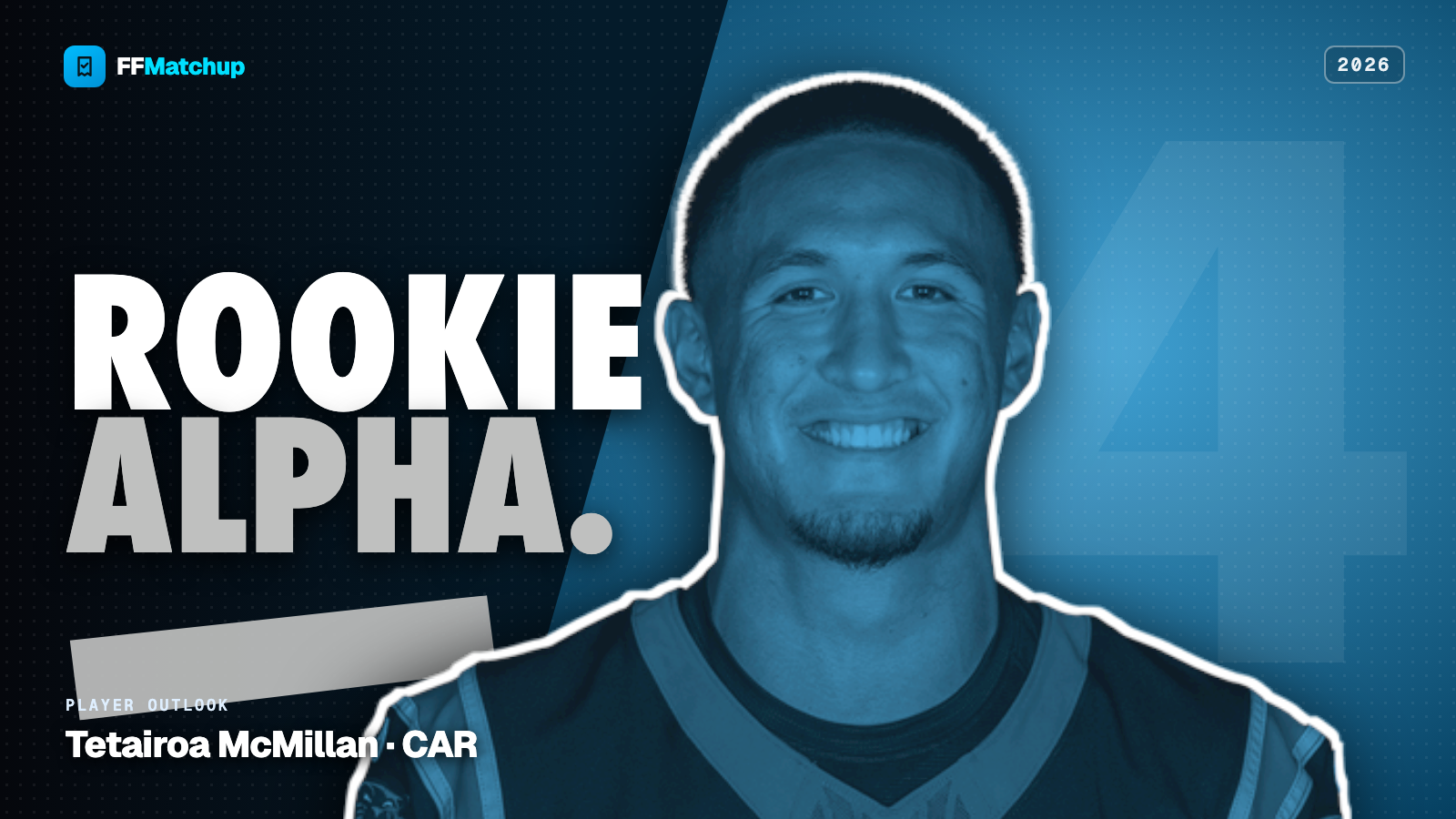
Tetairoa McMillan Fantasy 2026: A Rookie With a 43% Air-Yards Share
McMillan drew a 43% air-yards share as a rookie, the profile of a receiver an offense already runs through. He is going as a back-end WR2. The share is elite. The honest question is whether Carolina's passing volume and a rookie's thin track record let it turn into WR2 points.
FFMatchup
PLAYER OUTLOOK
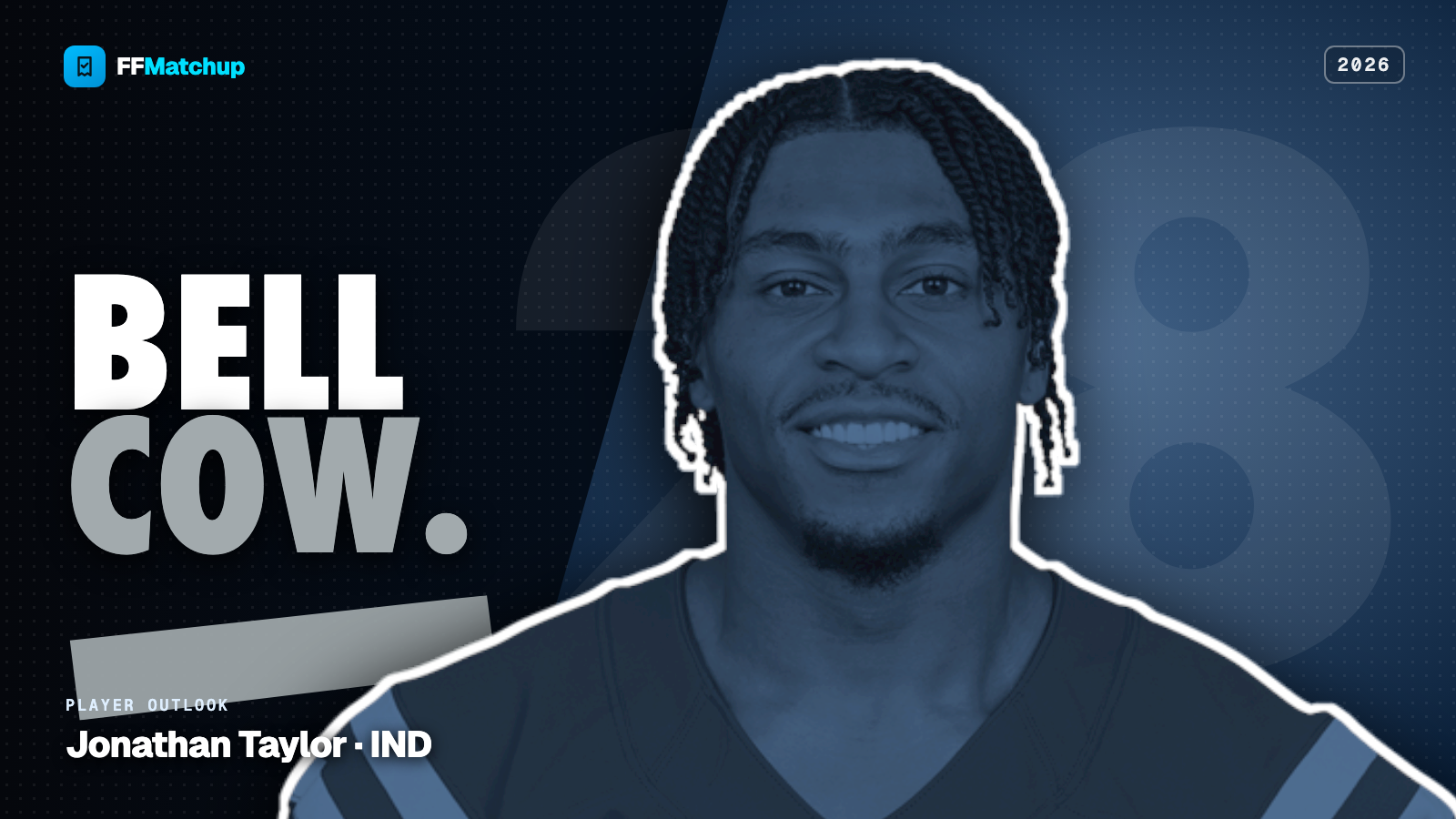
Jonathan Taylor Fantasy 2026: Can He Repeat an 18-Touchdown Season?
Taylor was a true bell cow in 2025, carrying 323 times for 1,585 yards and 18 rushing touchdowns over a full season, and he is going as a first-round running back again. The volume floor is not the question. The question at that price is whether 18 rushing scores is a repeatable baseline or a career-high due for regression.
FFMatchup
DEEP-STAT SPLIT
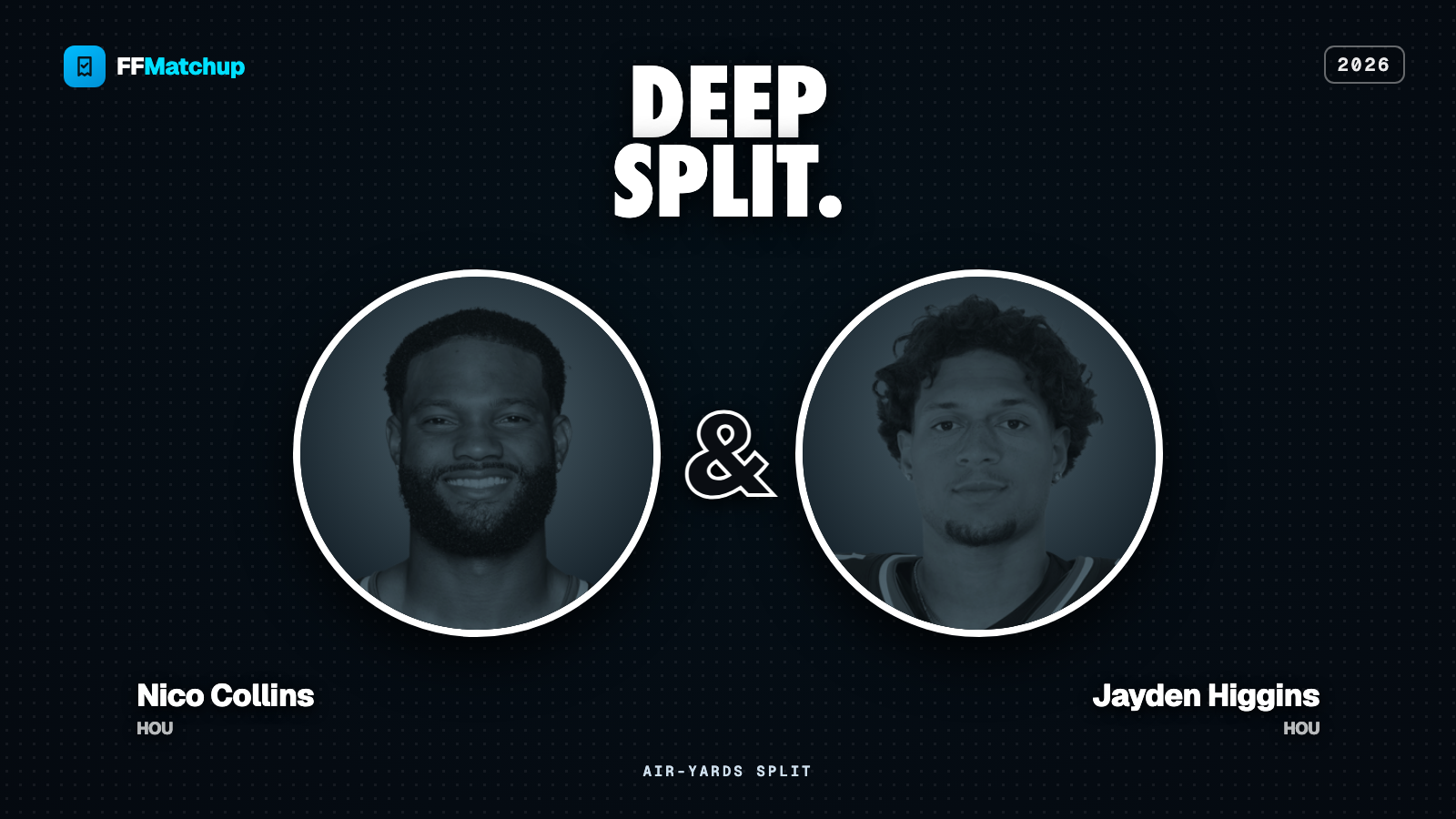
Nico Collins vs Jayden Higgins: How Houston Splits Its Air Yards in 2026
Both Houston receivers run deep, but the offense does not point at them equally. Collins commanded a 33.3% air-yards share to Higgins's 18.3% in 2025. Here is what the split says about a set-and-forget alpha and a cheap second-year dart.
FFMatchup
PLAYER OUTLOOK
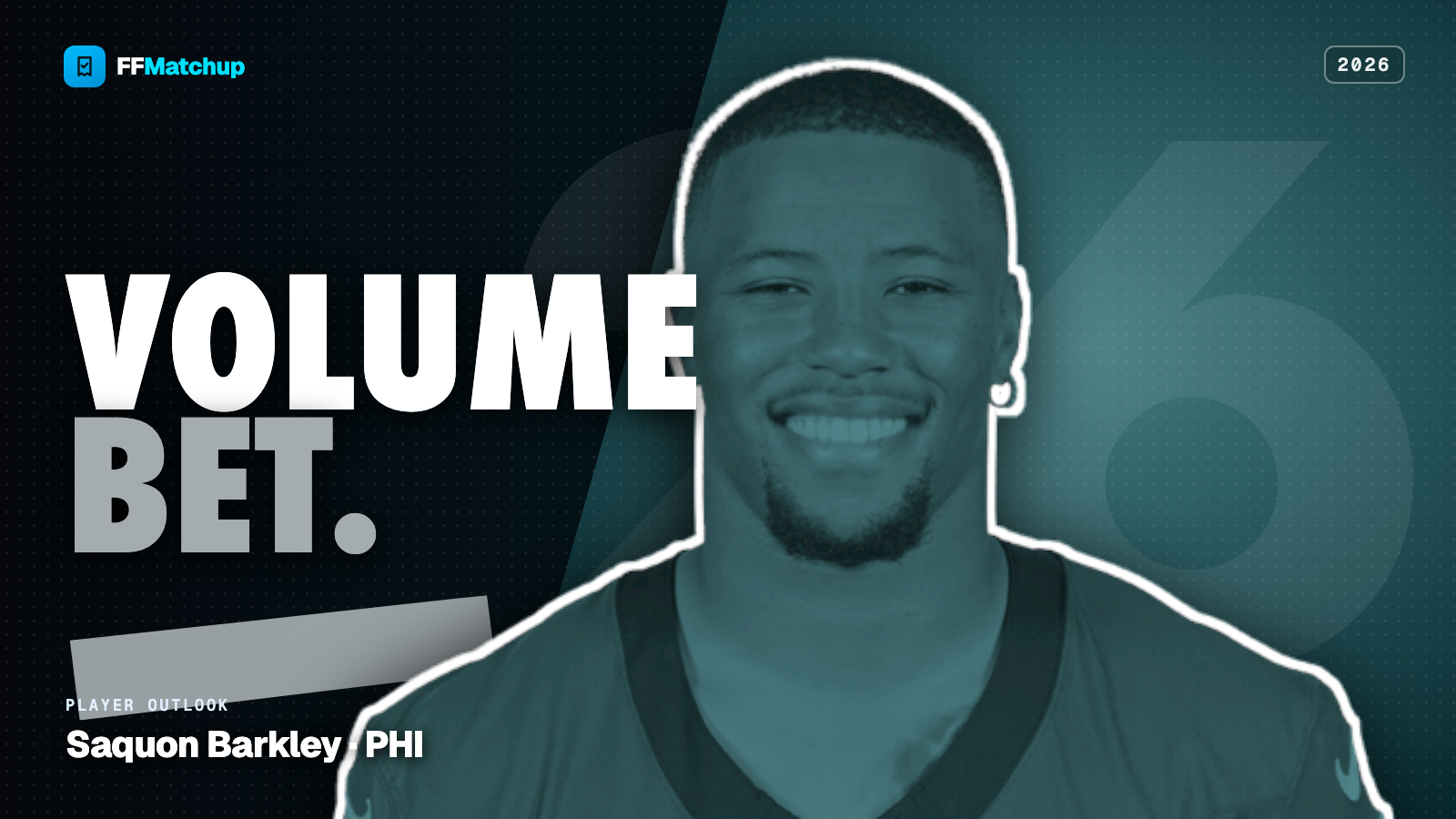
Saquon Barkley Fantasy 2026: The Volume Is Real, But Is the Touchdown Math?
Barkley carried 280 times for 1,140 yards and added 37 catches over a full 2025, and he is going as a top-10 running back again. The volume floor is not the question. The question at that price is where the touchdowns come from in an offense that runs its short-yardage scores through Jalen Hurts.
FFMatchup
PLAYER OUTLOOK
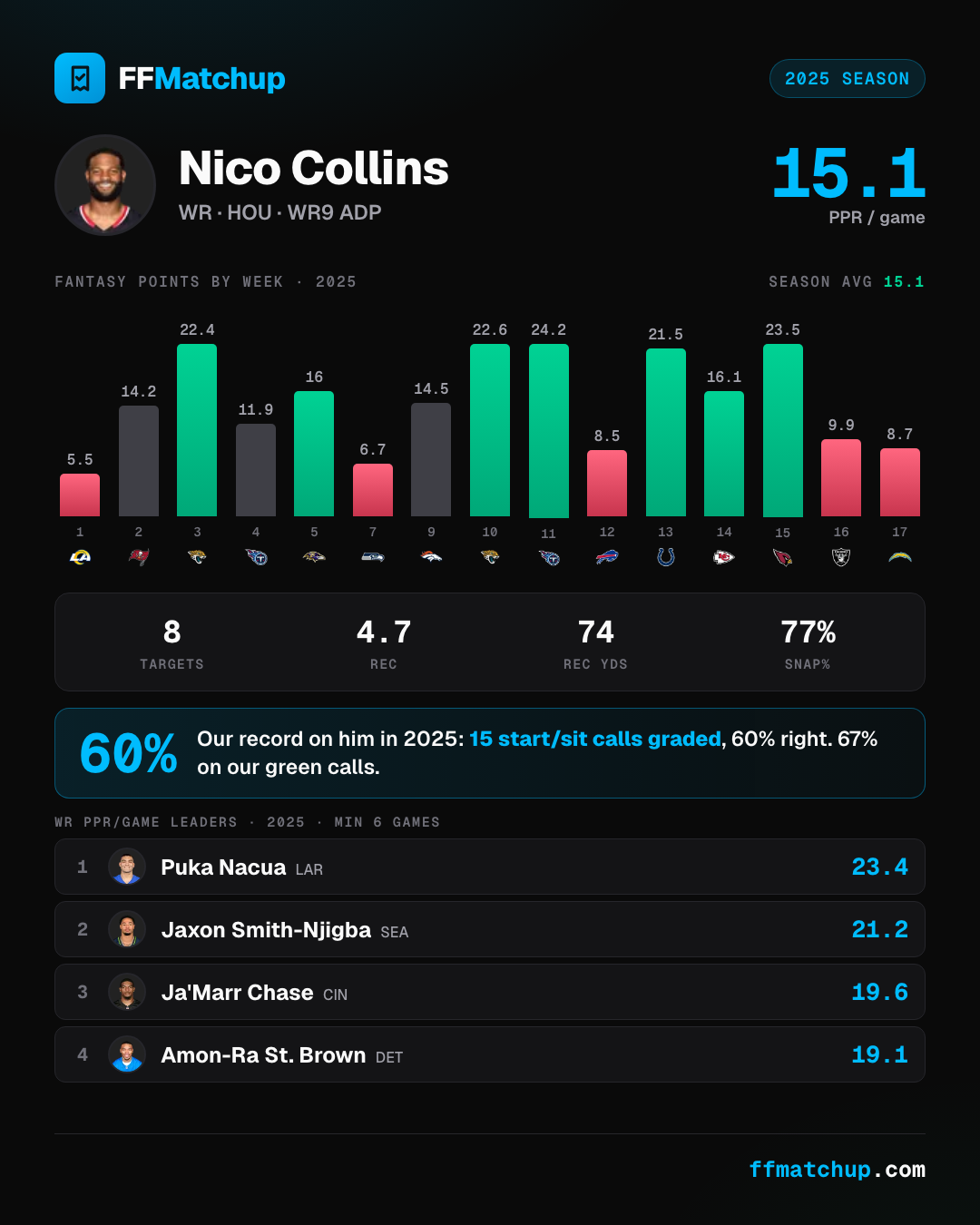
Nico Collins Fantasy 2026: Houston's Downfield Alpha Is a Second-Round Bet
Collins owned a 33.3% air-yards share and a 24.2% target share on a 12.7-yard average depth of target in 2025, the profile of a true No. 1. He is going as the 9th receiver off the board. Here is the alpha case and the honest reason the price is not a bargain.
FFMatchup
PLAYER OUTLOOK
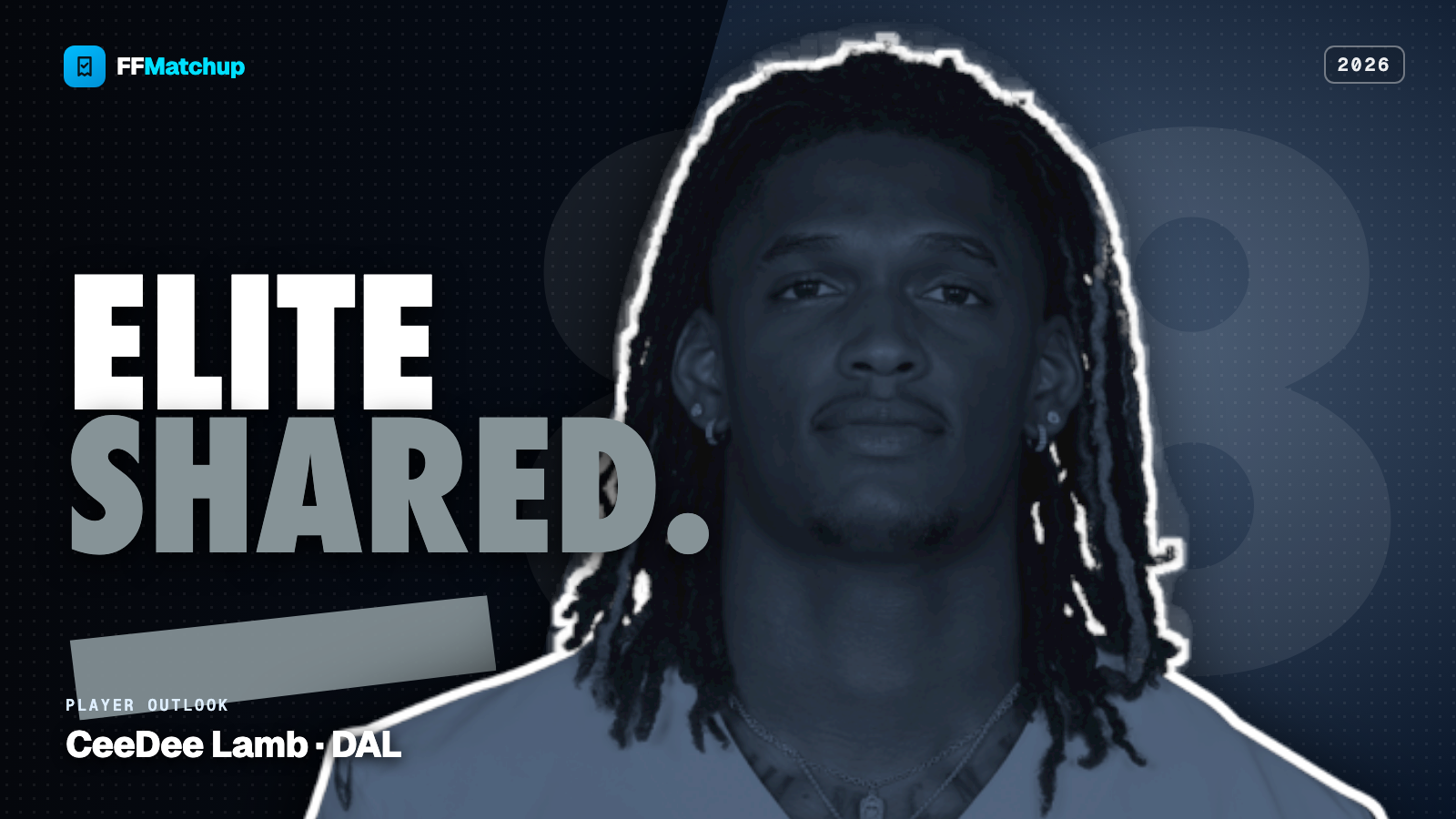
CeeDee Lamb Fantasy 2026: Can He Stay a Top-5 Receiver Next to George Pickens?
Lamb ran a 23.9% target share and a 28.5% air-yards share in 2025, elite separator usage. He is going as the 5th receiver off the board. The honest bear case is a two-alpha room and a 3-touchdown season, not the talent.
FFMatchup
PLAYER OUTLOOK
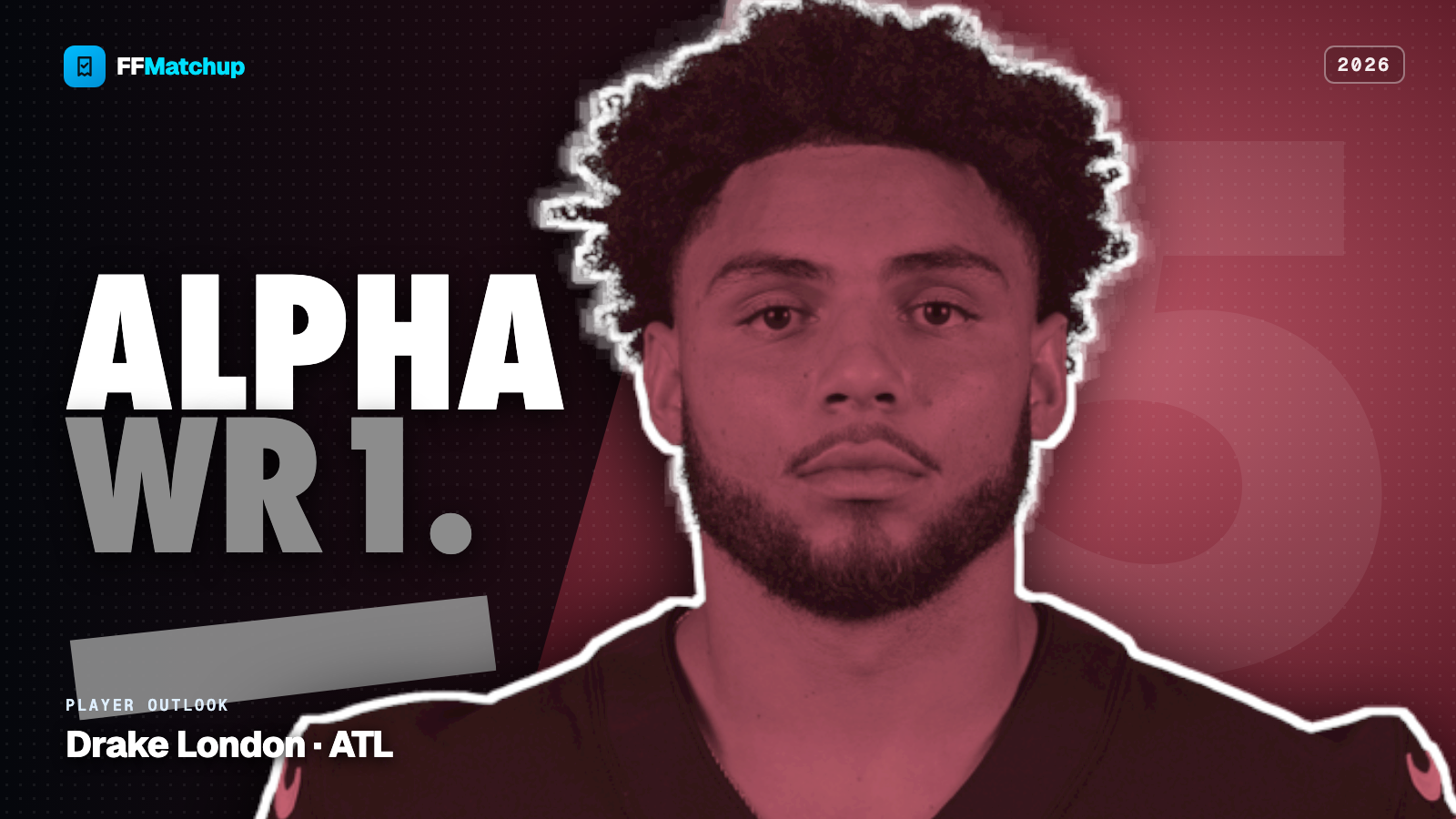
Drake London Fantasy 2026: A 30% Target Share With Atlanta's Deep Threat Gone
London commanded a 29.8% target share on 90.7% of the snaps in 2025, and the receiver who drew 72 targets across from him just left for the Giants. He is going as the 7th receiver off the board. Here is the alpha case, and the honest reason it comes with a warning.
FFMatchup
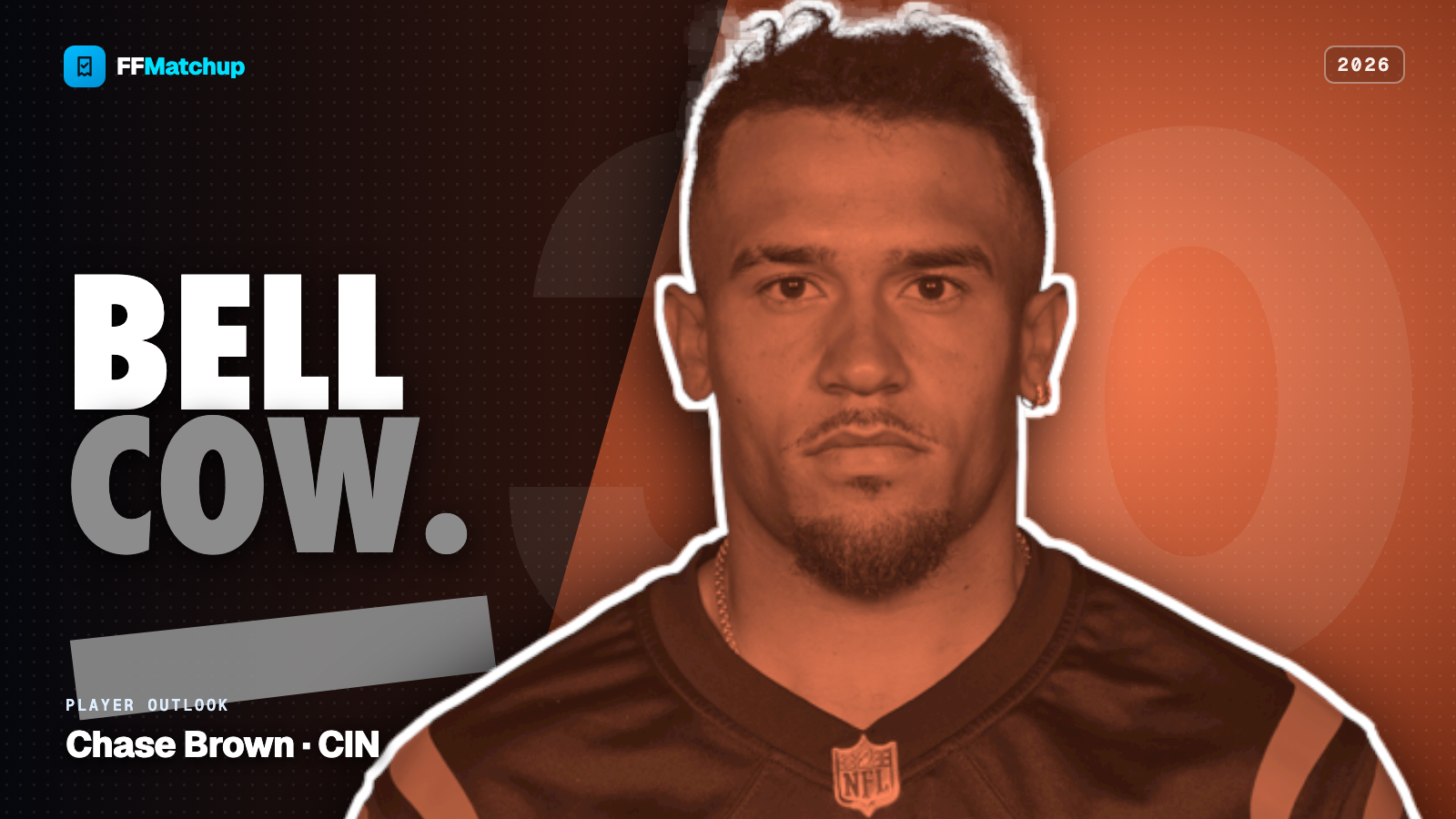
PLAYER OUTLOOK
Chase Brown Fantasy 2026: A 300-Touch Bellcow Finally Priced Like One
Brown handled roughly 300 touches, owned the Cincinnati goal line, and finished as the RB7 in 2025. He is now going as the 6th back off the board, a slot ahead of where he finished. Here is the case that the workload is real, and the honest reason it is not a discount.
FFMatchup
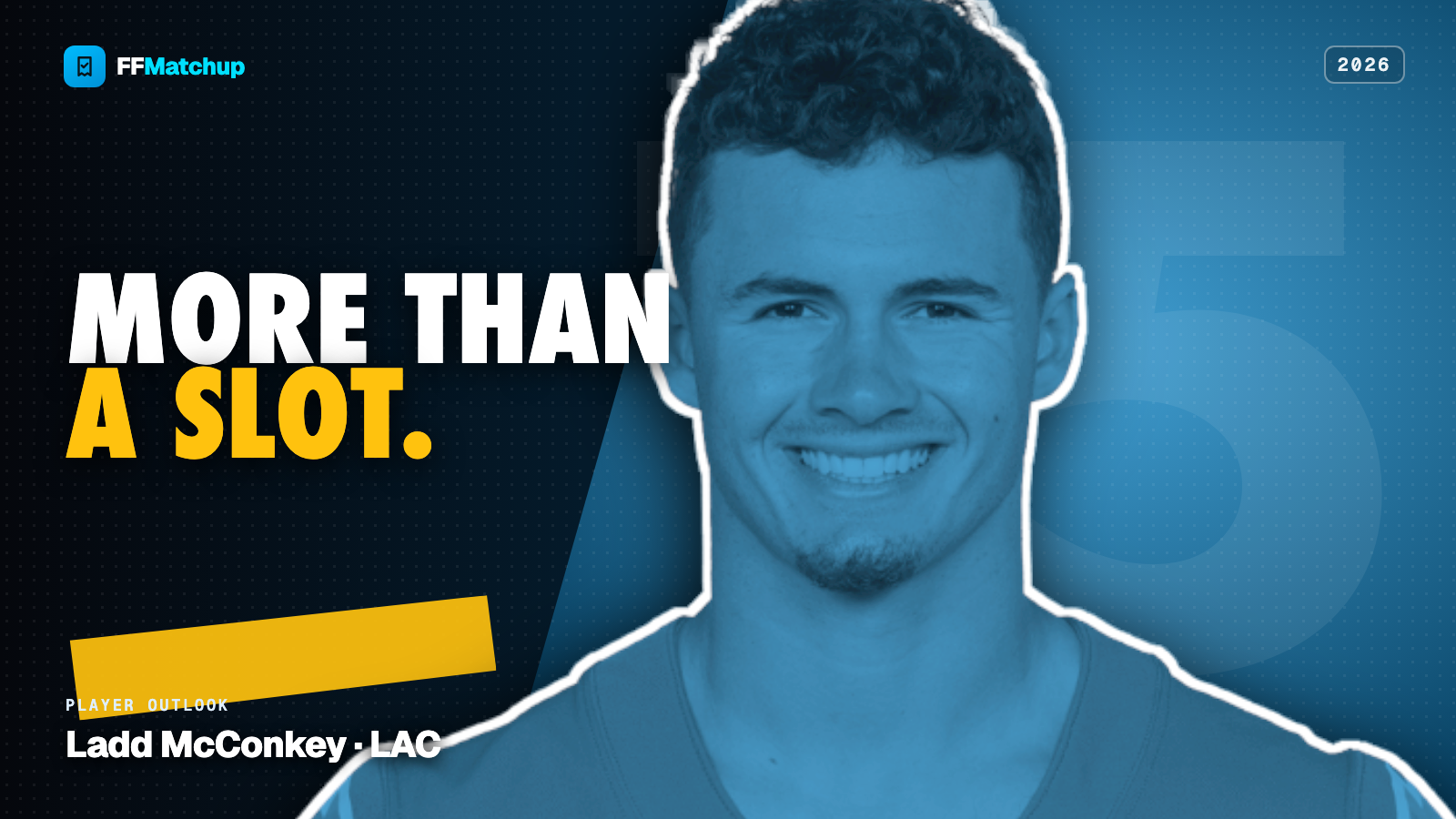
PLAYER OUTLOOK
Ladd McConkey Fantasy 2026: The Slot Label Undersells a Real Downfield WR2
McConkey is filed under 'slot receiver,' but a 9.87 average depth of target and a 22.8% deep-target share say something bigger. Here is why the usage points to a set-and-forget WR2, and the honest reason the price is not a discount.
FFMatchup
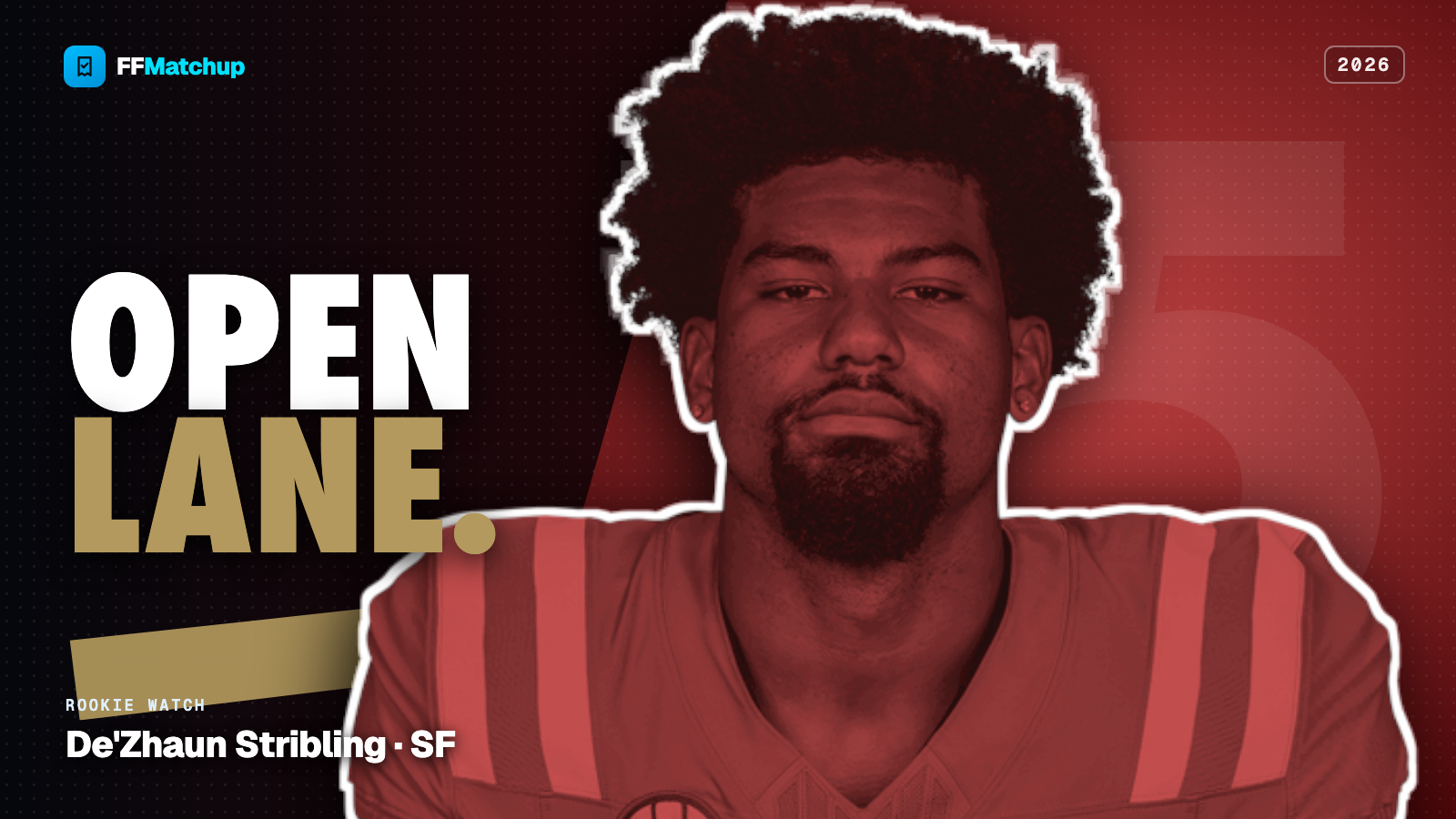
ROOKIE WATCH
De'Zhaun Stribling Fantasy 2026: Pearsall's Injury Opens a Rookie's Path in San Francisco
Ricky Pearsall's season-ending injury clears a receiving role in San Francisco, and the rookie with the draft capital to claim it is De'Zhaun Stribling. This is an opportunity read, not a production one, because he has yet to play an NFL snap.
FFMatchup
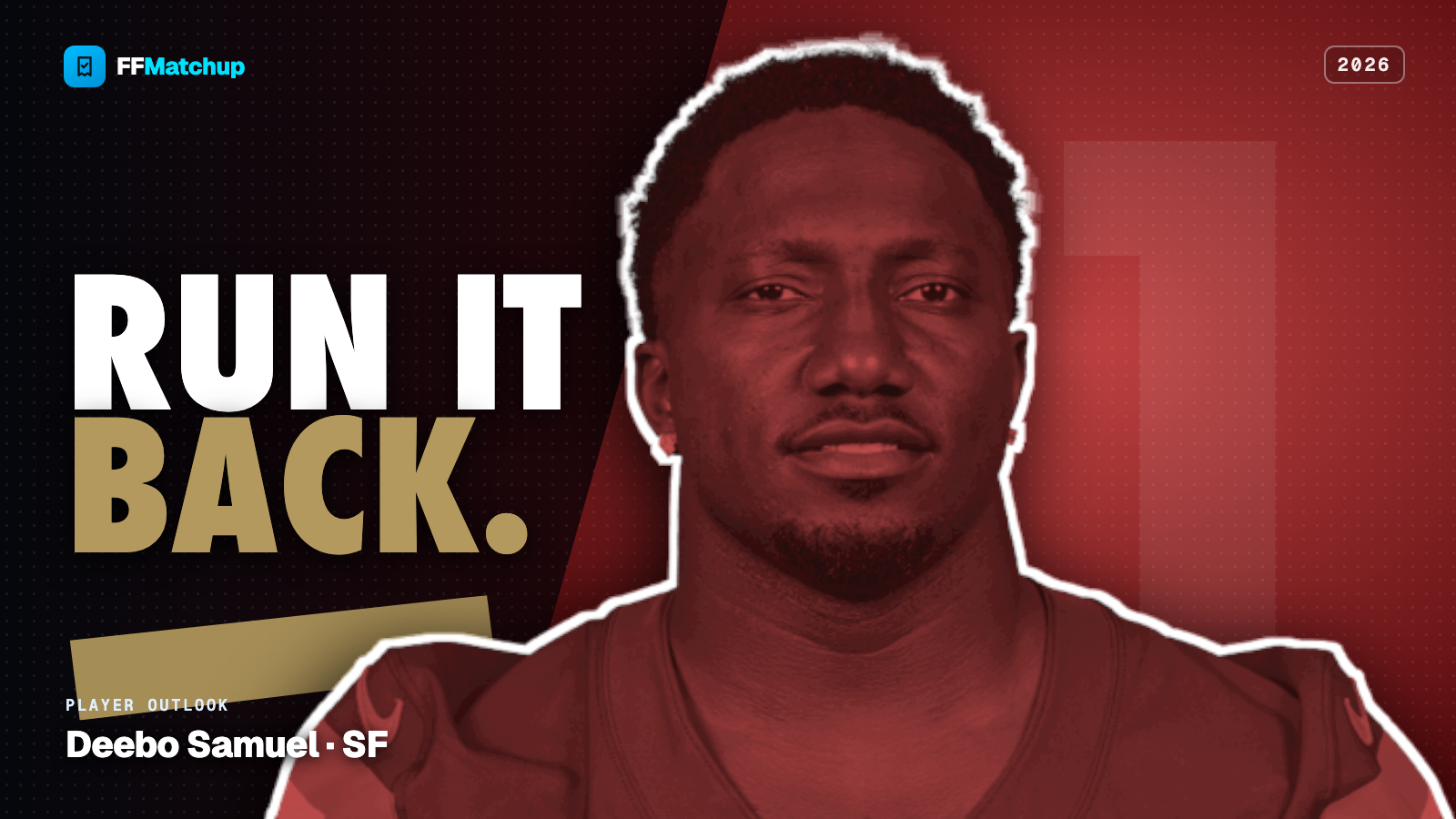
PLAYER OUTLOOK
Deebo Samuel Fantasy 2026: The 49ers Return Is About the Carries, Not the Catches
Washington handed Deebo a career-high 72 catches in 2025 and exactly one red-zone carry. San Francisco has already said he will play running back and return kicks again. The fantasy case is the role, not the receptions, and the price reflects the doubt.
FFMatchup
PLAYER OUTLOOK
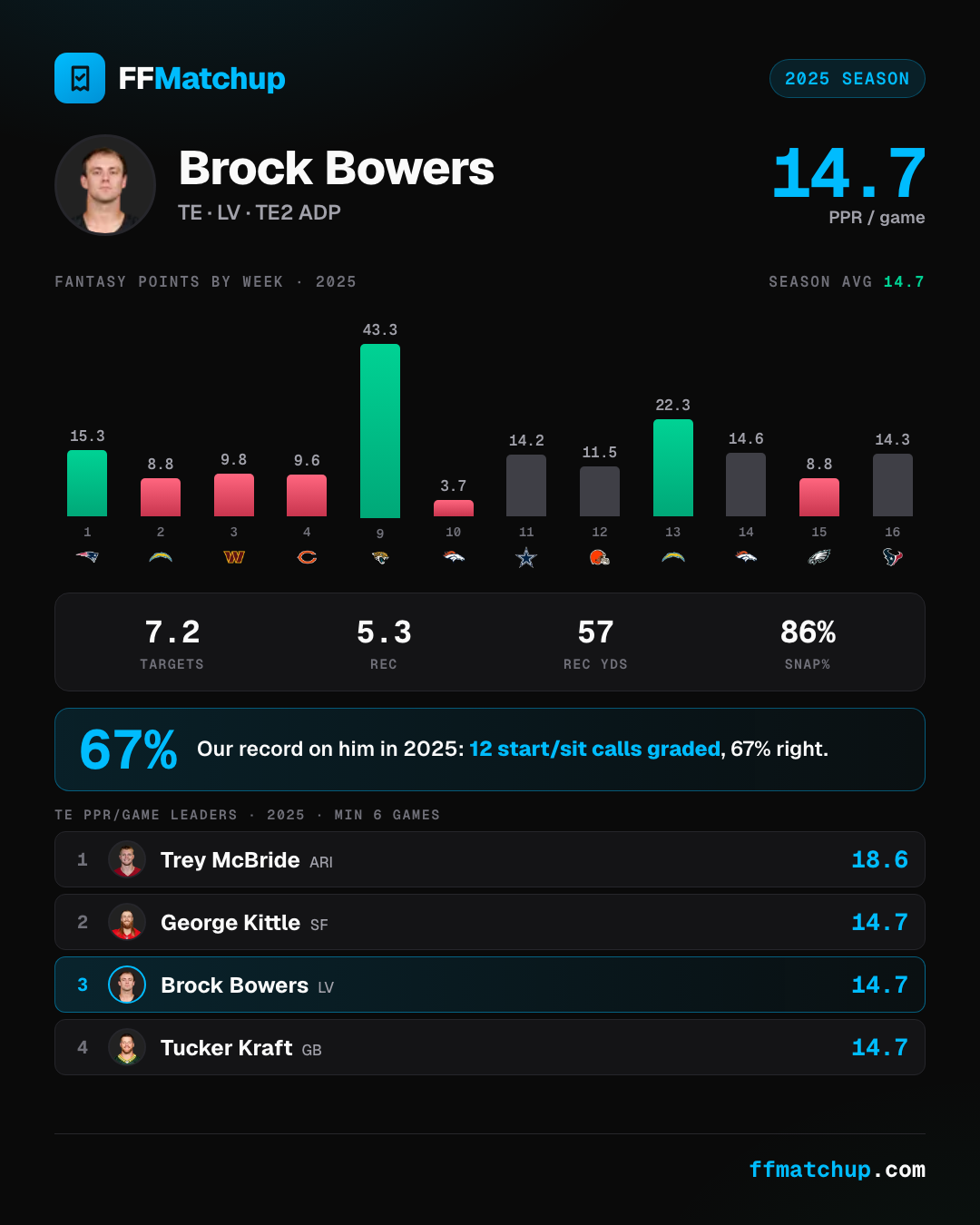
Brock Bowers Fantasy 2026: A 23% Target Share Is a Tight End Playing Like a WR1
Bowers commanded a 23.4% target share on 86% of the snaps in 2025 and finished as the TE3 in just 12 games. He is the second tight end off the board. Here is what the usage says, and the honest reason the price is not a discount.
FFMatchup
PLAYER OUTLOOK
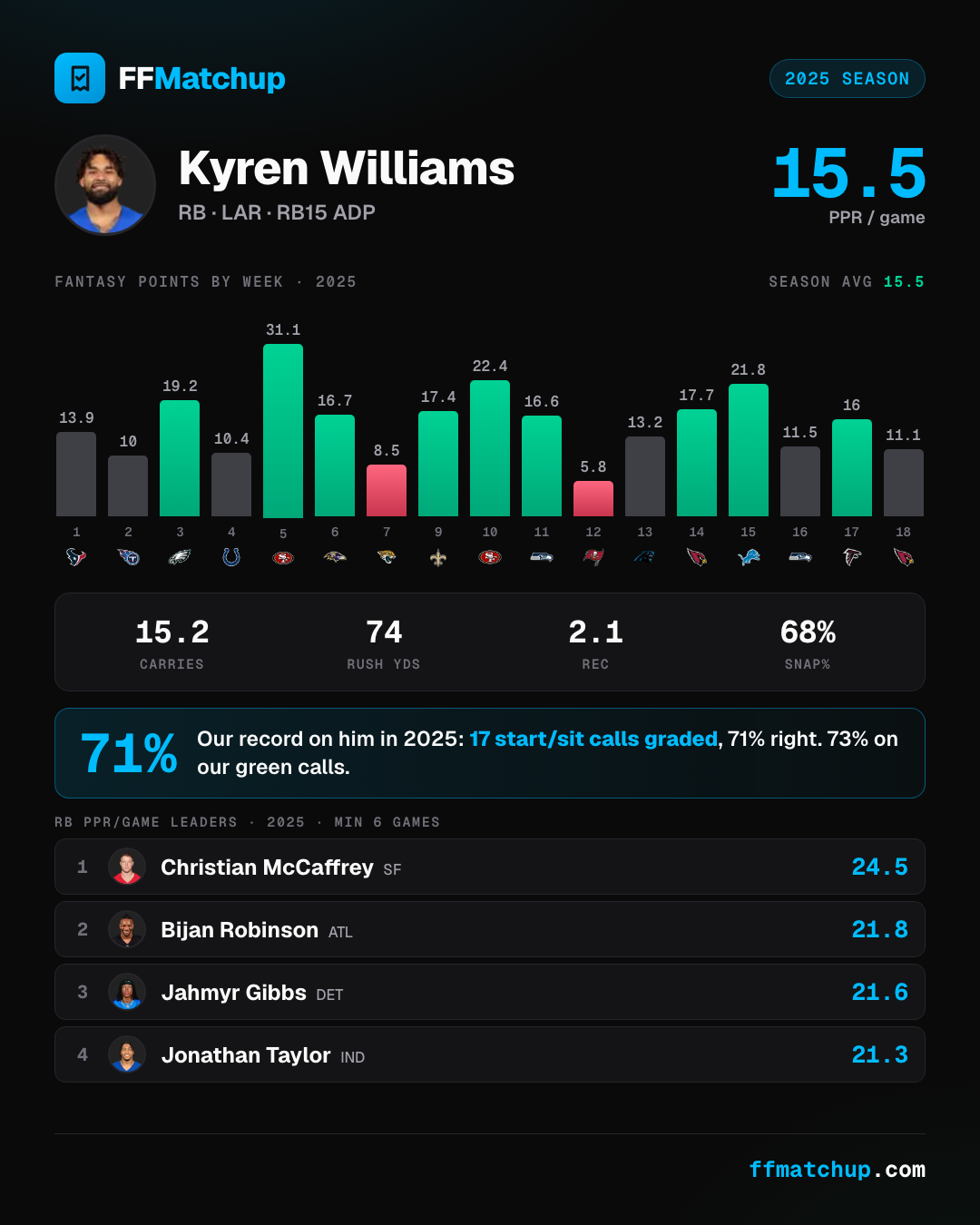
Kyren Williams Fantasy 2026: An RB15 Price on a Bellcow Who Finished RB11
Williams carried 259 times, scored 10 rushing touchdowns, and led the Rams' backfield at the goal line in 2025, then finished as the RB11. He is going as the 15th back off the board. Here is the case, and the honest reason the market holds the discount, Blake Corum included.
FFMatchup
PLAYER OUTLOOK
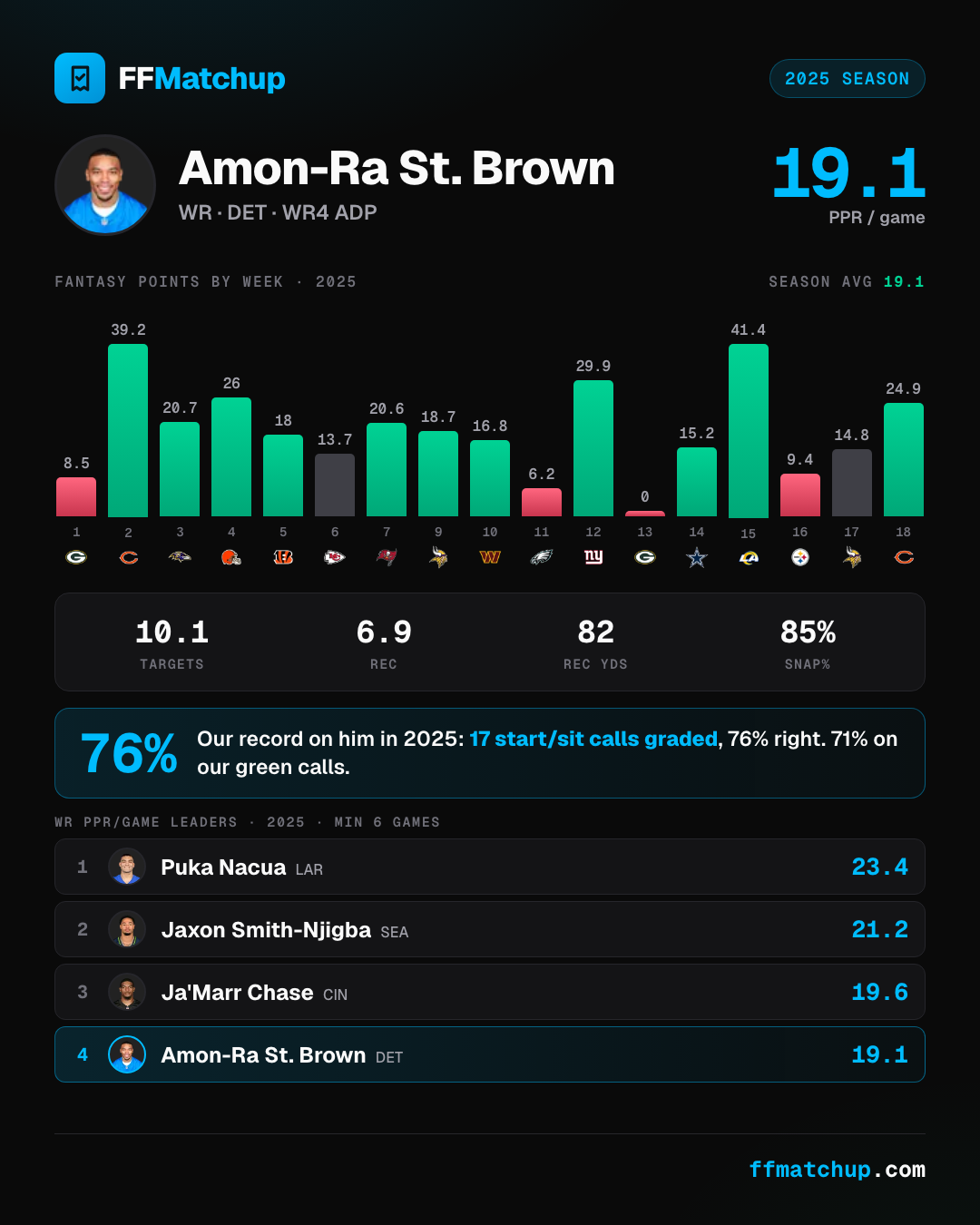
Amon-Ra St. Brown Fantasy 2026: The WR1 Who Earns It in Volume, Not Splash
St. Brown drew a 31.7% target share and a 37.8% share of Detroit's air yards in 2025, in a run-first offense. He wins on volume and reliability, not deep shots. Here is why that is the safest kind of WR1, and where the ceiling caps.
FFMatchup
PLAYER OUTLOOK
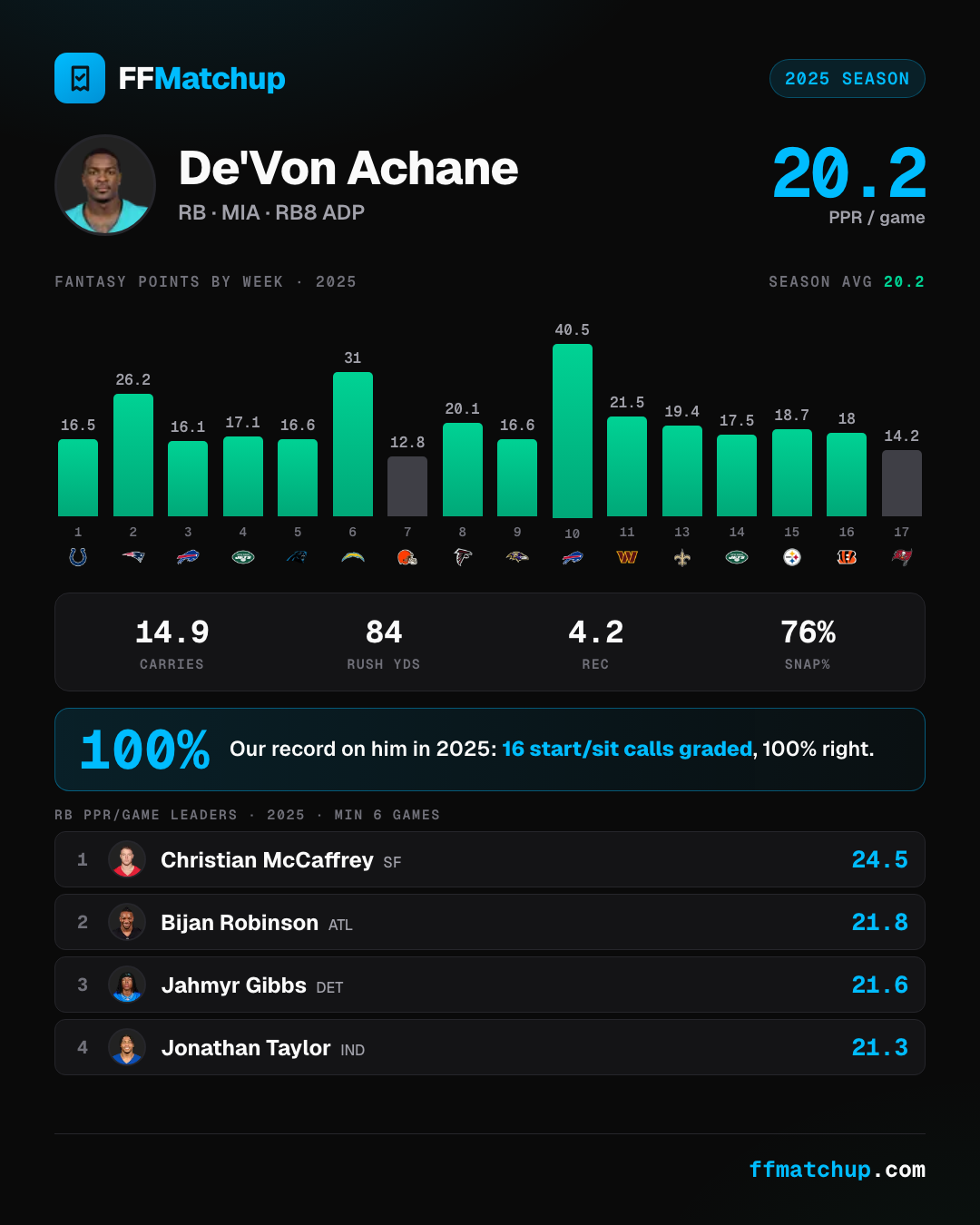
De'Von Achane Fantasy 2026: 305 Touches of Ceiling, Priced for the Health Risk
When he was on the field in 2025, Achane touched the ball 305 times and scored 20.2 PPR points a game. The usage is a top-tier back's. The draft price is not. Here is the honest floor and ceiling.
FFMatchup
PLAYER OUTLOOK
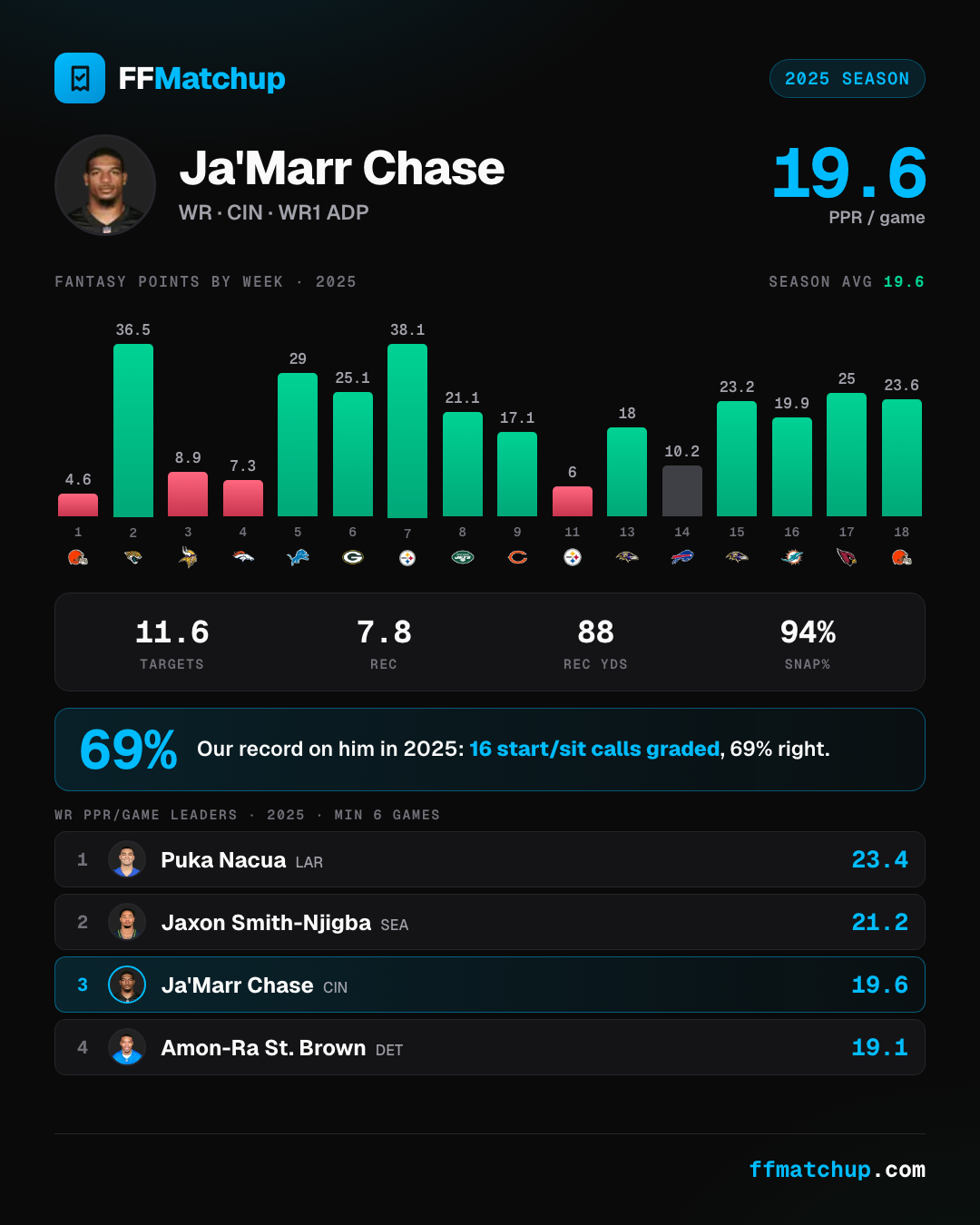
Ja'Marr Chase Fantasy 2026: A 32% Target Share Is the WR1 Floor, Whatever the Bengals Do
Chase commanded a 32.1% target share and a 34.4% share of Cincinnati's air yards in 2025. That volume, not the win total, is what sets his 2026 price. Here is the case, and the one number that can still climb.
FFMatchup
DEEP STAT
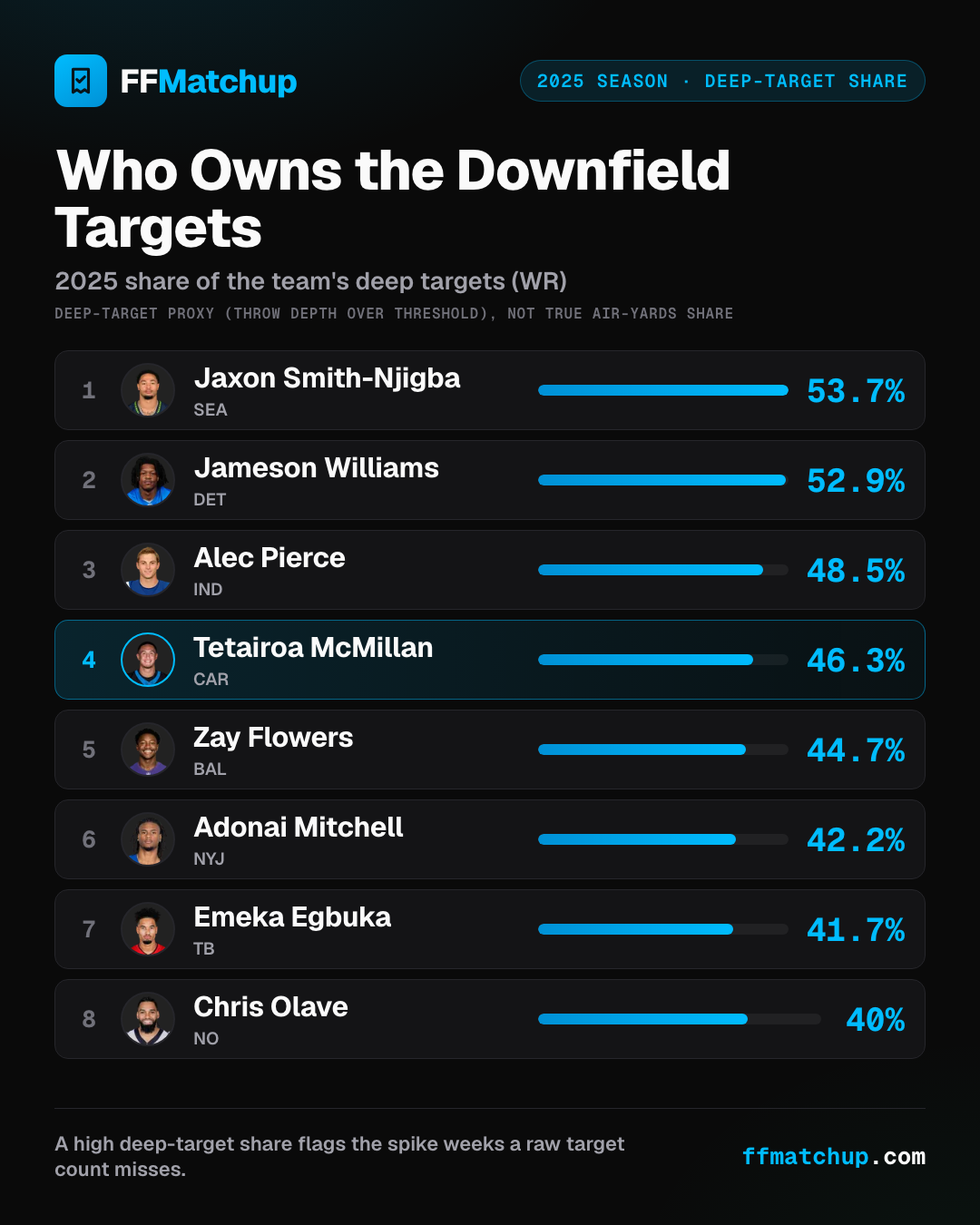
The Deep-Ball Wide Receivers: Who Owns the Downfield Targets for 2026
Spike weeks come from downfield targets. The share of a team's deep looks that goes to one receiver is where the ceiling lives, and it is a stat a raw target count hides. Here are the 2025 leaders, why the number flags a boom-week profile, and the rookie who already owns his offense's air yards.
FFMatchup
DEEP STAT
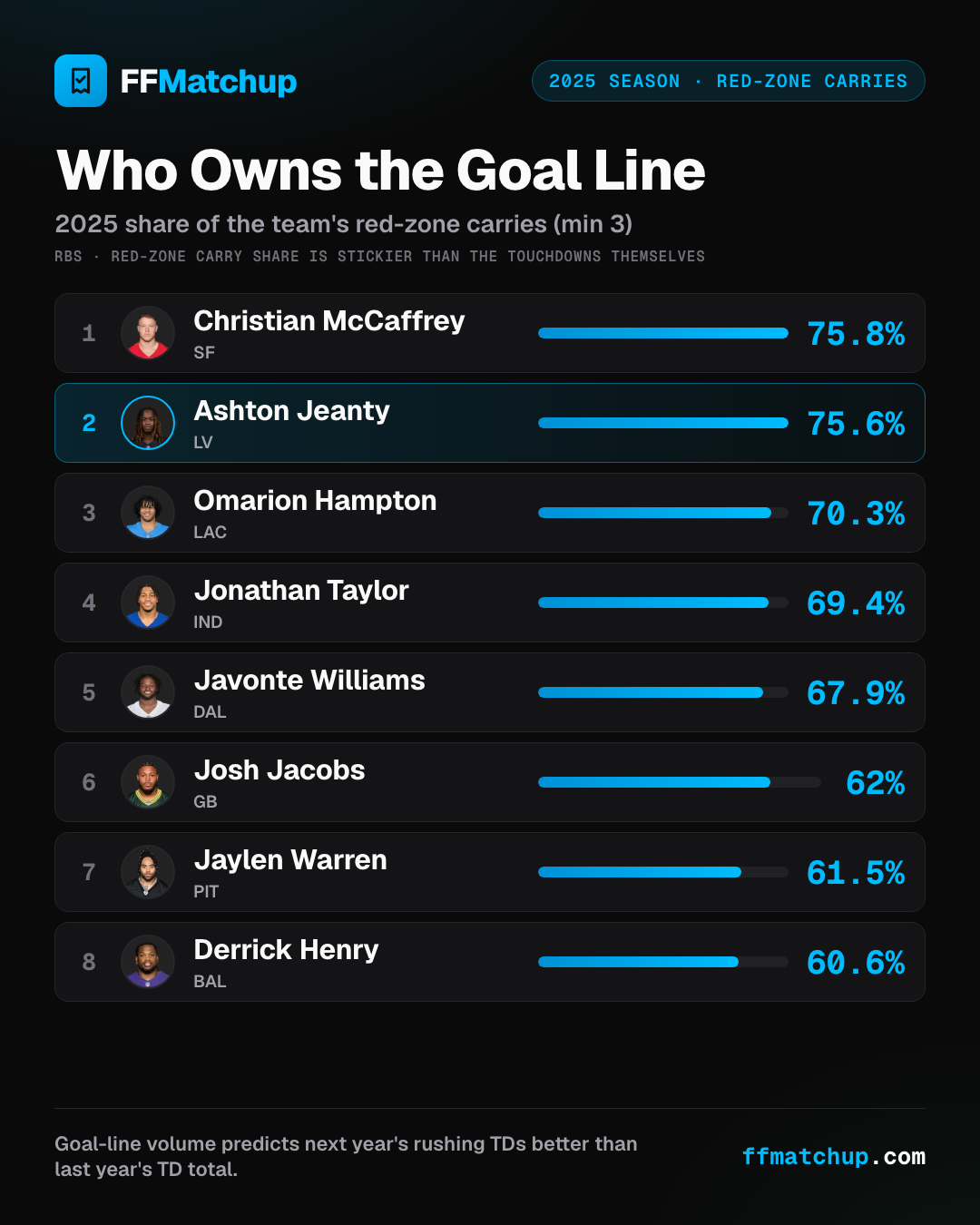
The Goal-Line Running Backs: Who Owns the Touchdown Equity for 2026
Rushing touchdowns are the noisiest part of a running back's fantasy line. The share of a team's red-zone carries is not. Here are the backs who owned the goal line in 2025, why that number predicts next year's scoring better than last year's touchdown total, and where the share hides a committee.
FFMatchup
PLAYER OUTLOOK
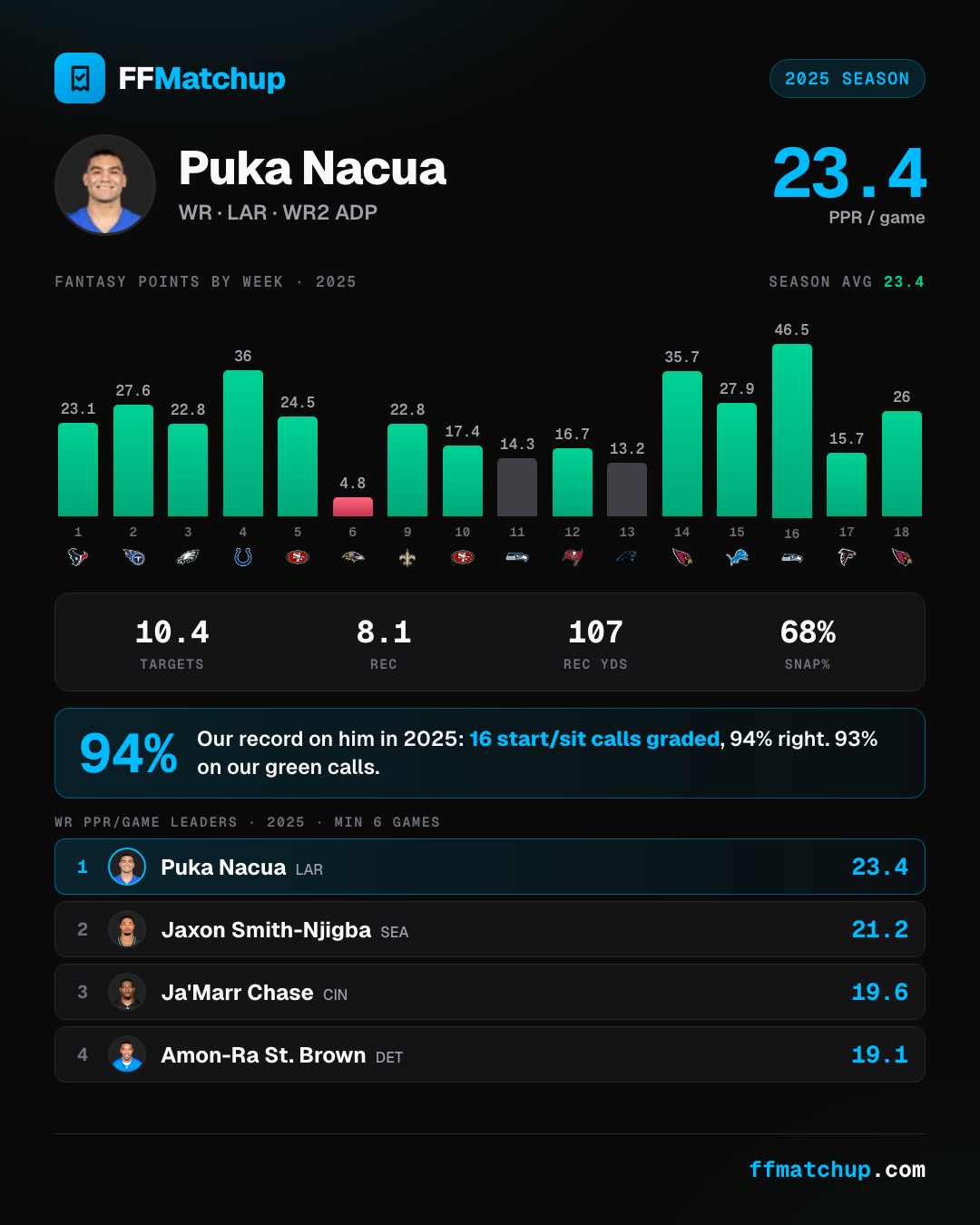
Puka Nacua Fantasy 2026: The Highest-Scoring Receiver Per Game, Even Next to Davante Adams
Nacua averaged 23.4 PPR points a game in 2025 while sharing the field with a 14-touchdown teammate. Here is what his workload says about a top-four price, and where the honest regression risk sits.
FFMatchup
PLAYER OUTLOOK
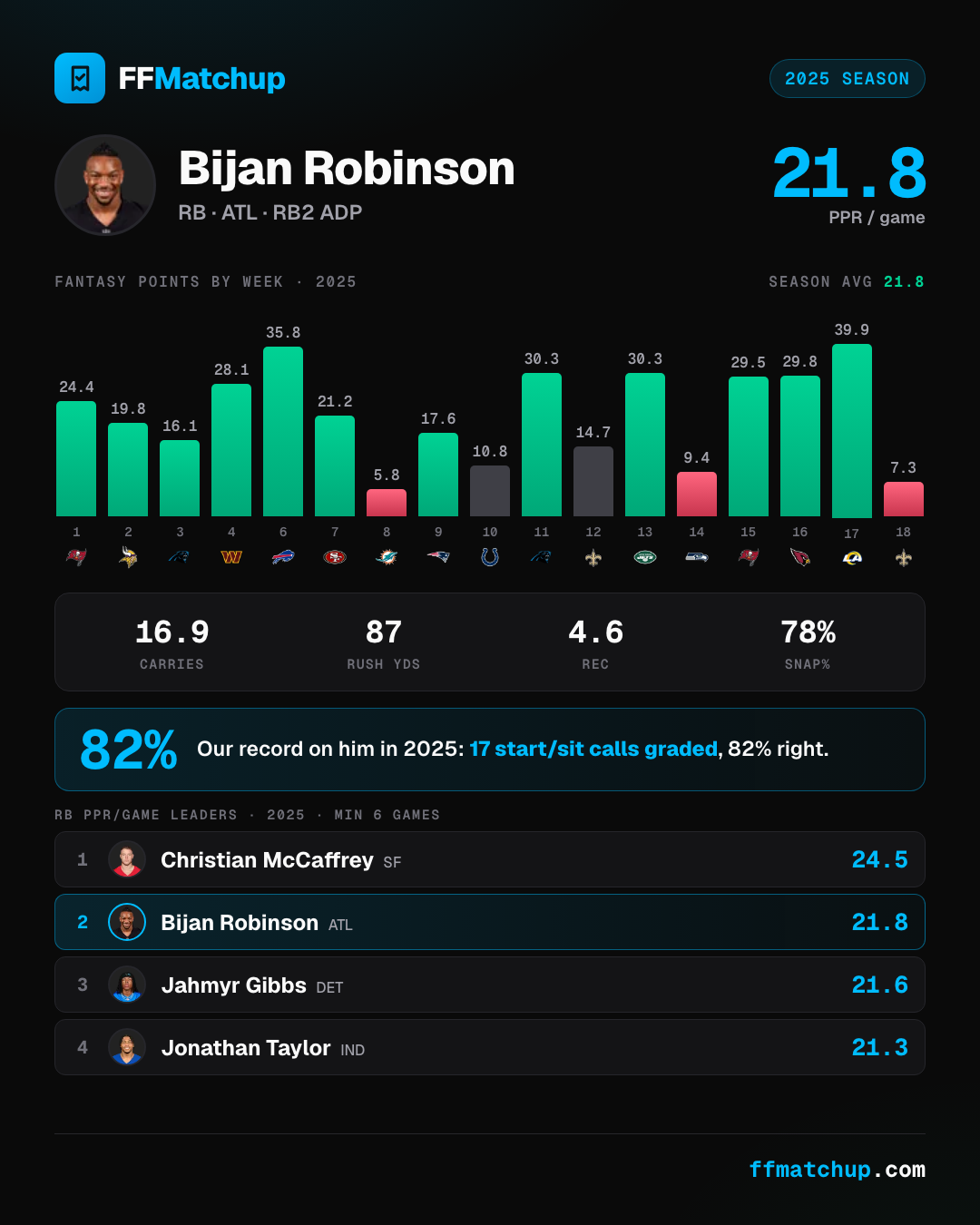
Bijan Robinson Fantasy 2026: 366 Touches and Production That Landed on His Usage
Robinson turned 366 touches into 21.8 PPR points a game in 2025, and unlike most early running backs his production landed almost exactly on his usage. Here is why the floor is the safest at the position.
FFMatchup
PLAYER OUTLOOK
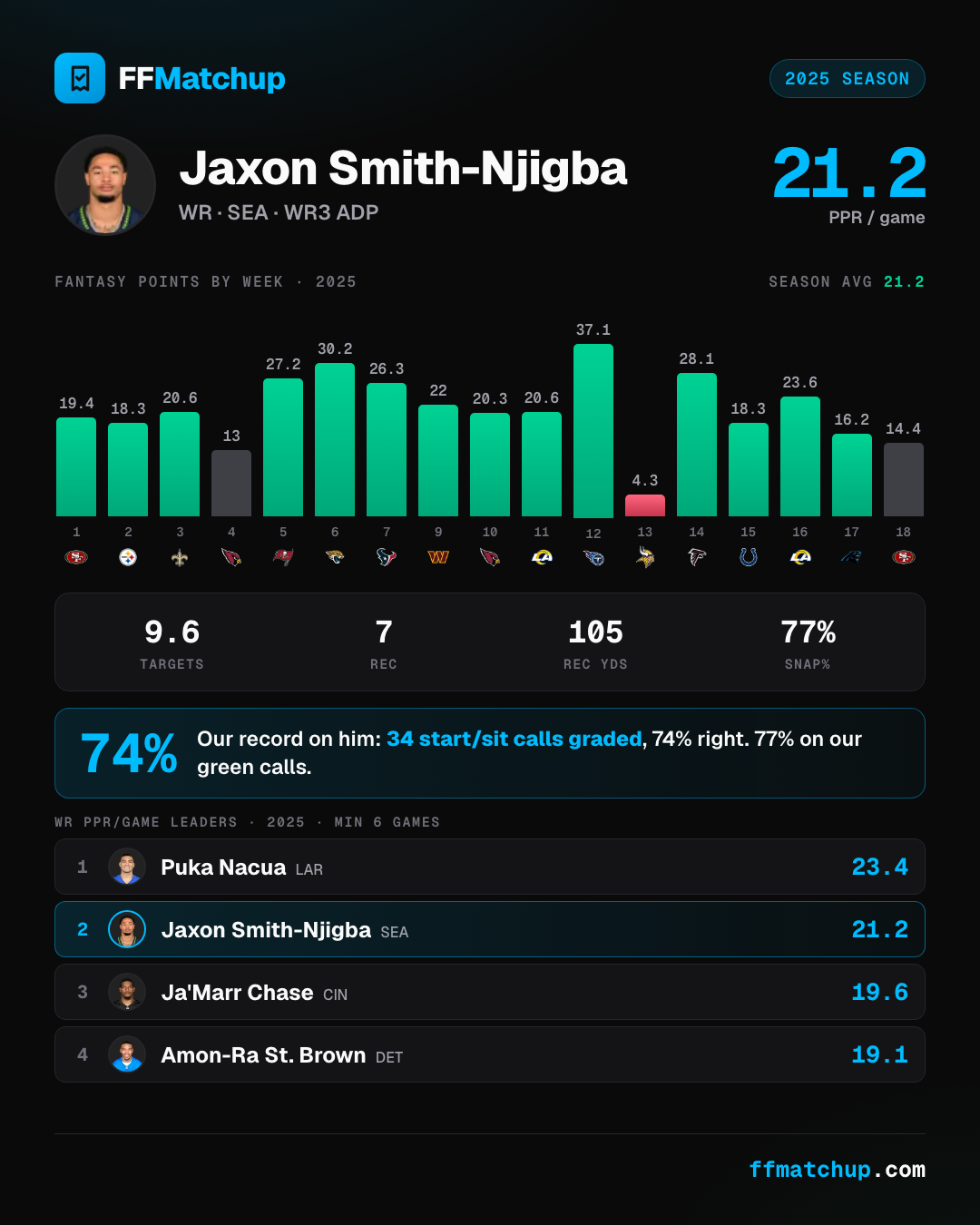
Jaxon Smith-Njigba Fantasy 2026: The WR Who Led the League in Fantasy Opportunity
JSN did not just take a step forward in 2025, he led every wide receiver in the league in target share and in our Opportunity Score. Here is what that workload means for his 2026 price, and why the usage backs it up.
FFMatchup
PLAYER OUTLOOK
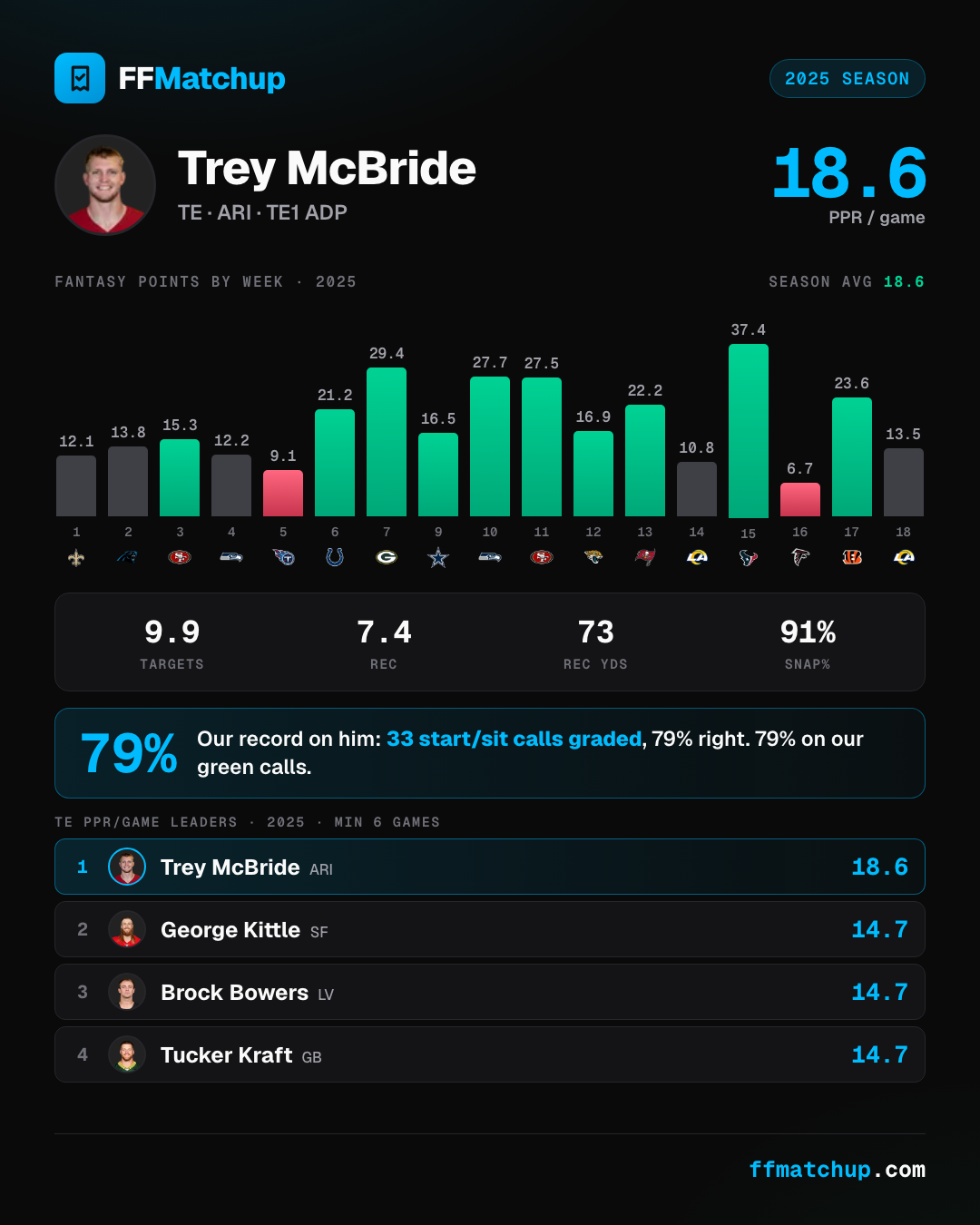
Trey McBride Fantasy 2026: The Tight End Who Earns a Wide Receiver's Workload
McBride ran a 91% snap share and led every tight end in target share and in our Opportunity Score in 2025. At a TE1 price, you are buying the position's clearest weekly floor. Here is the usage case, with the receipts.
FFMatchup
QB ↔ WR FIT
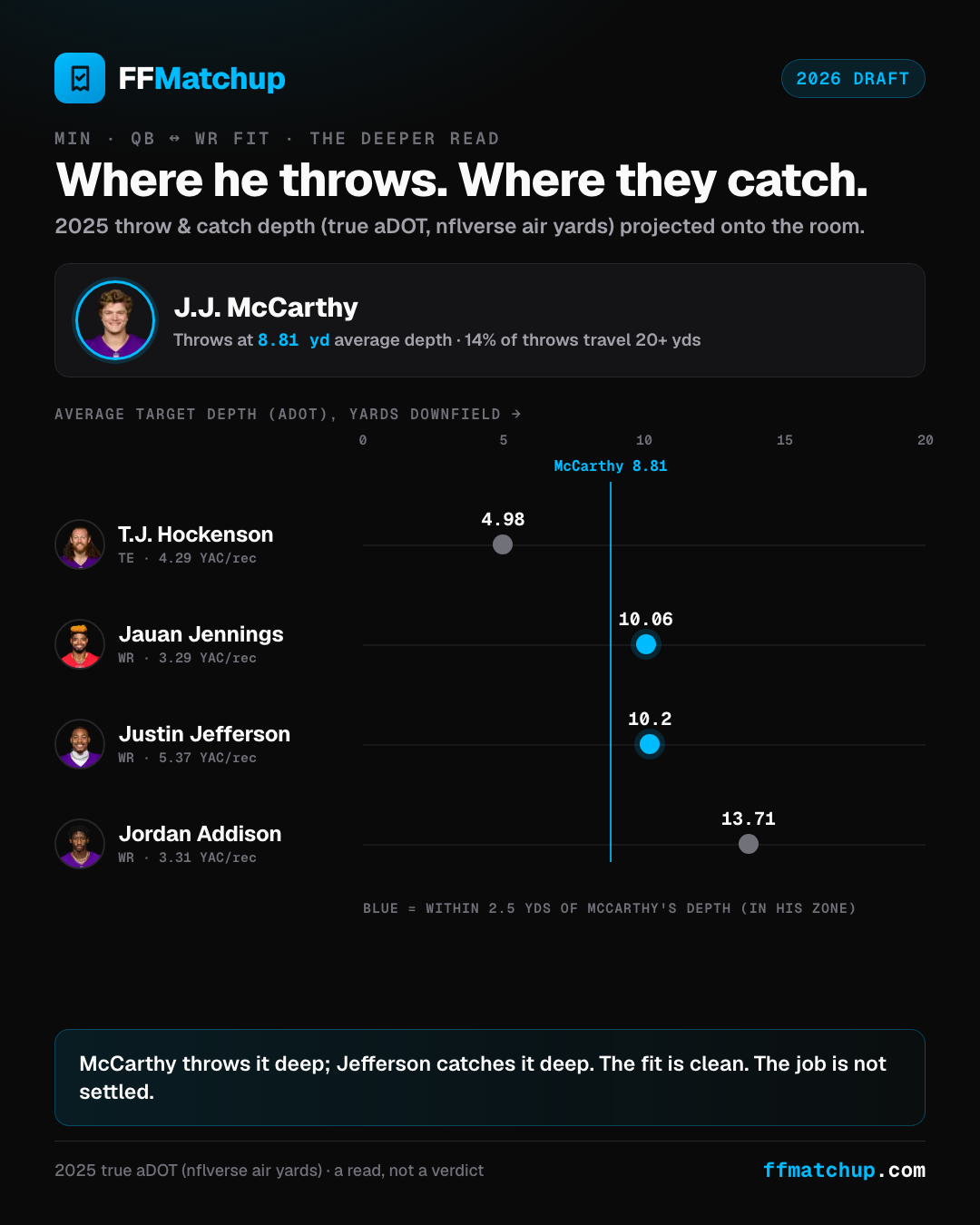
Justin Jefferson Fantasy 2026: The Vikings QB Battle Decides His Ceiling
Jefferson is still a first-round pick, but 2025 was quiet by his standard: 11.9 points a game and two receiving touchdowns behind a three-quarterback carousel. Minnesota's 2026 job is down to J.J. McCarthy and Kyler Murray, and the two throw the ball to very different places. One of them fits Jefferson's downfield game. The other does not.
FFMatchup
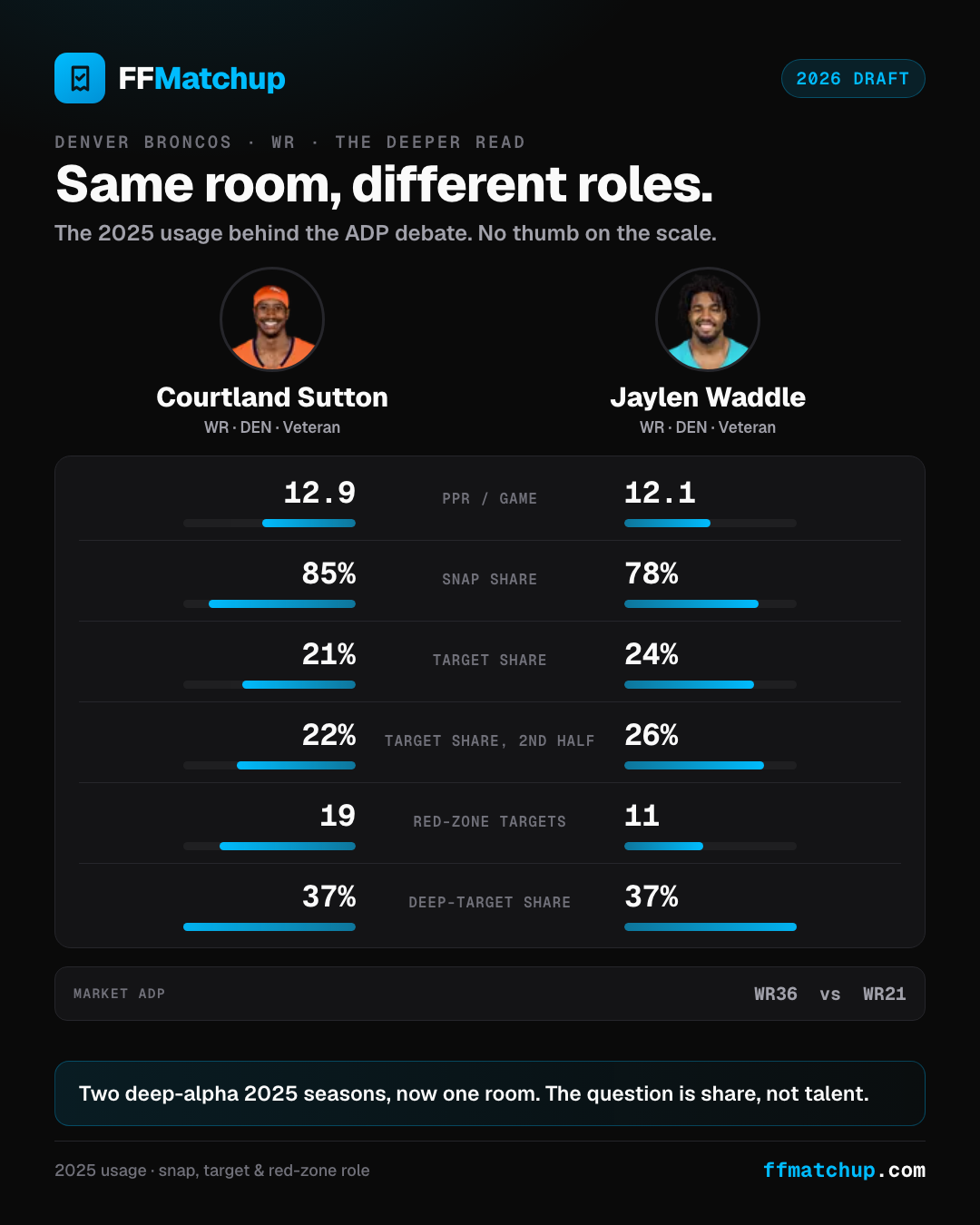
USAGE VS MARKET
Courtland Sutton 2026: Denver Added Jaylen Waddle. Is He Still Draftable?
The market is fading Courtland Sutton to WR36 after Denver signed Jaylen Waddle. The usage says his role is more defensible than the panic suggests, but the room is genuinely crowded. Here is the honest read on the price.
FFMatchup
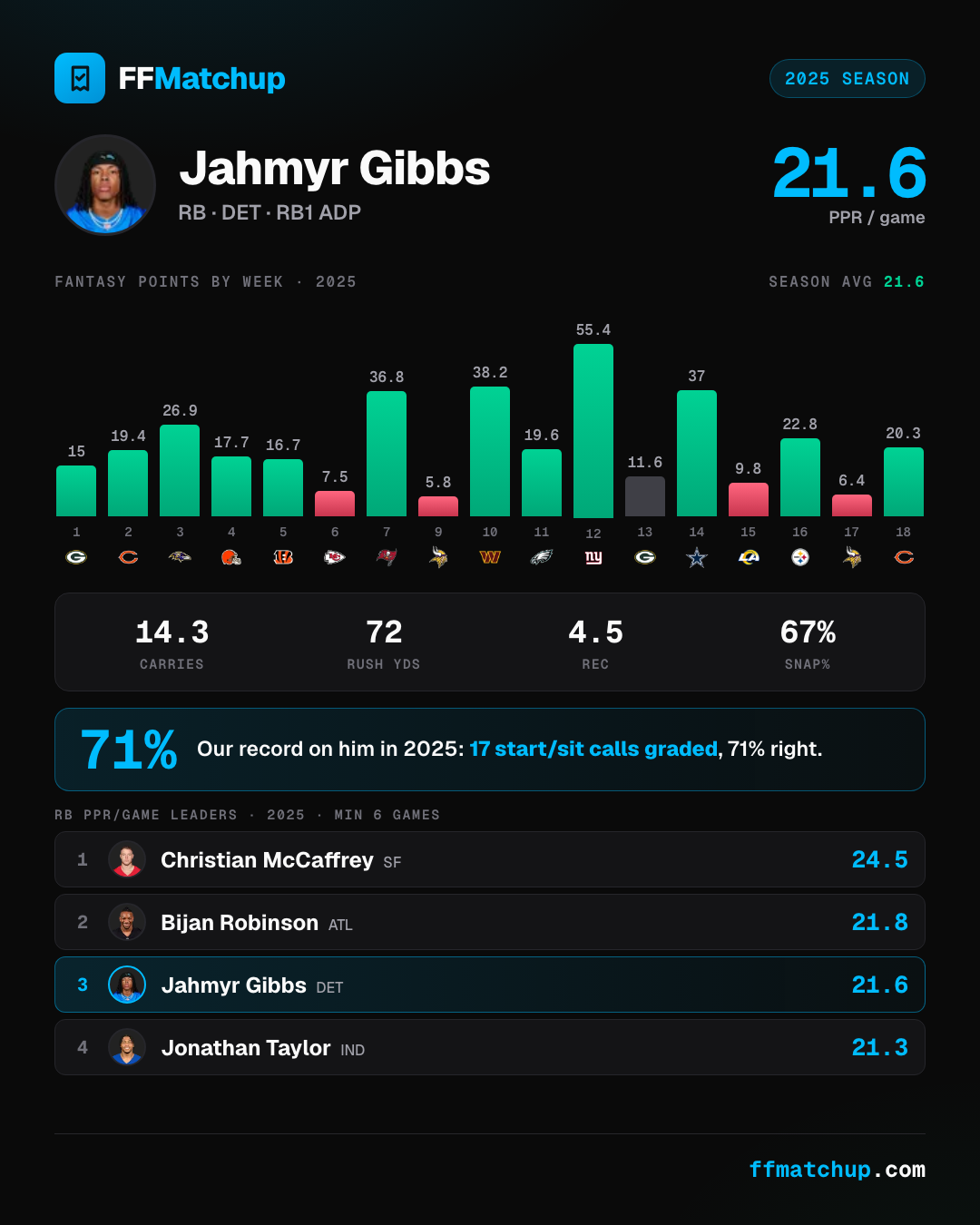
2026 PLAYER OUTLOOK
Jahmyr Gibbs 2026 Outlook: Why the Committee Does Not Matter
Gibbs is a top-three fantasy pick who shares his own backfield. That scares people every August. The usage says it should not: his fantasy value is built on the touches a committee cannot take away.
FFMatchup
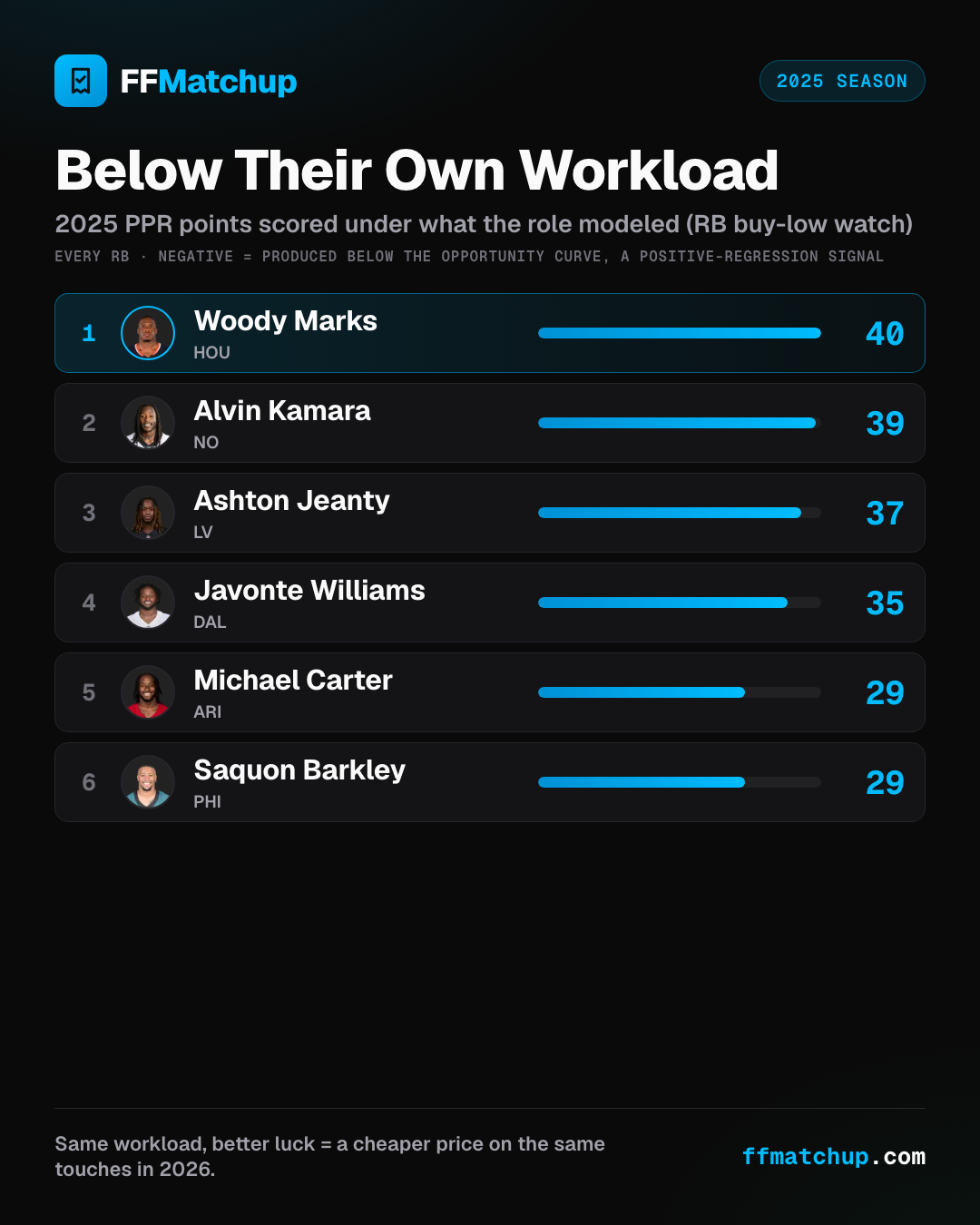
2026 SLEEPER PROFILE
Woody Marks Fantasy 2026: A Rookie Who Handled 231 Touches Is Going Free
Woody Marks carried a real workload as a rookie and scored fewer points than that workload should have paid. The volume is the signal, the efficiency is the discount, and the draft price has not caught up.
FFMatchup
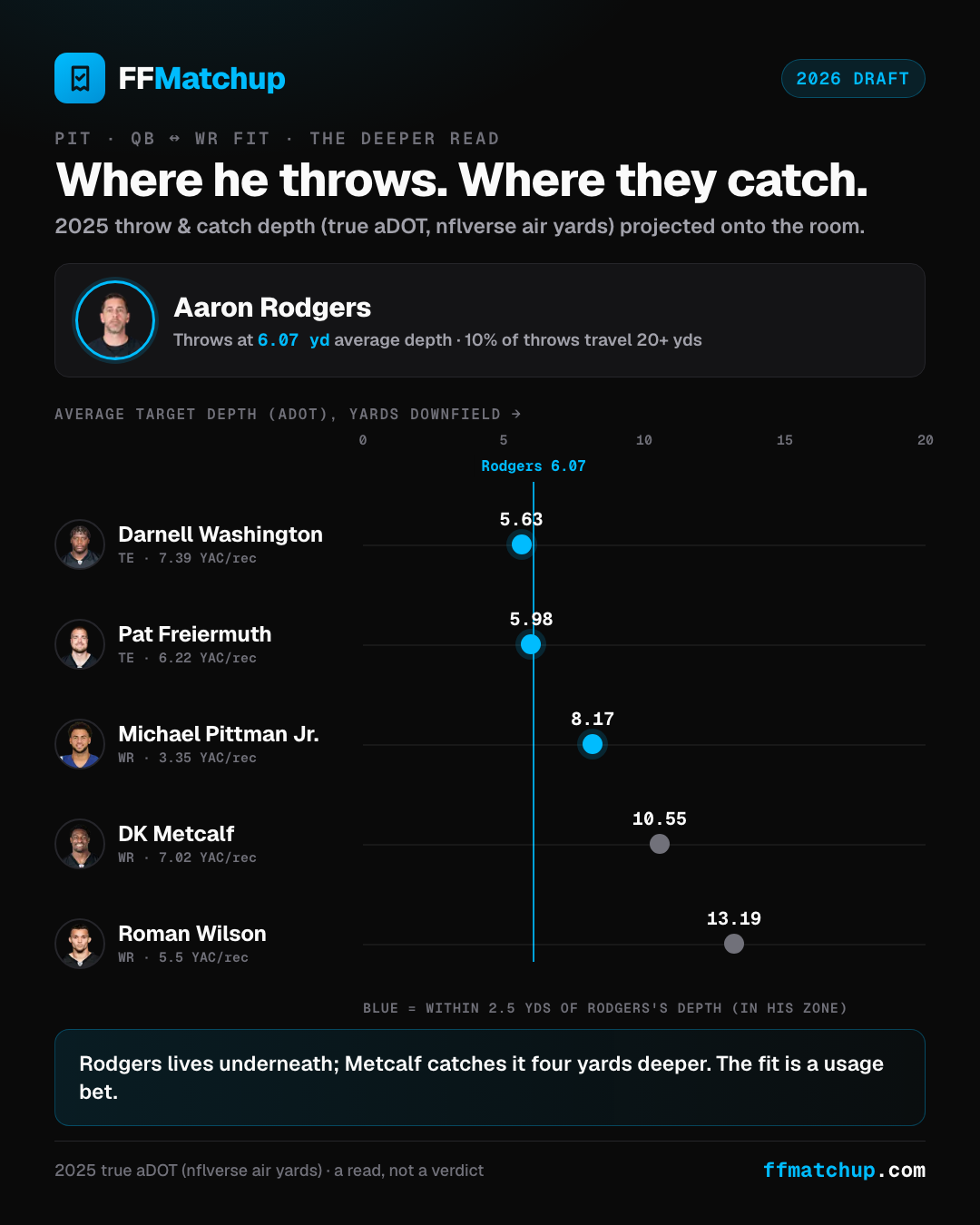
QB ↔ WR FIT
DK Metcalf to Pittsburgh: Does He Fit Aaron Rodgers?
Pittsburgh added a proven deep threat to a quarterback who lives underneath. The talent was never the question. The question is depth: where DK Metcalf catches the ball versus where Aaron Rodgers throws it. The numbers say the fit works, but only one way.
FFMatchup
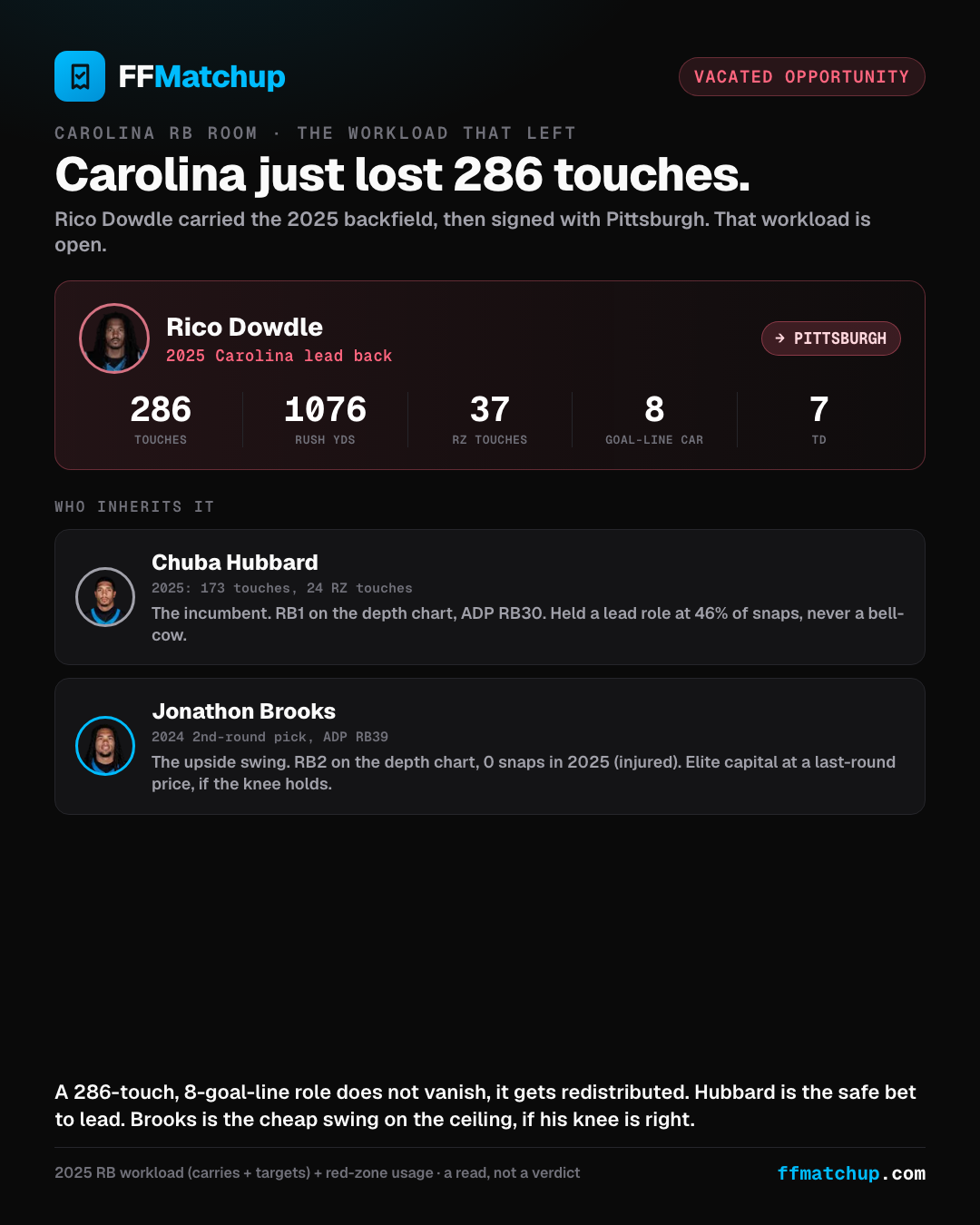
BACKFIELD WATCH
Carolina Lost 286 Touches. Jonathon Brooks Is the Cheap Bet to Inherit Them.
Rico Dowdle carried the Panthers to a 1,000-yard season, then left for Pittsburgh. That workload is open, and a 2024 second-round talent is going as RB39 to chase it. The upside is a league-winner. The catch is a double ACL.
FFMatchup
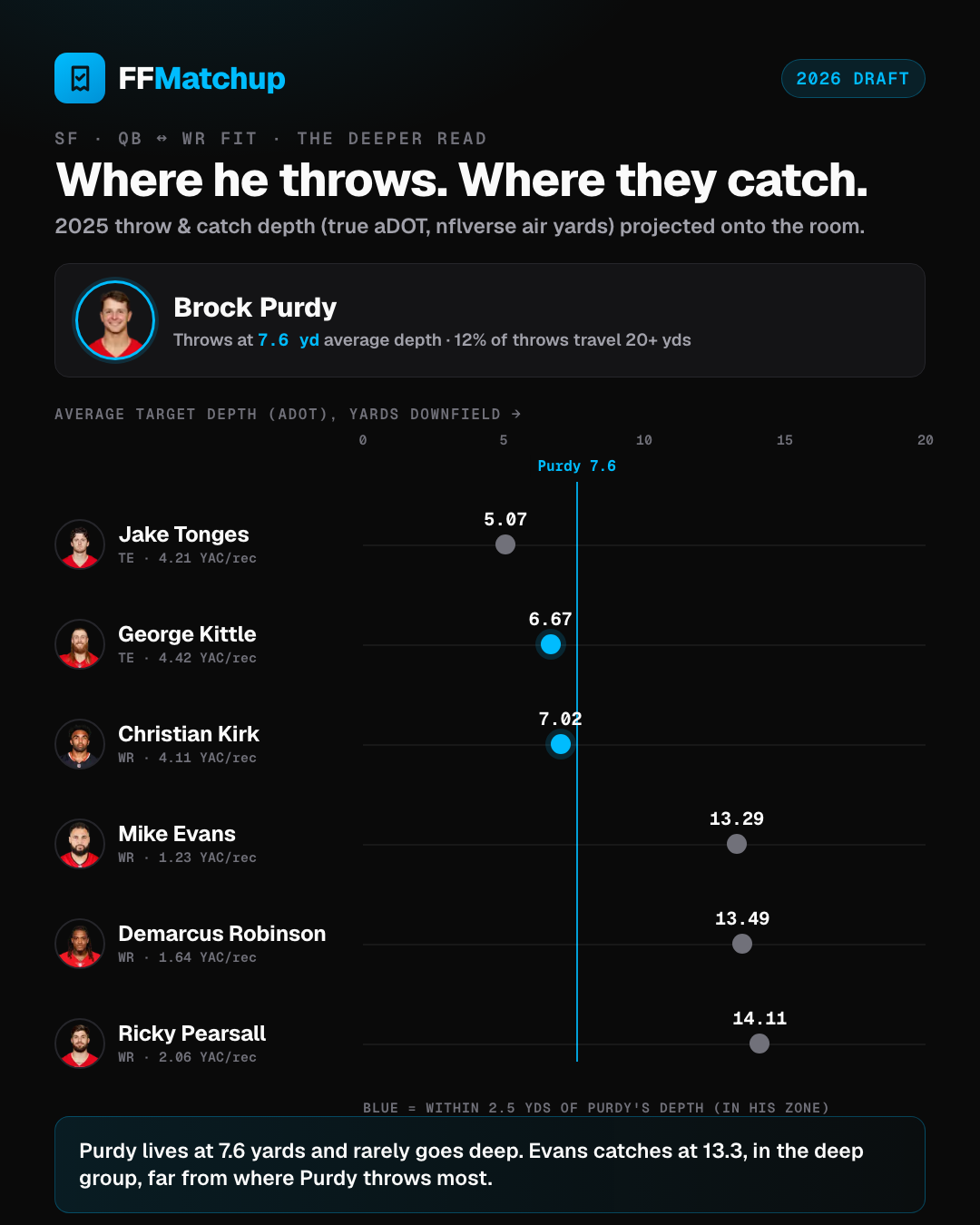
QB ↔ WR FIT
Mike Evans and Brock Purdy: The Fit Is the Question
San Francisco added a first-ballot resume. Talent was never the question. Depth is: across three seasons Mike Evans caught the ball five yards past where Brock Purdy throws it. The yardage fit is a real question, but the red-zone role travels to any offense.
FFMatchup
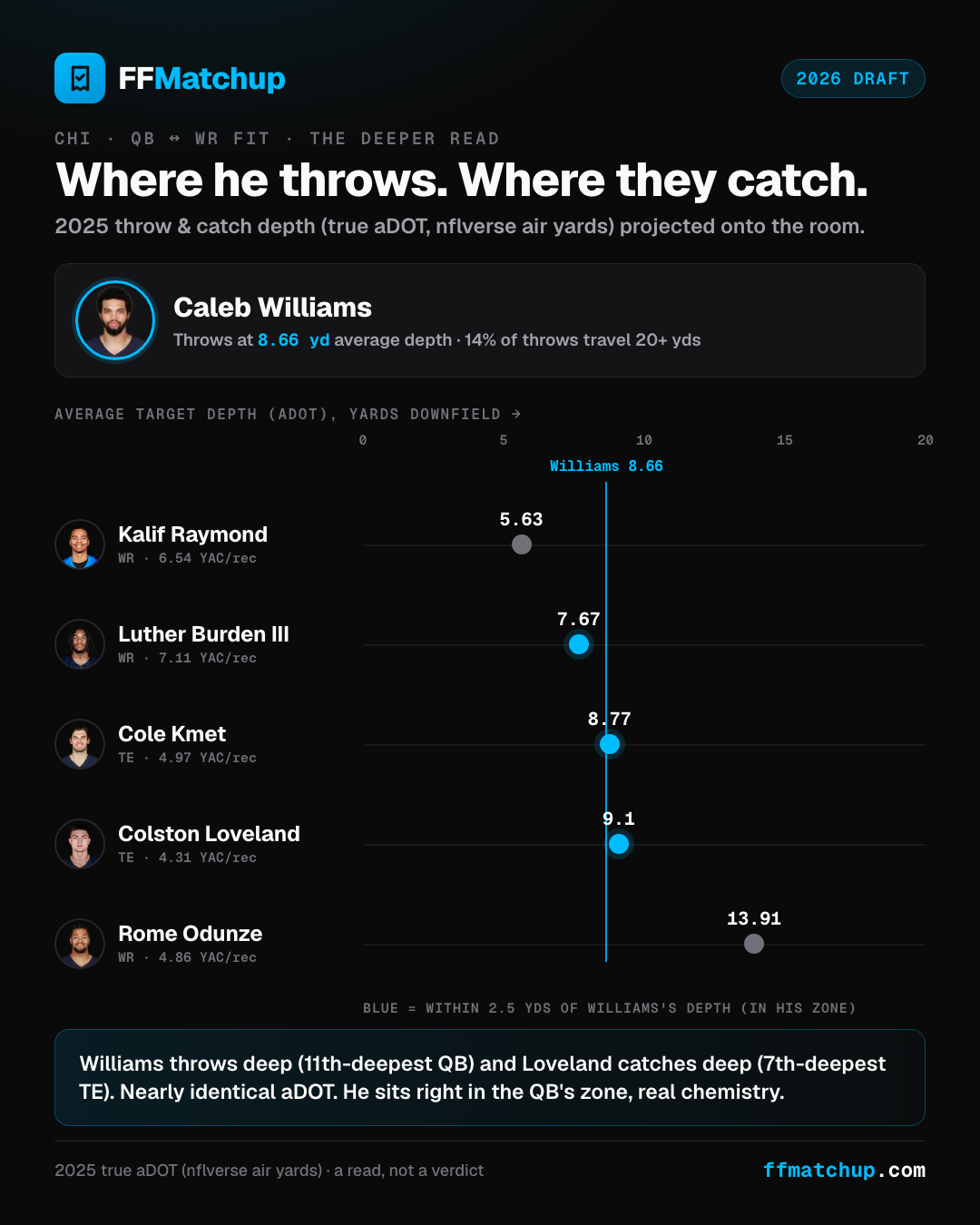
TIGHT END DEEP DIVE
Caleb Williams and Colston Loveland: The Chemistry Is Real
The depth data says these two fit. The rookie's second-half surge says it is already clicking. The only question left is whether a top-three tight end price has front-run the breakout.
FFMatchup
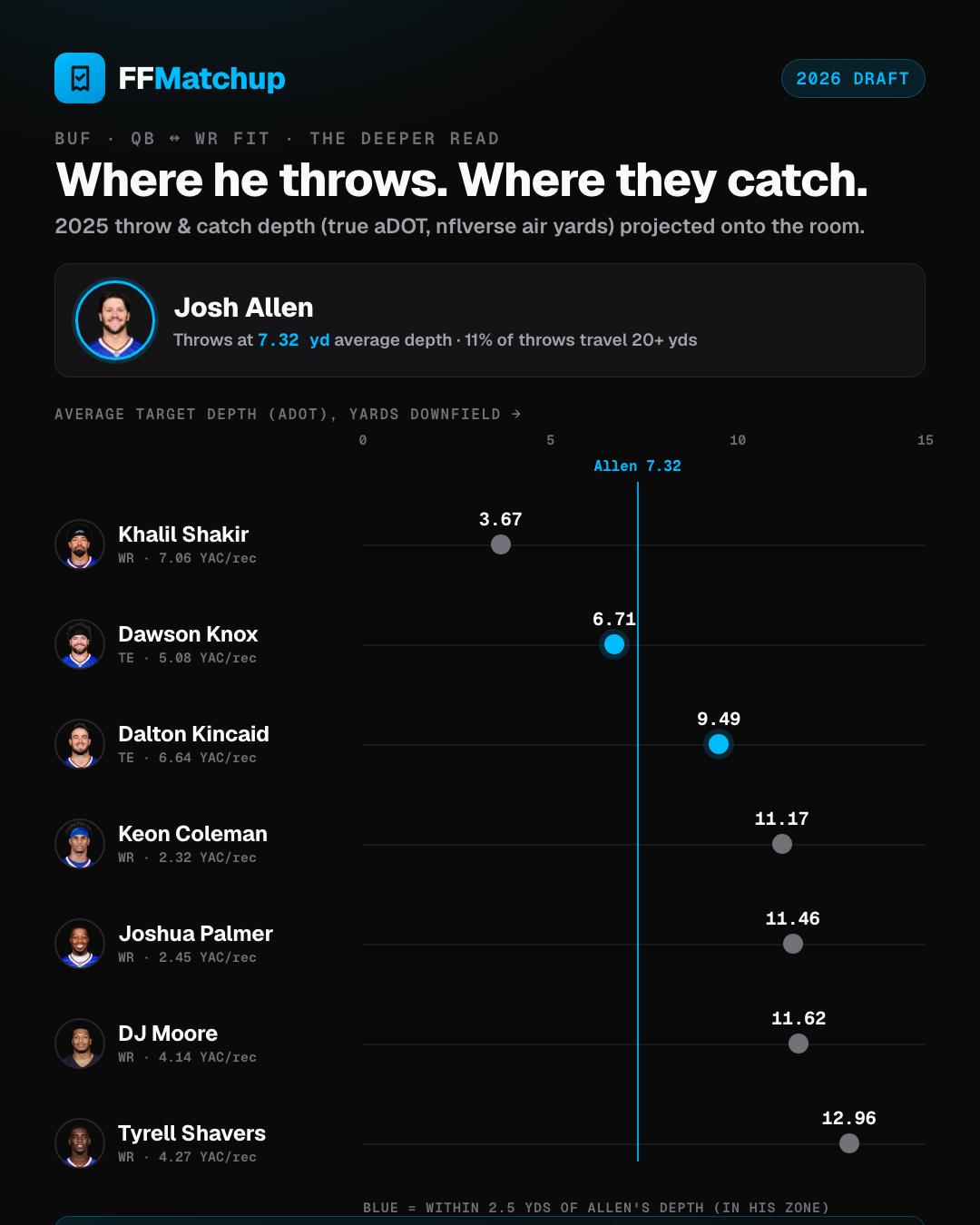
QB ↔ WR FIT
DJ Moore to Buffalo: Does He Actually Fit Josh Allen?
Buffalo added a proven WR1. The question was never talent. It is depth: where DJ Moore catches the ball versus where Josh Allen throws it. The numbers say the fit is real, but only if the Bills use him a certain way.
FFMatchup