Caleb Williams and Colston Loveland: The Chemistry Is Real
The depth data says these two fit. The rookie's second-half surge says it is already clicking. The only question left is whether a top-three tight end price has front-run the breakout.
Colston Loveland: fantasy points, matchups, and our calls


Every summer, someone tells you a young quarterback and his tight end are building something. Usually it is a vibe. In Chicago, it is in the numbers, and it points the same direction the tape does. This is about Caleb Williams and Colston Loveland.
The fit: they throw and catch at the same depth
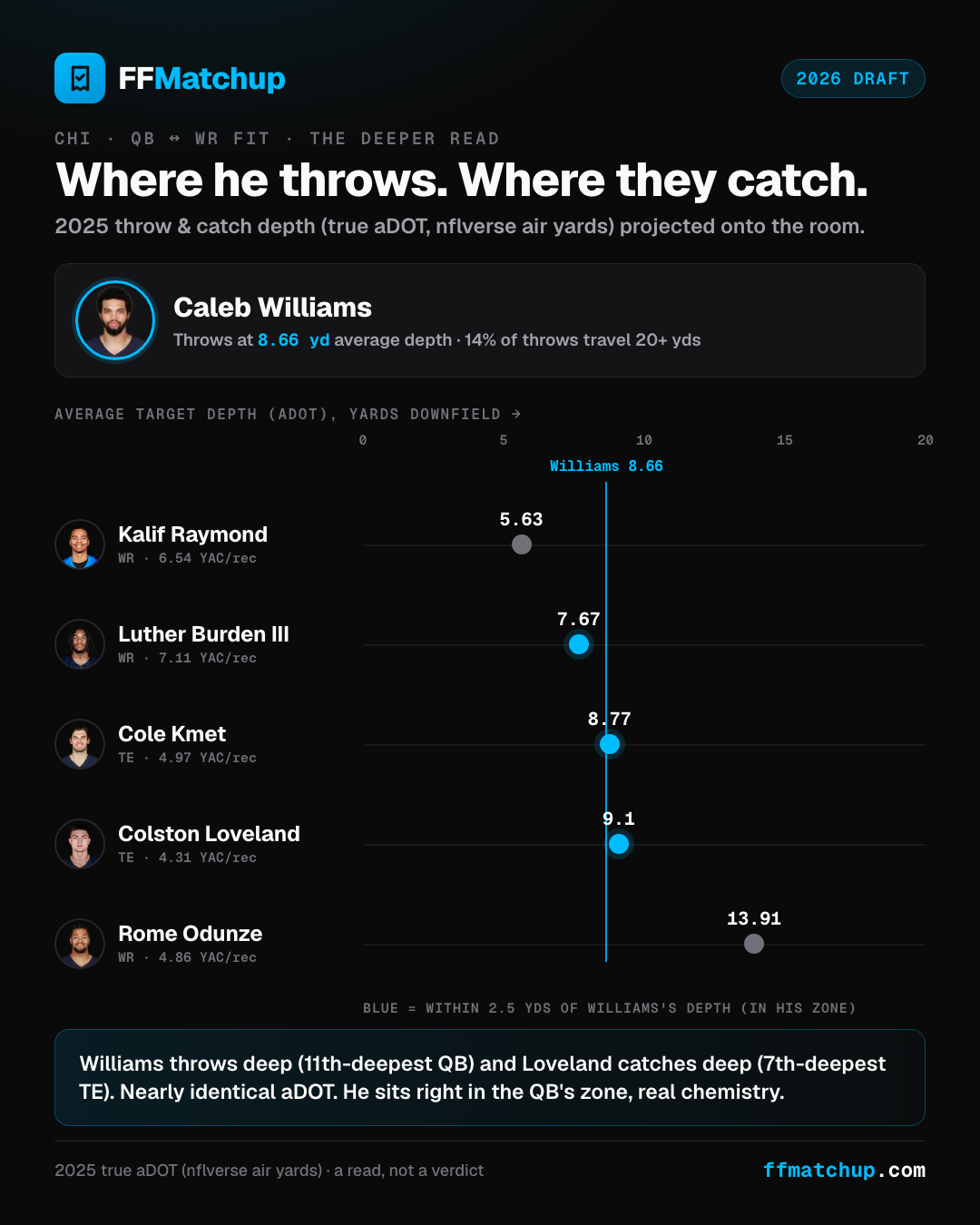
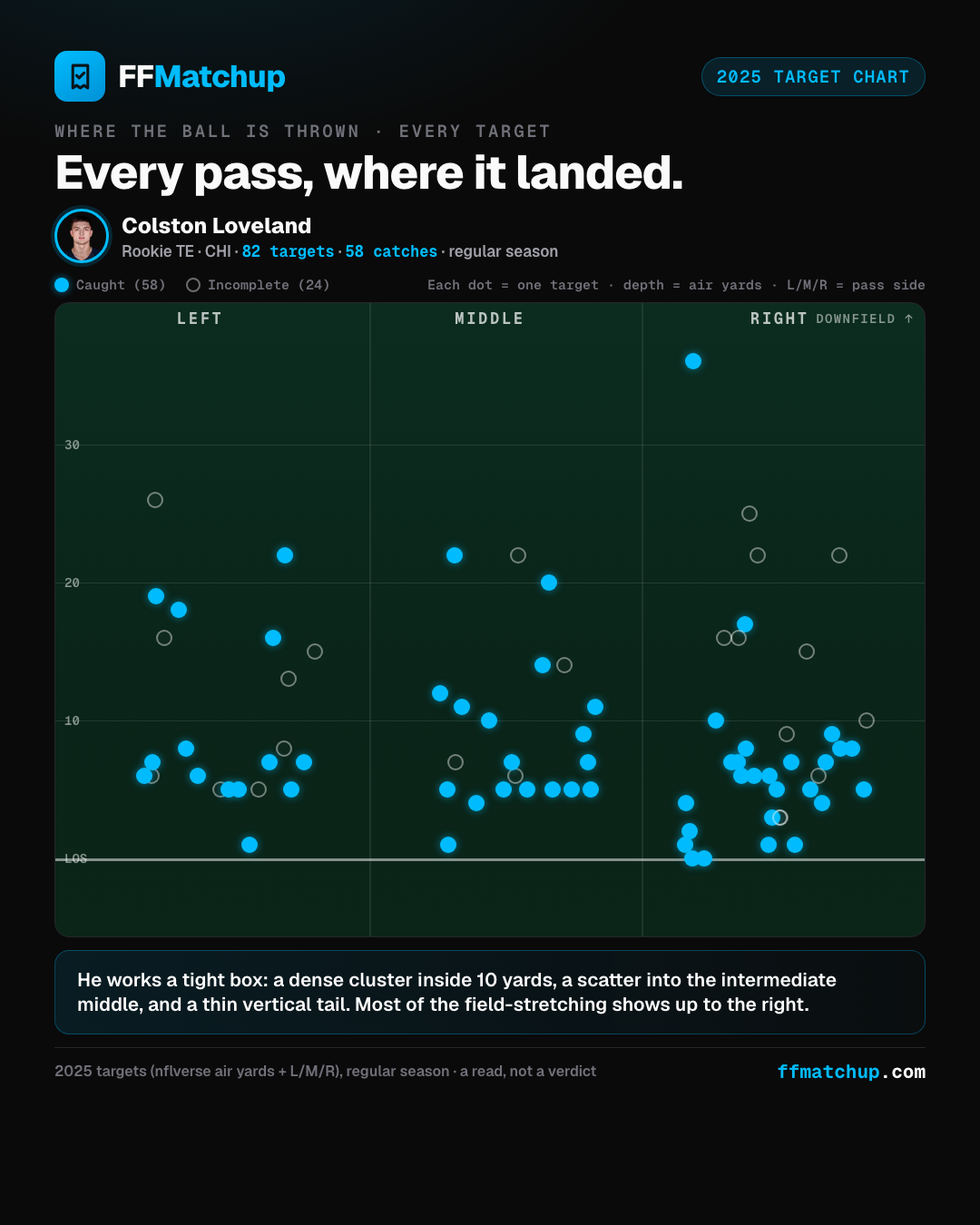
Caleb Williams is not a check-it-down quarterback. His average target depth last season was 8.66 yards, the 11th-deepest of 51 qualifying passers, and he leans heavily to the right side of the field. Colston Loveland is not a possession tight end. As a rookie he caught the ball at a 9.1-yard average depth, the 7th-deepest mark at his position, also skewing right.
That is what a fit looks like. A quarterback who wants to push the ball downfield, throwing to a tight end who does his damage downfield, both favoring the same side. There is no gap to reconcile here. Williams throws exactly where Loveland works. And when you plot every target where it landed, the shape of his game shows up.
The red-zone role
Depth tells you how he is used. Field position tells you how he scores. Inside the opponent's 20, Loveland was no afterthought as a rookie: he drew 13 red-zone targets and caught 10 of them, a 77% clip, with four of those looks coming inside the 5.
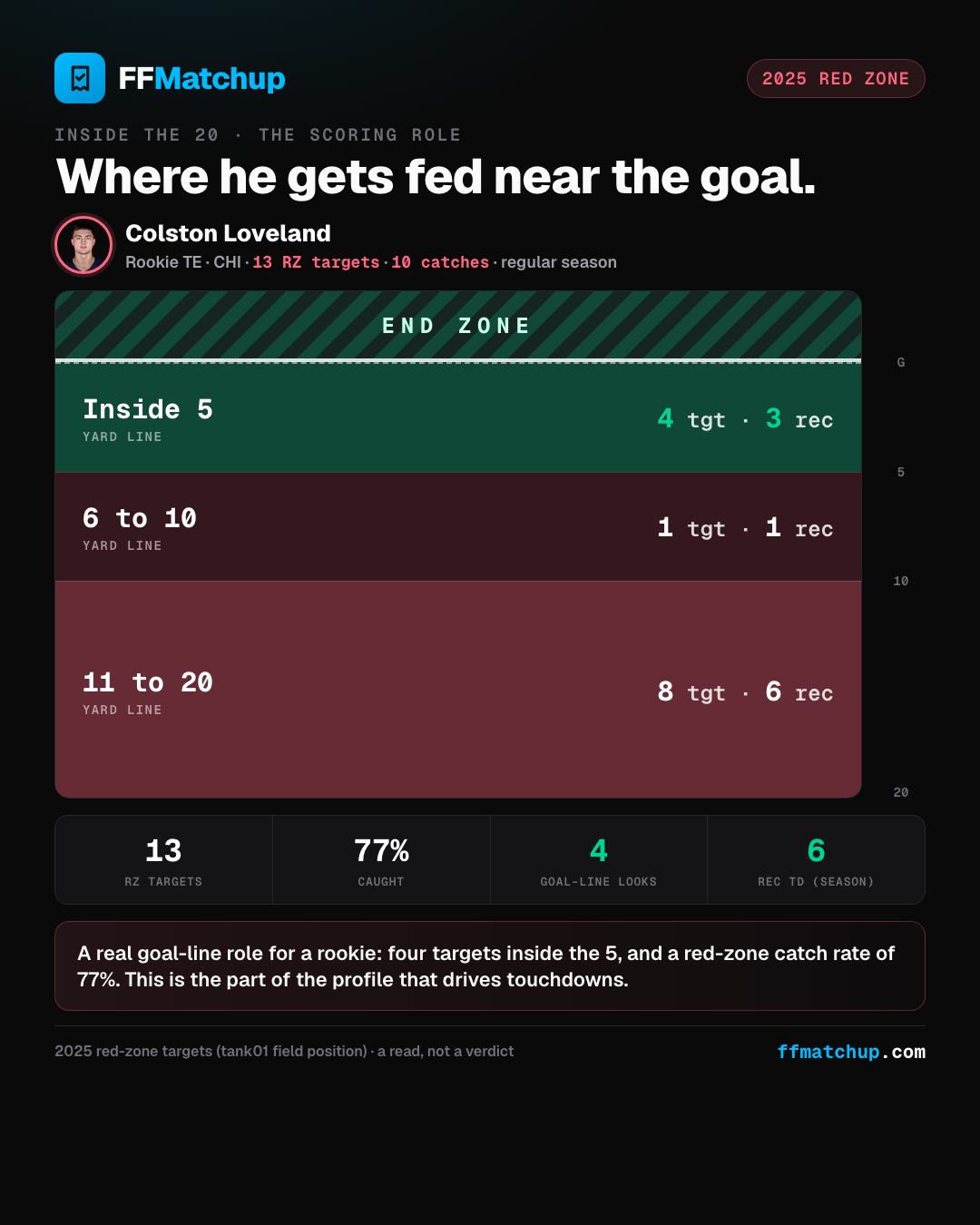
A goal-line role like that is uncommon for a rookie tight end, and it is why the six touchdowns were not a variance fluke. The volume in the scoring area was there to back them up.
The boom weeks were a connection compounding
Loveland's rookie year read like a relationship forming in real time. He was quiet through Week 8 (single digits, low target counts), then detonated for 30 PPR in Week 9 on two touchdowns. The bigger tell was the finish: the offense funneled more to him as the season went, not less.
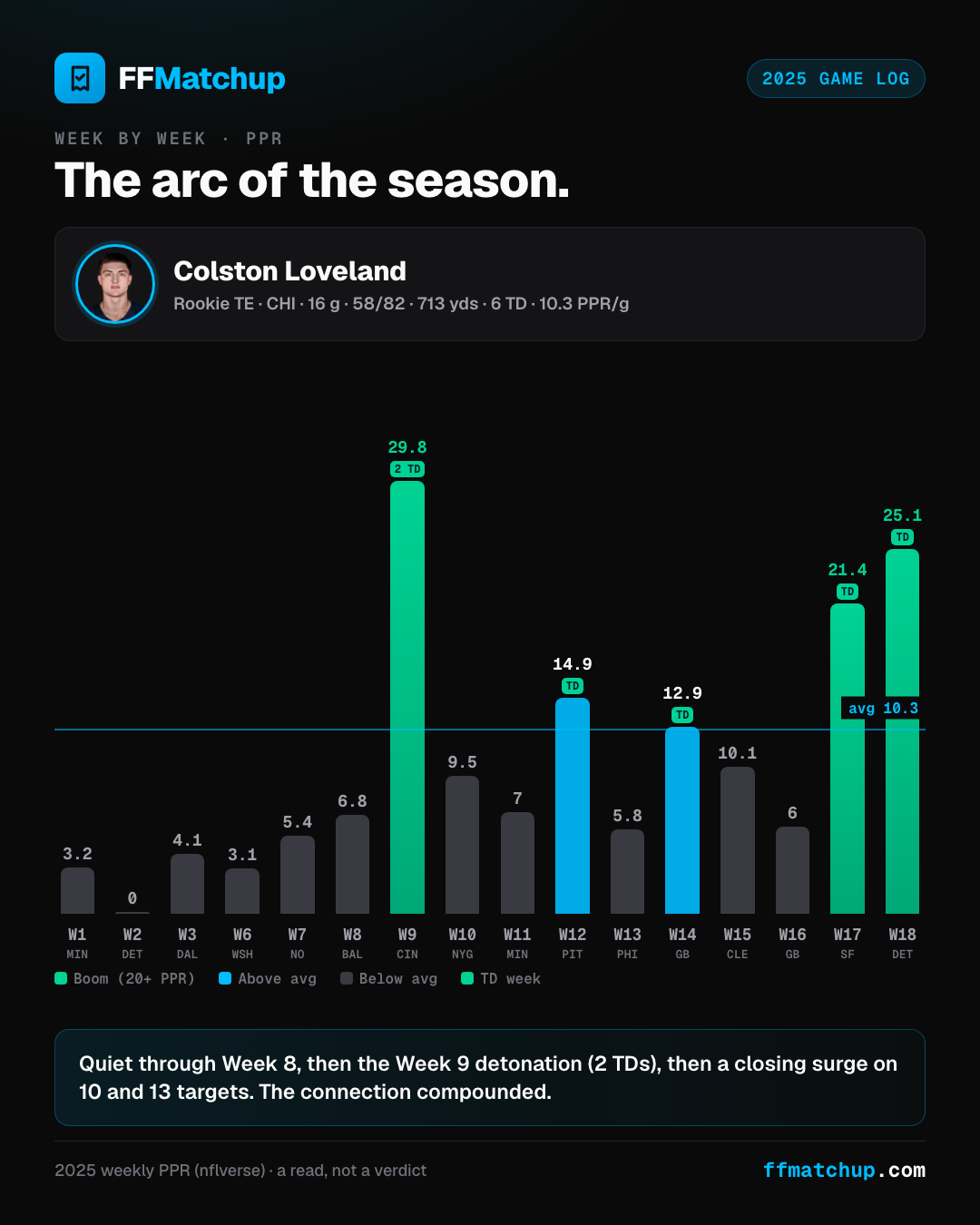
He closed with 82 targets, 713 yards, and 6 touchdowns as a rookie. The volume trend and the red-zone role are exactly what you want to see before a Year-2 leap.